
Your friend, your cousin, the barista with the septum ring, the dog-walker with a PhD in crystals from Naropa, the guy on TikTok whose entire personality is “neurodivergent aesthetic,” and your coworker whose main symptom is “forgets microwave meals.”
As George Carlin (comedian) once said, “Just when I discovered the meaning of life, they changed it.” That’s exactly what happened with ADHD.
For decades, society thought ADHD meant “hyperactive boy bouncing off cafeteria walls like a caffeinated meerkat.” Now we know it also means:
- The quiet girl in the back who’s drawing dragons instead of listening
- The adult woman who assumed she had anxiety for two decades
- The overachiever masking so hard they could earn a Tony
- The depressed adult who isn’t lazy — just drowning
- And the person with 47 mental tabs open, only three of which are useful
As Russell Barkley (psychologist and ADHD researcher) famously said: “ADHD is not a disorder of knowing what to do. It is a disorder of doing what you know.”
Translation: Your brain is not broken. It’s just a badly organized Google Drive.

Did ADHD Actually Increase After Covid, or Did We Just Start Counting Humans Accurately?
Here’s the science, but fun, I swear.
According to global research, the prevalence of ADHD didn’t really increase after Covid. The diagnosis rates absolutely did1.
Numbers to ruin family dinners:
- Adults newly reporting ADHD: 6%2
- Percentage of those diagnosed after age 18: about half3
- Stimulant prescriptions in adult women post-pandemic: spiking like a crypto chart4
- Humans diagnosing themselves via TikTok videos filmed in Honda Civics: uncountable
As Maria Bamford (comedian) says, “My brain is like a blender with no lid. Everything is everywhere, all the time.” She didn’t know she was describing half of adulthood.
Telehealth turbocharged everything.
Instead of waiting three months in a lobby decorated with dying Ficus plants, people got evaluated from their couch in pajama pants while petting “special” mice.

Autism After Covid
Autism didn’t magically sprout during lockdown like sourdough starters. Rates have been rising for decades as we:
- Improved identification5
- Stopped pretending autism only existed in boys who love trains6
- Expanded diagnostic criteria
- Stopped ignoring girls and quiet kids
- Noticed the adults who had been mislabeled their entire lives
As Hannah Gadsby (comedian and writer) says, “I’m not broken. I just live in a world that wasn’t designed for me.”
Pandemic disruptions caused evaluation delays, which made diagnosis numbers look higher later. Covid infection itself? No measurable effect on autism prevalence7.
The ADHD Girl/Woman Renaissance (We Finally Counted Half the Population)
Girls are the plot twist.
For decades:
- Boys with ADHD = “problem”
- Girls with ADHD = “daydreamy, emotional, hormonal, probably fine”
As Ali Wong (comedian) put it, “Women are expected to do everything, remember everything, and look good doing it.” And for those of you who remember, Ginger Rogers danced like the amazing Fred Astaire but backwards in heels.
Try doing that with inattentive ADHD.
Post-pandemic data show:
- ADHD diagnoses in women skyrocketed8
- Some countries saw increases of 135%9
- Women accounted for two-thirds of the “excess growth”10
Millions of women said, “This explains my entire existence.” This isn’t an epidemic of ADHD. It’s an epidemic of finally being believed.
The Wider Net Effect
Let’s acknowledge reality:
- Social media helped people recognize lifelong symptoms
- Telehealth lowered barriers to care11
- Physicians learned to diagnose adults
- Schools recognized inattentive and mixed presentations
- Parents stopped saying “they’ll grow out of it”
But more diagnosed people ≠ fake ADHD.
As Ned Hallowell (psychiatrist and ADHD expert) says, “ADHD is not a limitation. It is a trait with both strengths and challenges.” Diagnosing people who were previously missed is progress, not pathology.
Are We Overmedicating Kids? No. Let Me Explain Before You Throw a Chair.
People love to say: “Kids didn’t need meds in my day.”
Correct. Kids in your day also:
- Were told to “toughen up”
- Had undiagnosed learning disabilities
- Got yelled at for symptoms that weren’t behavioral
- Were labeled “lazy,” “troublemaker,” or worse, hit on the bum and locked in a closet.
As Stephen Fry (actor, writer, mental-health advocate, amazing personality) said, “Stupid people think intelligence is a privilege. It’s not. It’s a gift. What matters is how you use it.”
Kids with ADHD are intelligent. They just can’t access it consistently without support. Untreated ADHD leads to:
- Higher rejection by peers12
- Lower self-esteem
- Depression, anxiety, and disruptive behavior
- Academic failure despite having the brains for success13
- Being “that kid” whom everyone sighs at. Kids know when they’re that kid.
Medication isn’t about controlling children. It’s about protecting them. Of course, tell that to their teachers….
The “Meds Are Morally Wrong” People (Bless Their Hearts)
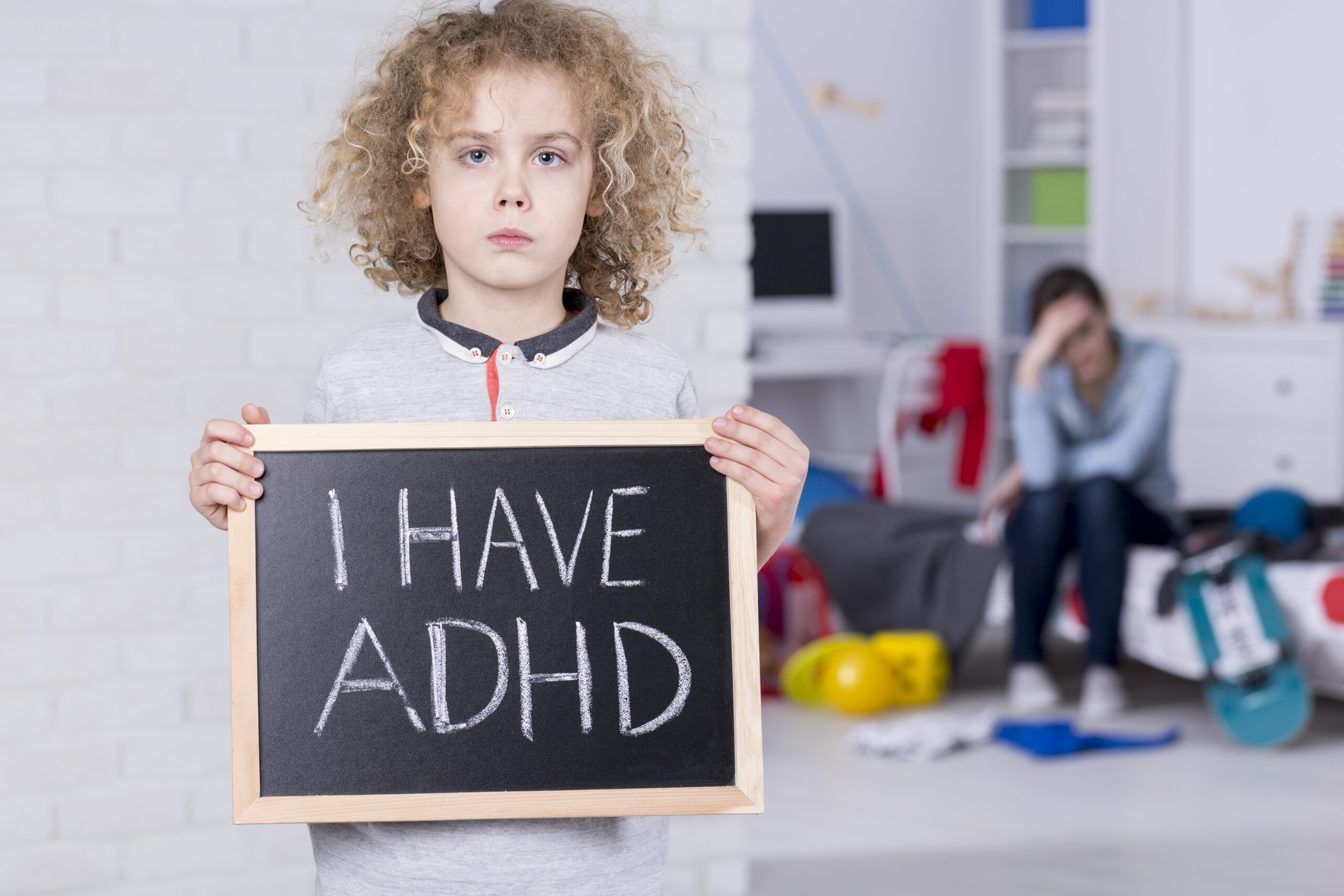
There’s a small group of humans who believe medication is a moral failure. Their worldview: If your brain needs help, you’re weak.
As John Mulaney (comedian) said, “Refusing help is like having a broken leg and saying, ‘I’ll let it heal at a weird angle.’”
ADHD medication doesn’t give superpowers. It gives access to learning, friendship, self-esteem, and functioning. Refusing treatment doesn’t build character. It builds shame.
Why I Sometimes Use Stimulants for Mood Disorders (Don’t Panic! There’s Science)
Some people look depressed or anxious because they simply cannot get anything done. Their world is a pile of half-finished tasks and guilt. Treat executive dysfunction → mood improves.
As Andrew Solomon (writer) said, “Depression is the flaw in love.” But sometimes, the flaw is a malfunctioning initiation system, not existential despair.
Is stimulant use for mood mainstream? No. Is it clinically useful in select cases? Yes14. Some people need a kick start.

The ADHD Boom Isn’t a Trend.
We’re not living through an ADHD fad. We’re living through an ADHD reckoning. A moment when the people who were ignored, mislabeled, punished, or told to “try harder” are finally being seen15.
Girls16. Women17. Quiet kids18. Burned-out adults19. Humans who thought their struggles were personal failures instead of neurodevelopmental realities20.
And as Carl Sagan (one of our best astronomers and science communicators) said, “Understanding is a kind of ecstasy.”21 ADHD isn’t a moral failing22. It isn’t optional whether it exists23. It’s a condition with real consequences24 and even better treatments25.
If you have questions, rage, curiosity, confusion, or opinions shaped by someone’s Facebook feed, leave a comment here. If you are against meds (something I addressed in an earlier post), and feel that “society is poisoning our children” (for which I hope you can justify your arguments with facts, not feelings), visit my website (www.boulderpsychiatryassociates.com), or come to my Boulder office where I always have home-baked treats. Bring your thoughts. Bring your arguments.
REFERENCES
- Barkley, R. A. (2015). Attention-Deficit Hyperactivity Disorder: A Handbook for Diagnosis and Treatment, 4th ed. Guilford Press. ↩
- Kessler, R. et al. (2006). The prevalence and correlates of adult ADHD in the U.S. American Journal of Psychiatry, 163(4), 716–723. ↩
- Adler, L. et al. (2017). Adult ADHD clinical presentation. Psychiatric Clinics of North America, 40(1), 29–45. ↩
- CDC. (2023). Stimulant dispensing trends. National Trends Report, 12–18. ↩
- Maenner, M. et al. (2023). Autism prevalence. MMWR, 72(2), 1–8. ↩
- Baron-Cohen, S. (2002). Autism and theory of mind. Nature Reviews Neuroscience, 3(4), 237–251. ↩
- Shuffrey, L. et al. (2022). Covid exposure and neurodevelopment. JAMA Pediatrics, 176(5), 460–468. ↩
- Quinn, P. & Madhoo, M. (2014). ADHD in women. Primary Care Companion for CNS Disorders, 16(3). ↩
- Dahl, V. (2022). Post-pandemic ADHD trends. BMJ Open, 12(7), e056789. ↩
- Ranta, K. (2021). ADHD excess diagnoses in women. Acta Psychiatrica Scandinavica, 143(6), 515–526. ↩
- Huskamp, H. et al. (2021). Telehealth ADHD prescribing. Health Affairs, 40(7), 1176–1183. ↩
- Hoza, B. (2007). Peer functioning in ADHD. Journal of Pediatric Psychology, 32(6), 655–663. ↩
- Sonuga-Barke, E. (2005). ADHD and educational outcomes. Psychological Bulletin, 131(4), 571–594. ↩
- Candy, M. et al. (2008). Psychostimulants for depression. Cochrane Review, CD006722. ↩
- Hinshaw, S. (2018). Another Kind of Madness. St. Martin’s Press. ↩
- Gershon, J. (2002). Meta-analysis of ADHD gender differences. Journal of Attention Disorders, 5(3), 143–154. ↩
- Nussbaum, N. (2012). ADHD in adult women. Current Psychiatry Reports, 14(5), 460–468. ↩
- Owens, J. (2020). Inattentive ADHD in children. Child Development, 91(2), 389–401. ↩
- Faraone, S. (2015). Adult ADHD impairment. World Psychiatry, 14(1), 84–93. ↩
- Barkley, R. (2012). Executive function deficits. Journal of Clinical Psychiatry, 73(1), 5–9. ↩
- Sagan, C. (1995). The Demon-Haunted World. Random House. ↩
- Corrigan, P. (2004). Mental-health stigma. The Lancet, 364(9437), 1021–1022. ↩
- American Academy of Pediatrics. (2019). ADHD treatment guidelines. Pediatrics, 144(4), e20192528. ↩
- Shaw, P. et al. (2012). Cortical development in ADHD. Biological Psychiatry, 72(3), 191–197. ↩
- Biederman, J. et al. (1999). Long-term outcomes of ADHD treatment. Pediatrics, 104(4), 1–10. ↩