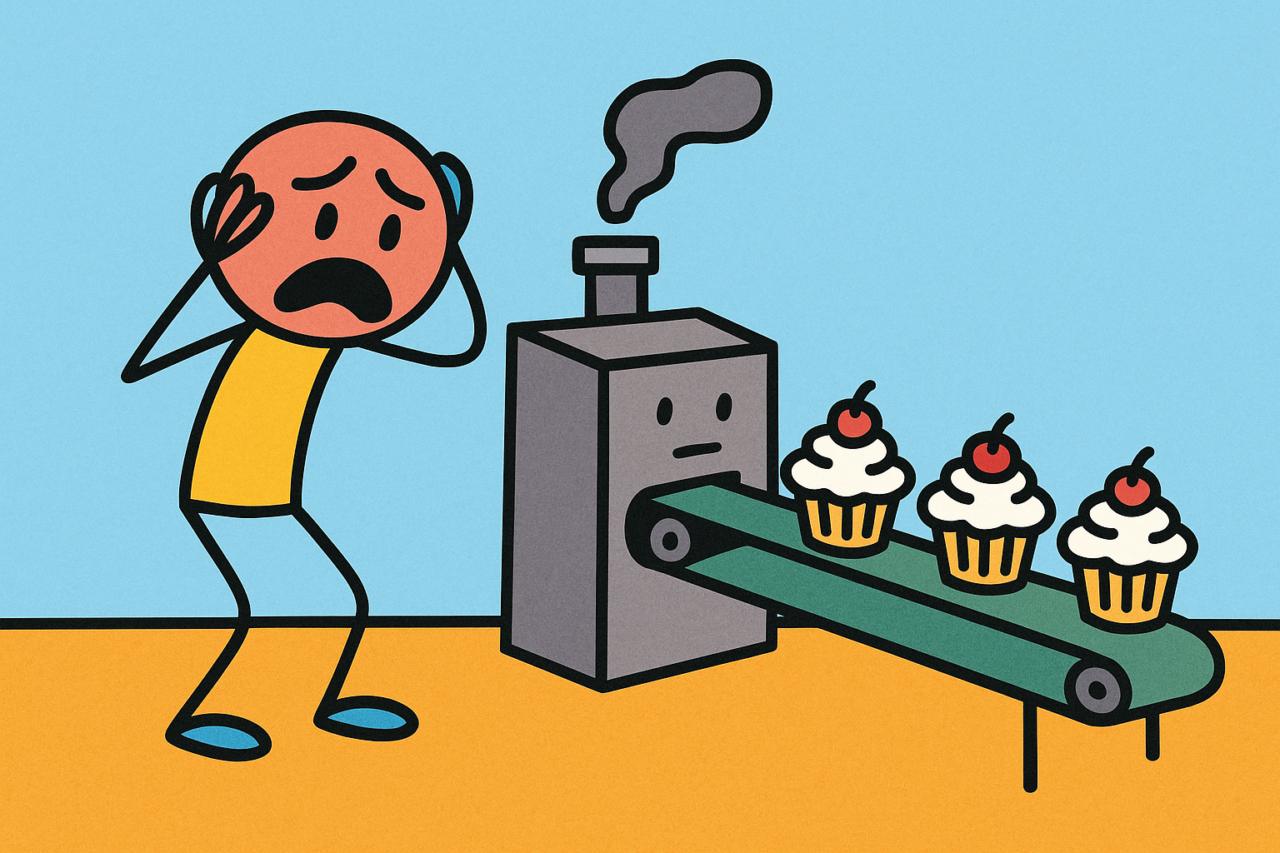
The Cupcake Conspiracy
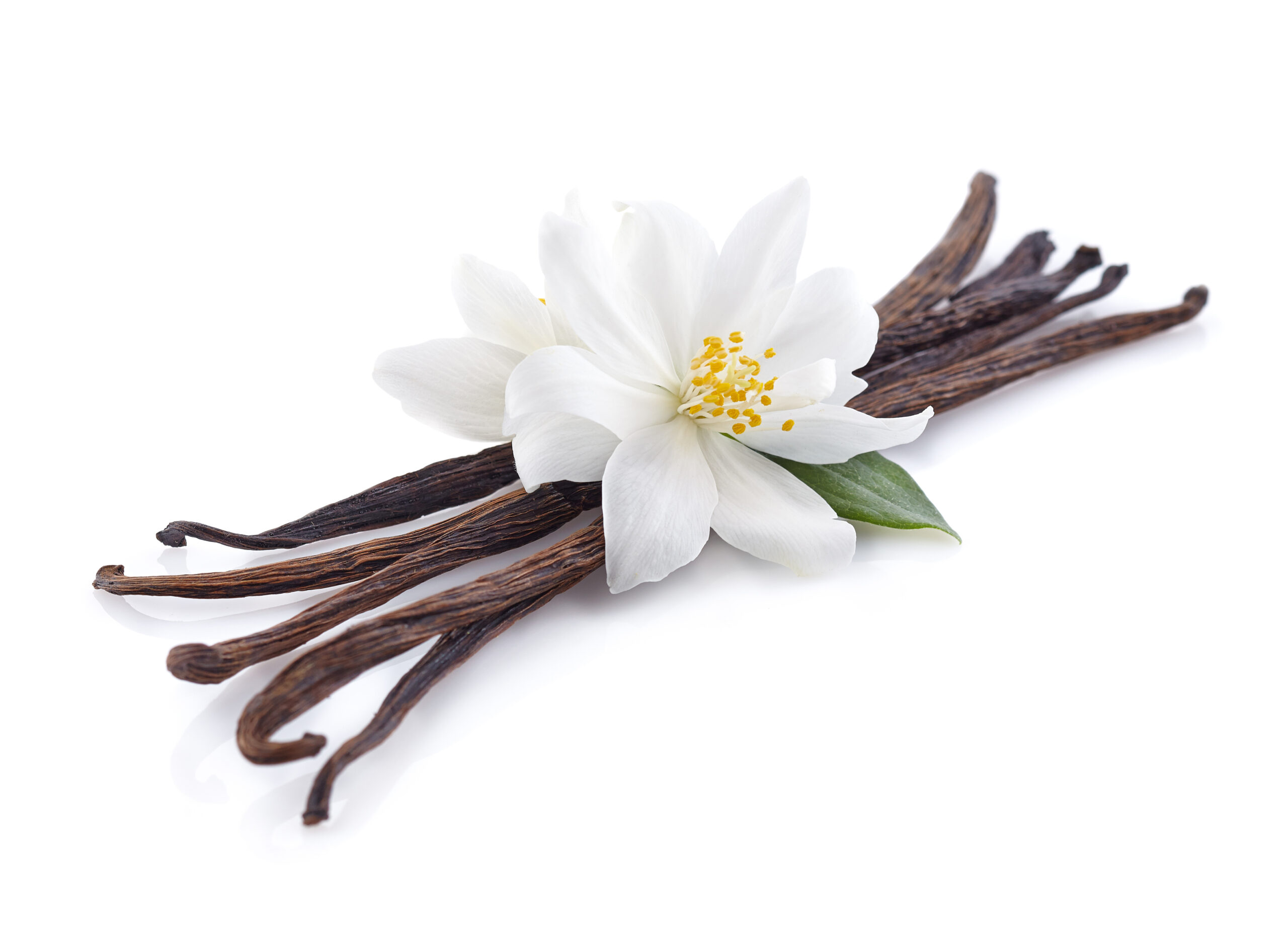
Vanilla is the default flavor of humanity. You do not have to like it; you were just born into a world where ice cream, candles, and basically anything labeled “original flavor” taste like it. But how did that happen? Who decided “normal” tastes like the inside of a cupcake?
It started with colonialism, like most weird global trends. Vanilla comes from Mexico, where the Totonac and Aztec people used it long before Europeans showed up. The Spanish brought it back to Europe in the 1500s, and everyone lost their minds. At first it was luxury stuff, mixed with chocolate and served to royalty. Then the French started farming it in Madagascar, and suddenly vanilla went from royal delicacy to grocery-store basic.1
By the 1700s, another frozen obsession was rising: ice cream. Ancient Persians mixed snow with grape juice, and the Chinese were freezing milk and rice before the Roman Empire was a thing.2 But ice cream as we know it, made from milk, sugar, cream, and eggs churned into something scoopable, took shape in Europe during the 1600s and 1700s.
When it crossed the Atlantic, Thomas Jefferson became America’s first ice-cream superfan. While serving as ambassador to France, he fell in love with it and brought back both a recipe and an ice-cream freezer.3 His handwritten recipe still exists in the Library of Congress. It is basically vanilla custard on steroids. Jefferson even served it at the White House, making frozen dairy officially patriotic. Benjamin Franklin was in Paris around the same time and would have been first in line if dessert came with electricity.
By the 1800s, as ice cream became a mass obsession, vanilla was the easiest flavor to produce. It was sweet but not too sweet, smelled like comfort, and offended no one. It was the edible equivalent of a beige sweater. Then scientists learned to make fake vanilla from petrochemicals, and that sealed the deal.4
Average number of real vanilla beans in a supermarket pint of ice cream: zero.
Percentage of the world’s vanilla grown in one country: 80.5
Years since anyone called vanilla “exotic”: roughly 400.
As American comedian John Mulaney, known for his sharp observational humor, once said, “Things that are good make me feel weird. Ice cream makes me think about death.” Vanilla may be safe, but safe rarely inspires poetry or stand-up.

Default Flavors of Planet Earth
Every culture has its own “vanilla,” the background taste you stop noticing because it is always there.
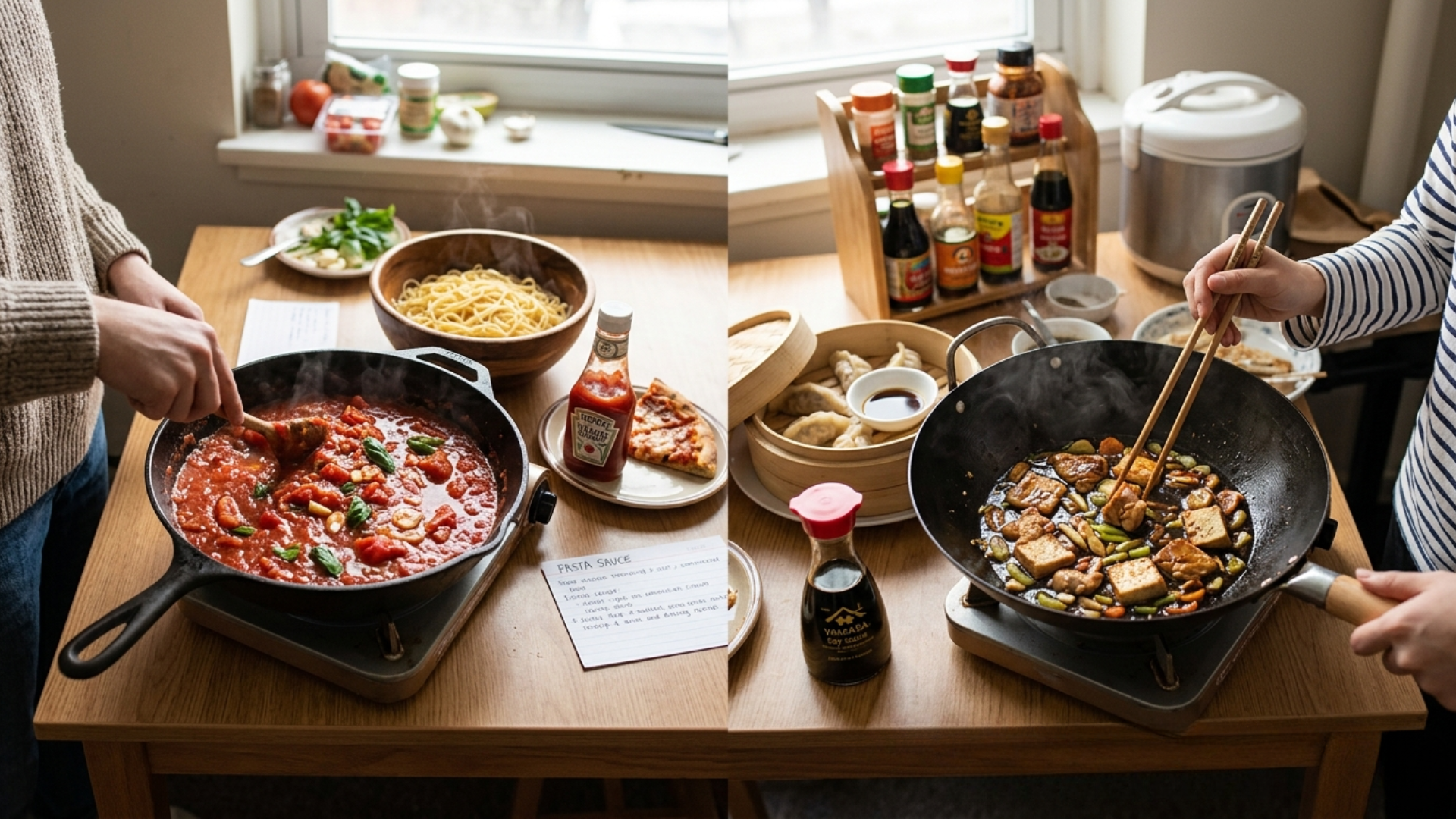
In the West, tomato is the neutral savory base: pizza, pasta, ketchup, the holy trinity of dorm food. In East Asia, soy is the quiet flavor running everything behind the scenes. Chocolate is the backup comfort code. Vanilla is safe; chocolate is therapy but delicious. Cinnamon equals nostalgia. Everything labeled “autumn” tastes like your grandmother’s kitchen. Coconut is the tropical stand-in for vanilla. Mint is what clean “tastes like.” We literally trained our mouths to equate burning with purity. Strawberry is the lab version of fruit.
Food chemists have identified more than ten thousand flavor compounds,7 but the industrial food system uses fewer than two hundred. Meanwhile, twenty-seven percent of Americans say vanilla is their favorite flavor,8 the taste equivalent of saying your favorite color is “light.”
Number of distinct artificial strawberry chemicals in mass-market yogurt: 47.
Number of times the average American eats something tomato-based per week: 19.
As American comedian and social critic George Carlin once said, “Think of how stupid the average person is, and realize half of them are stupider than that.” Statistically, those same people are probably ordering vanilla.
Chef Julia Child, the legendary American television cook and author of “Mastering the Art of French Cooking,” once said, “If you are afraid of butter, use cream.” It is a line that says everything about the Western love affair with comfort: rich, predictable, and just slightly excessive.
Because let’s be honest: “plain” is always a lie. Vanilla is just sugar wearing khakis.
Chocolate vs. Vanilla: The Health Paradox
Neither vanilla nor chocolate is exactly kale.
Vanilla sounds healthy. It is a plant, right? Technically, yes, but most of what you taste is synthetic vanillin made from lignin or petroleum.9 It is not harmful, just chemically boring. Real vanilla has mild antioxidant effects, but the stuff in your latte? That is the flavor of capitalism, not a rainforest.
Chocolate, however, is complicated. Pure dark cocoa, seventy percent or higher, is full of flavonoids that improve blood flow, mood, and brain function.10 But the average American chocolate bar is seventy percent sugar, ten percent dairy, and twenty percent wishful thinking.11 The Swiss eat about nine kilograms of chocolate a year, Americans about five, while most of Africa, where cocoa is grown, eats less than one.12
Number of known antioxidant compounds in dark chocolate: more than 700.
Percentage of U.S. chocolate labeled “dark” that contains milk powder anyway: 60.
American comedian Ali Wong, known for her fearless social commentary, once said, “You cannot have everything you want in life. You can either have a clean house or a satisfying life.” The same rule applies to chocolate: it is either healthy or it is fun, never both.
Chef Samin Nosrat, Iranian-American author of “Salt, Fat, Acid, Heat,” put it bluntly: “Fat, acid, salt, and heat make food taste amazing, and also slowly kill us.” Moderation is a concept invented by people who never met brownies.
So if we are scoring, vanilla is harmless, smells like happiness, and does nothing for your arteries; chocolate might help you live longer, but only if you hate joy.
A Not-So-Sweet Problem: The Global Flavor Crisis
The world’s supply of both vanilla and chocolate is wobbling on the edge of climate chaos.
Vanilla grows mainly in Madagascar from a single species, Vanilla planifolia. Every pod must be pollinated by hand because the bees that once did the work are extinct outside Mexico.13 Droughts, cyclones, and theft constantly threaten production, and vanilla farmers now guard their crops overnight like botanical bodyguards.
Chocolate is equally fragile. About seventy percent of cocoa comes from small farms in West Africa, where rising heat, deforestation, and exploitative labor systems make “fair trade” more marketing than movement.14 By 2050, many cocoa regions will simply be too hot to grow the beans.15 The average cocoa farmer is fifty-one years old, eighty-five percent of vanilla comes from one island, and half of all cocoa-suitable land could disappear within decades.16
Average daily income of a West African cocoa farmer: $1.10.
Estimated year cocoa becomes a luxury product: 2050.
American comedian Dave Chappelle, known for his sharp political storytelling, once said, “The worst thing to call somebody is crazy. It is dismissive.” Yet here we are, dismissing the farmers who grow our comfort crops as if they are background characters in our snack-time story.
The next time you unwrap a candy bar, remember: you might be holding an endangered species.
Global Comfort on Thin Ice
The problem is not just dessert; it is dinner. Comfort foods around the world are under siege.
Rice, the base for half the planet’s comfort dishes, is drowning in saltwater as sea levels rise.17 Wheat, the backbone of bread and pasta, buckles under heat waves and war. Coffee, humanity’s emotional support beverage, could lose sixty percent of its viable farmland in the next few decades.18 Spices are vanishing with erratic weather. Seafood is collapsing under acidification and overfishing.19
Chef Jacques Pépin, the French-American culinary legend and television teacher, once said, “You cannot cook well if you do not love the people for whom you are cooking.” These days, that love may need to extend to the farmers, the oceans, and the climate itself.
Half of all calories humans eat come from just three crops, wheat, rice, and corn,20 grown in fewer than a dozen varieties. The global food system now contributes roughly a third of all greenhouse-gas emissions.21
Number of edible plant species humans have ever cultivated: over 30,000.
Number that supply 90 percent of our calories: 12.
Comfort food, it turns out, depends on a very uncomfortable planet.
The Last Supper of Comfort
Are we entering the final course of our comfort foods? Probably. The same global trade systems that made chocolate and vanilla possible, colonialism, mass farming, and profit-first agriculture, are now destroying them.22
Future generations may inherit a menu of synthetic nostalgia, lab-grown substitutes that taste like memory but never saw soil. Companies are already 3D-printing chocolate and fermenting “milk” in stainless-steel vats.23
The synthetic flavor industry already exceeds thirty-six billion dollars annually,24 and alternative-protein foods are projected to reach four hundred fifty billion by 2035.25
Number of ingredients in a single “natural flavor” listed on a soda label: up to 100.
Percentage of global consumers who think “natural flavor” means fruit: 77.
Chef Ferran Adrià, the Spanish innovator of molecular gastronomy, once said, “Creativity means not copying.” Unfortunately, the future of food might mean doing exactly that.
Comedian Wanda Sykes, known for her biting social and political humor, put it best: “If you feel like you have control of your life, you are probably not paying attention.”
The Business of Comfort: Selling Feelings for Profit
Here is the twist: corporations are not just selling food; they are selling therapy. Nestlé, PepsiCo, Kellogg’s, Mondelez, and Unilever invest billions in engineering comfort.26 Food scientists design products to hit the “bliss point,” the perfect mix of salt, sugar, and fat that activates dopamine like a slot machine.27
When they say “you cannot eat just one,” that is not a slogan; it is a laboratory finding.28 Major food companies spend over thirty billion dollars annually on marketing,29 while nearly three-quarters of U.S. adults eat ultra-processed foods every day.30
Average number of ads a U.S. child sees for junk food each year: 4,000.
Percent of the food industry’s R&D budget spent on nutrition: less than 2.
Chef Massimo Bottura, the Italian culinary artist behind Osteria Francescana, once said, “Cooking is a call to act.” Corporations treat it like a call to cash out.
American comedian Bo Burnham, known for blending satire and existential dread, captured it perfectly: “Welcome to the internet, have a look around—anything that brain of yours can think of can be found.” Replace “internet” with “supermarket,” and the logic still holds.
Health-wise, we are paying the price. Obesity, diabetes, and depression have all risen in sync with junk-food consumption.31 Companies know our stress levels drive their profits. They have monetized loneliness and turned emotional eating into an economy.
As Mexican-American comedian George Lopez once said, “In America, we like our freedom like we like our fast food—cheap and convenient.” So yes, it is about the dollar. Always has been. They did not invent comfort food; they just figured out how to patent our cravings.
Comfort Food: Flavor With Feelings
If vanilla is the taste of normal, comfort food is what we reach for when normal breaks down. It is not nutrition; it is emotional damage control you can eat.
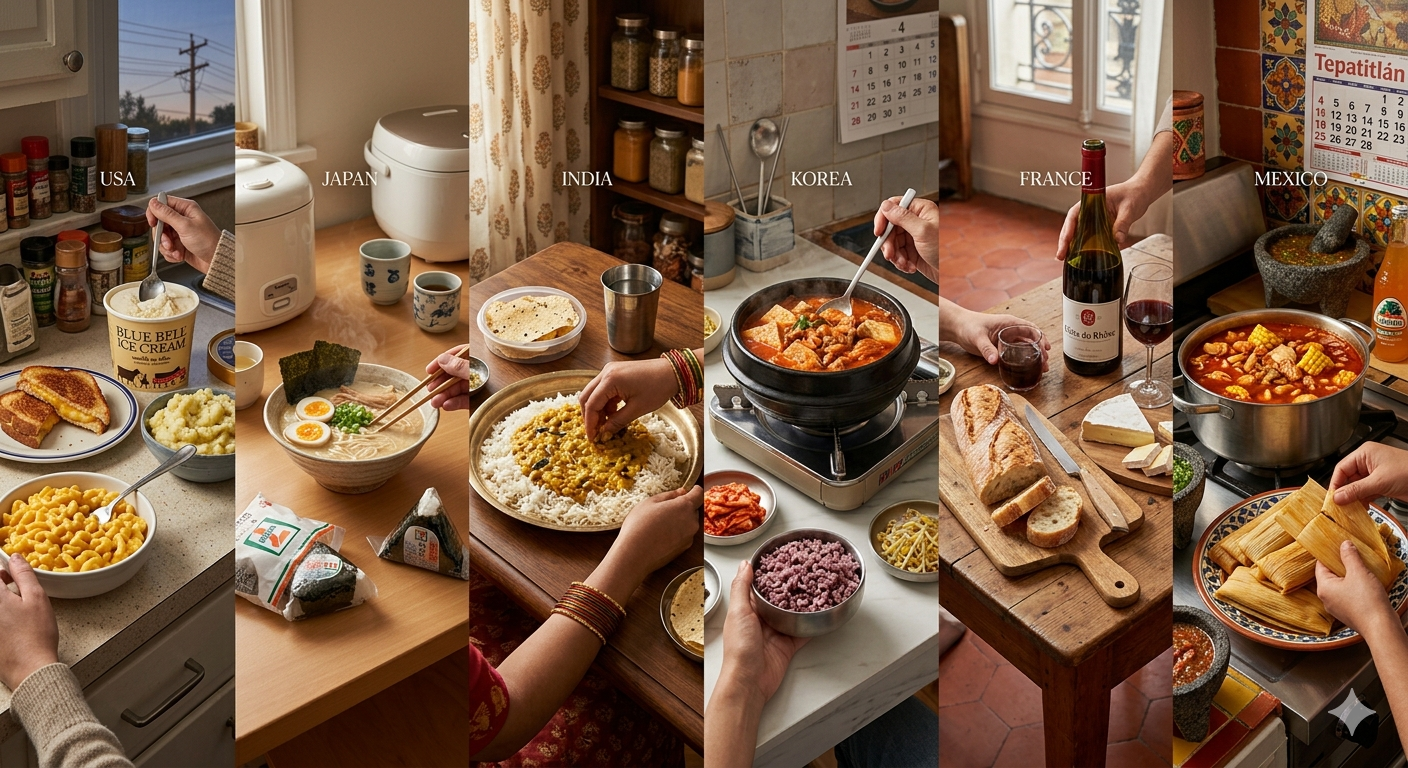
In the United States, it is mac and cheese, mashed potatoes, grilled cheese, and ice cream straight from the tub. In Japan, it is ramen or onigiri. In India, dal and rice. In Korea, kimchi stew. In France, bread and wine. In Mexico, tamales and pozole.
Chef Anthony Bourdain, the American writer and traveler, once said, “Food is everything we are. It is history, it is family.” That might be the problem. What counts as comfort depends on what your childhood smelled like. In America, that means dairy and sugar. Elsewhere, it means spice, rice, and broth. But the chemistry is universal: carbs raise serotonin, fat hits dopamine, and for five minutes, everything feels okay.32
Average number of comfort-food cravings during a breakup: six per day.
Average time before regret sets in: eleven minutes.
Comfort food is the edible version of a weighted blanket. It is not good for you, but it feels like it is, and sometimes that is enough.
And as Julia Child reminded us near the end of her long, buttery life, “People who love to eat are always the best people.” Maybe the real comfort is not the food at all—it is the shared act of tasting something that still reminds us what being human feels like.
Epilogue: The Future of Flavor
So the next time you order a vanilla latte or grab a dark-chocolate bar for your health, remember—you are not indulging. You are participating in a centuries-long experiment in colonialism, chemistry, and comfort.
Vanilla made the world safe. Chocolate made it sweet.
Comfort food keeps us pretending it still is.
And someday soon, pretending might be all we can afford.
If you are in Boulder, please stop by. I don’t have ice cream, but I have plenty of baked goodness to share!
References
- Sophie D. Coe and Michael D. Coe, The True History of Chocolate (Thames & Hudson, 2013), 52–58. ↩
- Harold McGee, On Food and Cooking: The Science and Lore of the Kitchen (Scribner, 2004), 553. ↩
- Library of Congress, “Thomas Jefferson’s Vanilla Ice Cream Recipe,” Manuscript Division, 1780s. ↩
- S. Havkin-Frenkel, Vanilla: The Cultural History of the World’s Favorite Flavor and Fragrance (CRC Press, 2018). ↩
- FAO Food Outlook Report, “Vanilla Market Update,” 2022. ↩
- Bloomberg News, “The Wild Price Swings of Vanilla,” July 2021.
- International Organization of the Flavor Industry, “Global Flavor Compounds Study,” 2020. ↩
- YouGov Poll, “America’s Favorite Ice Cream Flavor,” 2023. ↩
- L. C. Rottman et al., “Production of Vanillin,” Journal of Agricultural and Food Chemistry 67, no. 9 (2019): 2571–78. ↩
- M. Grassi et al., “Cocoa Flavonoids and Vascular Health,” Nutrients 11, no. 6 (2019): 1370–79. ↩
- USDA Food Database, “Composition of Chocolate Products,” 2024. ↩
- Statista, “Global Chocolate Consumption per Capita,” 2023. ↩
- National Geographic, “Vanilla’s Fragile Empire,” June 2020. ↩
- World Cocoa Foundation, “Cocoa Market and Sustainability Report,” 2021. ↩
- Intergovernmental Panel on Climate Change (IPCC), AR6: Impacts on Agriculture, 2022. ↩
- Nature Climate Change, “Future Suitability of Cocoa Regions,” 2017. ↩
- FAO, “Global Rice Production and Sea-Level Rise,” 2020. ↩
- World Coffee Research Institute, “Climate Impact Report,” 2022. ↩
- United Nations World Food Programme, “Fisheries and Climate Vulnerability,” 2023. ↩
- FAO, “Global Food Security and Crop Diversity,” 2021. ↩
- Crippa et al., “Food Systems Are Responsible for a Third of Global Greenhouse Gas Emissions,” Nature Food 2 (2021): 198–209. ↩
- Raj Patel, Stuffed and Starved: The Hidden Battle for the World Food System (Portobello Books, 2012). ↩
- The Economist, “Lab-Grown Chocolate Is Coming,” February 2024. ↩
- Grand View Research, “Synthetic Flavors Market Report,” 2024. ↩
- Boston Consulting Group, “Food for Thought: Alternative Protein Projections,” 2023. ↩
- Nestlé Annual Report, “R&D on Consumer Craving Patterns,” 2022. ↩
- Howard Moskowitz, interview in The New York Times Magazine, February 2013. ↩
- Michael Moss, Salt Sugar Fat: How the Food Giants Hooked Us (Random House, 2013). ↩
- AdAge, “Global Food and Beverage Advertising Trends,” 2023. ↩
- Centers for Disease Control and Prevention (CDC), “Ultra-Processed Food Consumption Among U.S. Adults,” 2022. ↩
- World Health Organization (WHO), “Global Obesity and Non-Communicable Disease Trends,” 2023. ↩
- J. Blundell et al., “Carbohydrate Intake and Serotonin Modulation,” Appetite 154 (2020): 104–12. ↩