

I’m not writing this as an outsider who just discovered the internet and decided to have opinions. I’m writing this as someone who actually joined a garin, which is a small group of young people who commit to building a shared life in Israel. Not as a vibe. As a real, inconvenient life decision.
I didn’t just repost slogans. I moved there. I lived there for years. We picked cucumbers in brutal heat while arguing about socialism, labor, and whether a just society could exist without slowly turning into the exact thing it claimed to oppose. These were not cute dorm-room debates. These were arguments happening with sore backs, dirty hands, and the constant awareness that ideas only matter if someone is willing to sweat for them.
We weren’t cosplaying history. We were inside it. And yes, we felt called. Not in a mystical sense. In a moral one. Like gravity. You don’t have to agree with it. It still works. After the Holocaust, after centuries of expulsions, pogroms, ghettos, and massacres, the idea that Jews might want a place where they couldn’t just be erased didn’t feel like ideology. It felt like physics1. Not destiny. Not triumph. Gravity.
That context matters. Without it, this entire conversation collapses into people yelling labels at each other online. As George Carlin (American stand-up comedian and social critic) once said, “History is just one damn thing after another.” Which is funny. And also, a warning label.
What a garin is and why it matters
In modern Hebrew, garin literally means seed. In the Zionist youth movement context, a garin was a small group of people who committed to building a future community in Israel in a practical, physical way. Not a slogan. Not a summer camp. A decision to show up somewhere and take responsibility for it. For us, this was true Zionism.
Here’s what made a garin different:
- It was intentionally small: Small enough that you couldn’t disappear. If you didn’t show up, people noticed. Accountability wasn’t theoretical.
- It valued action over ideological purity: You didn’t win by having the cleanest beliefs. You won by working, arguing, fixing mistakes, and continuing anyway.
- It assumed imperfection: A seed doesn’t know what it’s going to become. It was an experiment run by humans who fully expected to screw things up.
- It rejected passivity: Waiting politely for history to stop murdering Jews had not gone well. The garin assumed agency was required.
- It was future-oriented without being authoritarian: No loyalty oaths. No charismatic leader. We had thinkers we argued about, not people we obeyed.
This matters because garin culture was basically the opposite of cult culture. It said: We don’t know exactly what this will become, but we’re not going to sit around becoming nothing.
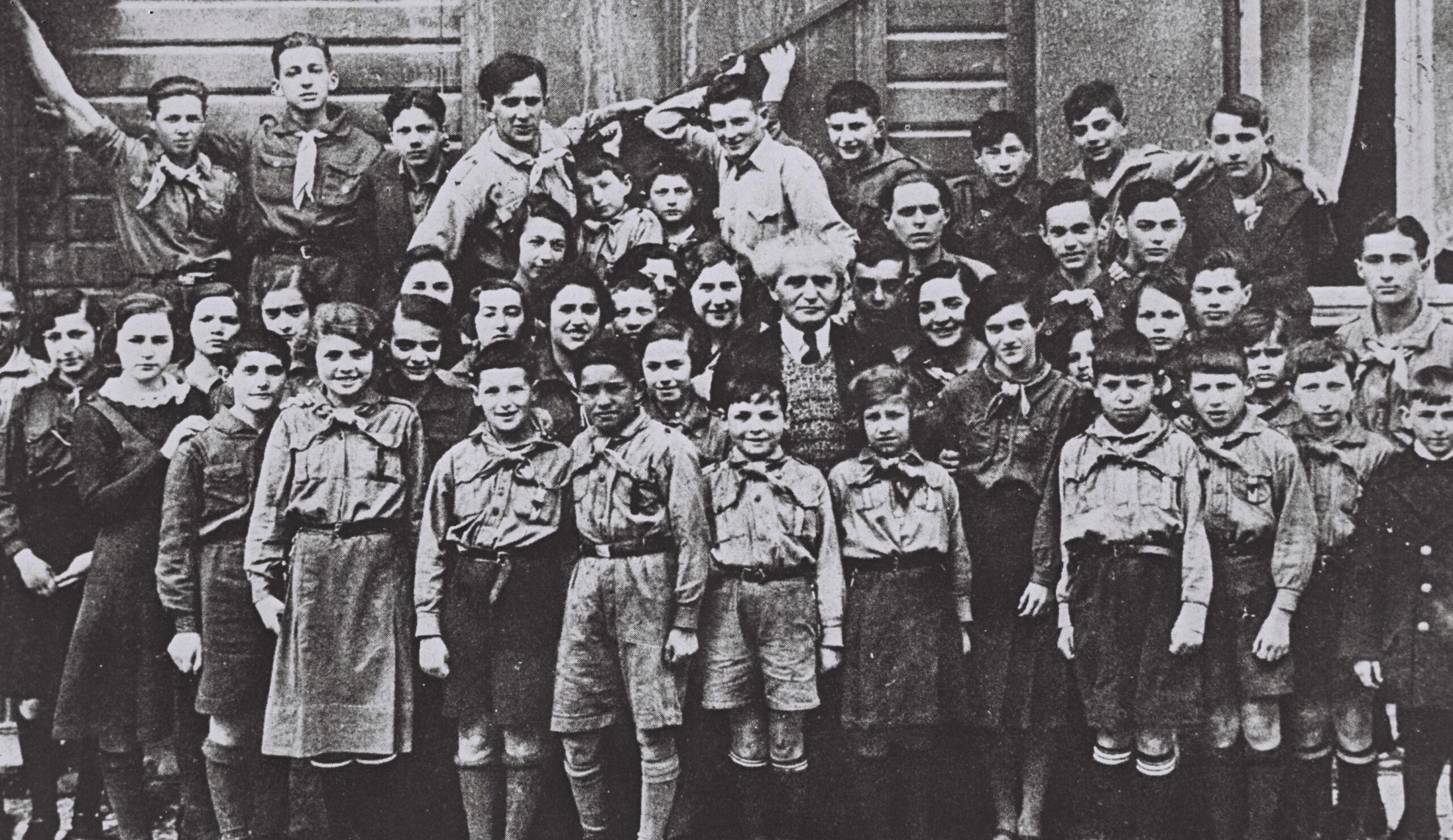
What joining a garin actually meant
From the inside, this wasn’t indoctrination. It was work. Belief wasn’t enough; the fields still needed tending. Idealism without labor was treated like a punchline. Debate was mandatory. Herzl, Ahad Ha’am, Labor Zionists, Cultural Zionists—these weren’t sacred texts. They were arguments2. Silence was more suspicious than disagreement.
The garin was a structure, not a personality replacement. “Seed” meant temporary; you were supposed to grow up and take responsibility somewhere else. Sacrifice was chosen, but no one claimed suffering made us morally superior. People came from all over the world, including Muslims. Ethics mattered. People did not. Exit was real; people left and nobody was punished for it. That alone separates movements from cults.
As Theodor Herzl (founder of modern political Zionism) wrote, “If you will it, it is no dream”3. And as Hillel the Elder (ancient Jewish sage) said, “If not now, when? If not you, who?”4 Notice how neither of those say, “If you obey.”
Why it can feel cult-adjacent later
Here’s the uncomfortable part: intense idealism can feel culty later even when it wasn’t. Strong bonding happens fast. Your identity gets shaped. Sacrifice gets meaning attached to it. Future-orientation can drift into fantasy. Humor disappears. When stakes feel existential, jokes vanish. As Mel Brooks (American filmmaker and Holocaust survivor) put it, “Tragedy is when I cut my finger. Comedy is when you fall into an open sewer and die.” When humor fully disappears, something’s wrong5. Cults exploit these dynamics on purpose; movements stumble into them by accident.

Commitment versus control
Commitment lets you choose; control tells you there is no choice. Commitment survives exit; control punishes questioning. A cult says, If you leave, something is wrong with you. A movement, especially a garin, says, You chose differently. That difference is everything6. As Maria Bamford (American stand-up comedian) joked, “I feel like everyone I know is trapped in a cult, and the cult is called their own personality.”
Where I am now
I used to feel proud of my Zionism. Not loud pride. Quiet, serious pride. Now I hesitate to say the word at all. People don’t hear Herzl or Ahad Ha’am. They hear bombs, rubble, dead civilians, and a government speaking in absolutes. And I freeze. This isn’t confusion about values. It’s grief. As Jon Stewart (television host and political satirist) said, “If you don’t stick to your values when they’re being tested, they’re not values. They’re hobbies.”
Antisemitism, criticism, and a broken conversation
Antisemitism is real and rising. Jean-Paul Sartre (French philosopher) explained that antisemitism is about the antisemite’s need for a target, not about Jews7. And something about Zionism as practiced by those in power has changed. Self-critique shrank. Dissent becomes betrayal. “Survival” becomes a word that covers everything.
I listen to IHIP News. I admire the two women who host it (Jennifer Welch and Angie “Pumps” Sullivan, American political commentators). They’re smart and morally serious. But total anti-Zionism and obsessive fixation on AIPAC turns critique into something absolutist. And that hurts. Agreeing with someone while feeling your chest crack open isn’t hypocrisy. It’s grief. As Hasan Piker (political commentator) has said, “When you strip people of their humanity, it becomes easier to justify anything done to them.”

When criticism is grief, not hatred
I don’t recognize the moral language coming from Israel’s leadership. That doesn’t make them not Jewish. It makes them Jews exercising power in ways that feel morally unrecognizable to me. Hannah Arendt (German-Jewish political theorist) warned that when identity fuses with state power, conscience collapses into loyalty8.
And as Kurt Vonnegut, Jr. (American novelist and satirist) wrote: “Hello babies. Welcome to Earth… On the outside, babies, you’ve got about a hundred years here. Don’t let anybody tell you there isn’t enough time.” Moral urgency isn’t hysteria. It’s responsibility under a deadline.
Genocide, memory, and moral inheritance
Genocide is a legal category defined by intent to destroy a group in whole or in part9. That definition exists because the Holocaust happened. I grew up with that inheritance: mass death is never abstract, survival doesn’t cancel responsibility, and “we had no choice” is the beginning of moral scrutiny, not the end.
When Dwight D. Eisenhower (U.S. Army general and future president) toured Nazi concentration camps in 1945, he insisted on documentation because he knew someone would eventually say it never happened10. Denial isn’t ignorance. It’s discomfort weaponized. As Richard Pryor (American stand-up comedian) said, “You don’t get justice by looking away.”
Movements fail when they stop correcting themselves. Tony Judt (British historian) warned that the real danger was internal moral erosion11. That doesn’t make early Zionism naive. It makes it unfinished. As Rob Reiner (American filmmaker) said, democracy doesn’t run itself. Moral movements don’t either.
Invitation
If you’re reading this thinking “yes” or “absolutely not,” I’d like to hear from you. Leave a comment. Visit my website. And if you’re in Boulder, Colorado, stop by my office and say hello. This isn’t meant to be consumed silently. It’s meant to be argued with. Conversation is the point.
FOOTNOTES
- Yehuda Bauer, Rethinking the Holocaust (New Haven: Yale University Press, 2001), pp. 33–52, 221–236. ↩
- Ahad Ha’am, Selected Essays (Philadelphia: Jewish Publication Society, 1912), pp. 3–28, 145–162. ↩
- Theodor Herzl, The Jewish State (New York: Dover, 1988), pp. 1–24, 92–103. ↩
- Hillel the Elder, Pirkei Avot (Ethics of the Fathers), 1:14; The Mishnah (Oxford: Oxford University Press, 1933), p. 457. ↩
- Mel Brooks, All About Me!: My Remarkable Life in Show Business (New York: Twelve, 2010), pp. 89–91, 162–165. ↩
- Margaret Thaler Singer, Cults in Our Midst (San Francisco: Jossey-Bass, 2003), pp. 8–32, 63–88. ↩
- Jean-Paul Sartre, Anti-Semite and Jew (New York: Schocken Books, 1948), pp. 8–27, 53–69. ↩
- Hannah Arendt, The Origins of Totalitarianism (New York: Harcourt, Brace & Company, 1951), pp. 460–479, 623–630. ↩
- United Nations, Convention on the Prevention and Punishment of the Crime of Genocide (1948), Article II. ↩
- Dwight D. Eisenhower, The Papers of Dwight David Eisenhower, vol. 7 (Baltimore: Johns Hopkins University Press, 1978), pp. 2230–2234. ↩
- Tony Judt, Reappraisals: Reflections on the Forgotten Twentieth Century (New York: Penguin Press, 2008), pp. 364–381. ↩