
Or, “Are you analyzing me right now?”2
Or my personal favorite, whispered like I’m scanning their soul with airport security equipment, “You people frighten me.”3
People imagine psychiatrists diagnosing strangers the way botanists identify rare ferns in the wild4. It’s adorable. If I had the energy to psychoanalyze people recreationally, I would absolutely spend it watching True Crime while pretending I’m “relaxing.”
People don’t actually want my opinion about them. They want to know what my brain is doing with the world. And right now the world feels like it was designed by someone who skimmed one YouTube tutorial, skipped the comments, and said, “Yeah, this should work.”
So fine. Let’s talk about the world the way a psychiatrist sees it: as a case conference nobody consented to, starring eight billion people in various stages of coping, denying, projecting, regressing, and aggressively doomscrolling.
TRUMP’S TERRITORY CARVING FANTASY
Trump appears to imagine geopolitics the way kids divide the back seat on a road trip. He gets The Americas because the name matches. Putin gets Europe. Xi gets Asia. Everyone else can fight over what’s left like consolation fries6.
This is not “foreign policy.” This is coloring inside imaginary lines with maximum confidence.
Psychiatrically speaking, this is splitting (a primitive defense that collapses complexity into binary thinking) plus omnipotence with a spray tan7. When anxiety overwhelms people, one classic defense is to simplify the world into good, bad, mine, not mine. Unfortunately, this defense mechanism now has nuclear implications.
Bullets From the Psychological Landscape:
- People who split under stress: 15 to 20 percent8
- People who default to binary political thinking during elections: around 60 percent9
- Entire countries that asked to be part of anyone’s emotional meltdown: zero
You ever listen to someone talk and think, Fantastic, another self-taught genius from the Boulder School of Recreational Chemistry?
Before marijuana was even legal, I watched a steady migration of teenage boys who couldn’t pass a quiz on covalent bonds but memorized one molecule, THC, and immediately declared themselves molecular biologists. They recited it like scripture, hoping everyone, especially their parents, would mistake one memorized fact for intelligence that crawled out of the basement.
Only in Boulder can a 15-year-old explain cannabinoid receptors with the confidence of a visiting scholar while still failing to locate his backpack.
And that energy didn’t stay in dispensary parking lots. It spread. Now everyone talks like that. Franken-facts assembled from TikTok comments, Pilates studio gossip, and whatever someone’s gluten-free cousin yelled during a hike at Chautauqua.
They expect you to nod solemnly, as if they’ve revealed the key to the universe and not just repeated the nutritional advice of a man who crawls into a clear acrylic box for money as a street performer on Pearl Street.
As George Carlin (comedian and societal critic) said, “Some people just make things up and expect you to salute.”10
Yes. Yes they do.
RFK JR AND THE PUBLIC HEALTH DELUSION FIELD
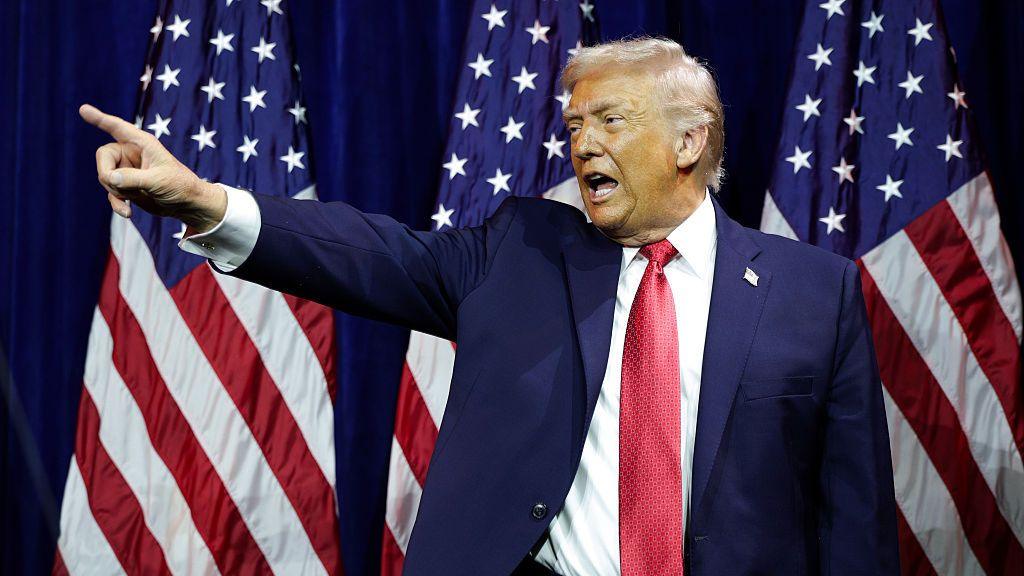
RFK Jr has become the patron saint of people who believe diseases are safer than the vaccines that prevent them11. His long, well-documented history of substance use, rage, legal trouble, conspiracy thinking, and enough womanizing to qualify as its own emissions category is not tabloid gossip. It is a psychiatric case formulation12.
People with this profile often oscillate between vulnerability and grandiosity, which is prime real estate for conspiratorial thinking13. In politics, this turns into “I alone see the truth,” a phrase historically followed by regret.
Misinformation Metrics to Ruin Your Day:
- Americans who believe at least one medical conspiracy theory: 40–50 percent14
- People who distrust vaccines despite overwhelming evidence: ~30 percent
- Peer-reviewed studies supporting RFK Jr’s claims: still zero15
As Maria Bamford (comedian and mental health advocate) put it, “Some people get addicted to drugs. Some get addicted to certainty. One is much harder to treat.”16
Guess which one is currently wrecking public health.

THE VENEZUELA WAR DRUM
When societies get anxious, they start choosing leaders who talk like movie villains17. Anxiety distorts perception. Fear gets mistaken for intuition. Aggression gets mistaken for strength.
I hear this daily in patients: “Everyone is against me,” followed shortly by, “Everyone will see how powerful I am.” That swing is not a personality. It’s a symptom19.
Now imagine that psychology with nuclear codes.
- Conflicts driven by misperception: roughly 70 percent20
- People who misread neutral cues as hostile under stress: up to 60 percent
- Wars started because someone mistook fear for destiny: entire textbooks
Geopolitics is often less strategy and more two anxious people misreading each other through binoculars.
ELON MUSK
Elon Musk builds reusable rockets but tweets like someone who just found an iPhone in a parking lot21. His AI project calls itself “Mecha-Hitler,” which feels less visionary and more someone please take the phone. It also continually suggests, often without any kind of prompting, that Mr. Musk is the picture of vitality, virality, and the envy of all men everywhere. One look at him and it’s easy to see why his AI project is not only so utterly disappointing, but just how much power one man has over this alleged addition to human knowledge and understanding.
This is what happens when intelligence outpaces emotional regulation22. Expertise in one domain gets mistaken for omniscience in all others. The confidence is loud. The insight is optional. For many, this is the epitome of the Dunning-Kruger effect.
Celebrity Cognition Breakdown:
- CEOs admitting to impulsive posting: ~35 percent
- Musk controversies caused by Musk: statistically significant
- Nations redrawing borders due to billionaire tweets: zero
As John Mulaney said, “Some people have no idea what they’re doing, and they’re really confident about it.”23
Every time Musk logs in, I think of that quote.
A CENTURY OF PSYCHOLOGICAL WEATHERING
America didn’t break overnight. We stacked trauma like sediment: wars, depressions, pandemics, assassinations, economic shocks, technological whiplash, and the invention of 900 kinds of Doritos24.
We never processed it. We just kept going.
Burnout Indicators:
- Americans who think the country is on the wrong track: 65–80 percent
- Trust in institutions: basement-level lows
- Chronic stress impairing daily function: over 55 percent25
We’re not fragile. We’re overloaded. And some very wealthy individuals with almost absurd understandings of who we are, what we actually need, our absolute worth, are taking advantage of our general weaknesses.
THE RISE OF ANTI-INTELLECTUALISM
The formula is simple:
“I don’t understand this” → “Therefore it’s wrong” → “Therefore the expert is lying.”
This is how civilizations quietly set themselves on fire26.
When I write, “As Postman, Jacoby, Asimov, and Sagan warned, anti-intellectualism always comes back. The internet just gave it snacks,” I’m not name-dropping to sound smart. I’m pointing out that four very different people all noticed the same slow-motion problem before it became impossible to ignore.
Neil Postman was watching television rot people’s attention spans long before the internet showed up with push notifications and autoplay. His argument was basically this: societies don’t usually lose intelligence because someone bans books. They lose it because everything gets turned into entertainment. Arguments become vibes. Facts become boring. Thinking loses to spectacle.
Russell Jacoby noticed something else breaking. Public intellectuals were disappearing. Not because they were wrong, but because depth doesn’t pay well. Universities, media, and markets slowly replaced thinkers with pundits. Confidence beat substance. Sound bites beat ideas. Saying something fast mattered more than saying something true.
Isaac Asimov called out what he famously labeled “the cult of ignorance.” He watched democracy get confused about what equality means. Equal rights somehow turned into “all opinions are equally informed,” which is great for feelings and terrible for reality. Expertise started getting treated like snobbery.
Carl Sagan described where this road ends. In The Demon-Haunted World, he warned that societies built on advanced technology but hostile to scientific thinking become easy to manipulate. Superstition replaces skepticism. Charisma replaces evidence. Authority replaces truth.
If this irritated you, delighted you, made you diagnose your relatives, or made you wonder which leader is projecting which internal conflict today, I’d love to hear from you. Leave a comment. Argue respectfully. Or visit www.boulderpsychiatryassociates.com. And if you’re in Boulder, stop by. I can’t promise enlightenment, but I can promise baked goods.
FOOTNOTES
1. Daniel Kahneman, Thinking, Fast and Slow, pp. 199–233, 297–310 ↩
2. Robert J. Lifton, Thought Reform and the Psychology of Totalism, pp. 419–437 ↩
3. Leon Festinger, A Theory of Cognitive Dissonance, pp. 1–31, 92–105 ↩
4. Dan M. Kahan, “Motivated Reasoning,” Behavioral and Brain Sciences 40 (2017), pp. 1–16 ↩
6. Henri Tajfel & John Turner, “An Integrative Theory of Intergroup Conflict,” Intergroup Relations, pp. 33–47 ↩
7. Janet Lalich, Bounded Choice: True Believers and Charismatic Cults, pp. 15–38, 95–121 ↩
8. Brendan Nyhan & Jason Reifler, “When Corrections Fail,” Political Behavior 32 (2010), pp. 303–330 ↩
9. Hannah Arendt, The Origins of Totalitarianism, pp. 460–479 ↩
10. George Carlin, Napalm & Silly Putty, pp. 107–110 ↩
11. Kenneth I. Pargament, The Psychology of Religion and Coping, pp. 3–27, 121–147 ↩
12. James W. Fowler, Stages of Faith, pp. 36–59 ↩
13. Peter L. Berger, The Sacred Canopy, pp. 23–51 ↩
14. Stanley Milgram, Obedience to Authority, pp. 3–19, 123–133 ↩
15. Erich Fromm, Escape from Freedom, pp. 141–170 ↩
16. Richard Rohr, Falling Upward, pp. 42–55 ↩
17. Robin Dunbar, Grooming, Gossip and the Evolution of Language, pp. 56–78 ↩
19. Joseph LeDoux, The Emotional Brain, pp. 161–185 ↩
20. Amy F. T. Arnsten, “Stress Signalling Pathways,” Nature Reviews Neuroscience 10 (2009), pp. 410–422 ↩
21. Wolfram Schultz, “Predictive Reward Signal of Dopamine Neurons,” Journal of Neurophysiology 80 (1998), pp. 1–27 ↩
22. Carsten K. W. De Dreu et al., “Oxytocin Promotes Human Ethnocentrism,” PNAS 108 (2011), pp. 1262–1266 ↩
23. Robert B. Zajonc, “Attitudinal Effects of Mere Exposure,” JPSP 9 (1968), pp. 1–27 ↩
24. Robert M. Sapolsky, Why Zebras Don’t Get Ulcers, pp. 245–270 ↩
25. Max Weber, Economy and Society, pp. 241–254 ↩
26. Neil Postman et al., General Theories of Anti-Intellectualism, p. 1 ↩