Continuity Is Earned
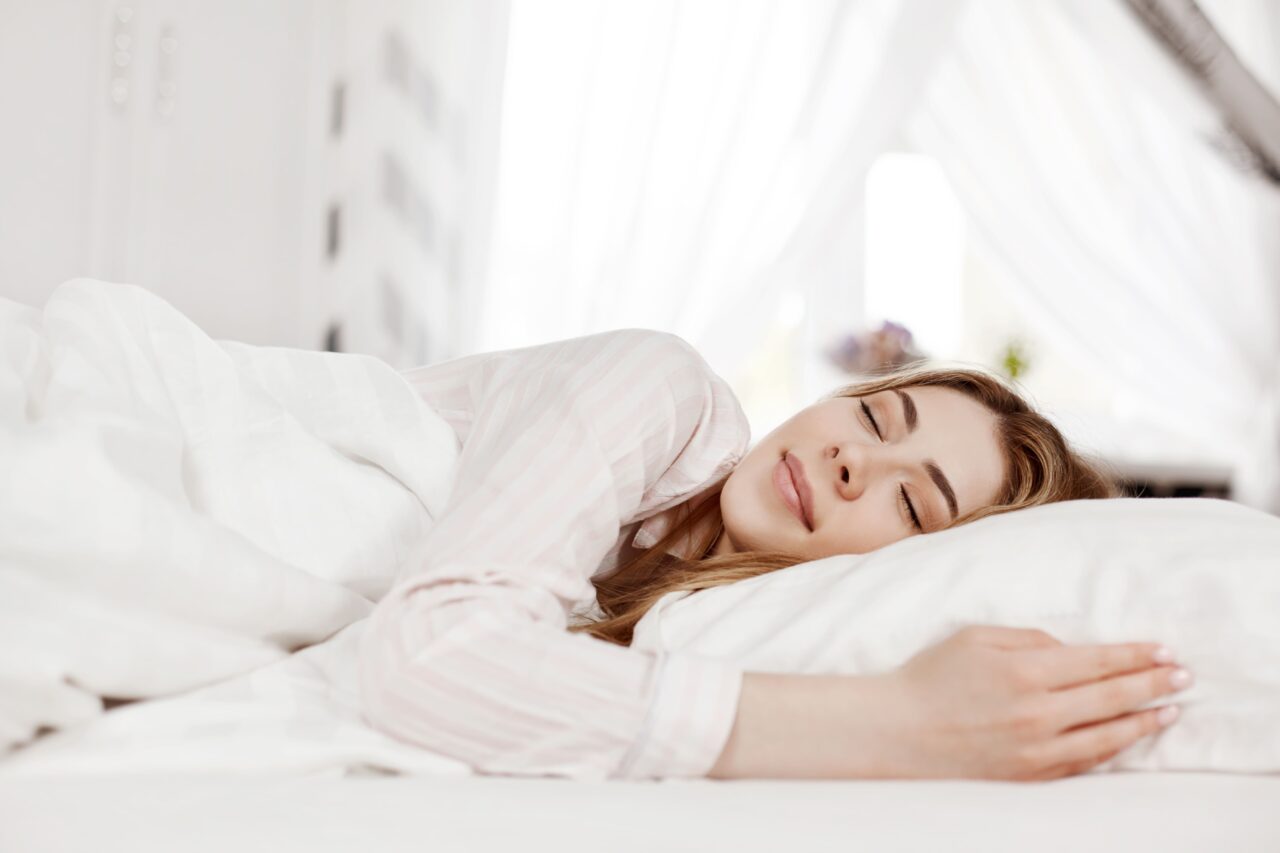
While you were asleep, your brain was not idle. It recalibrated emotional circuitry, consolidated yesterday into memory, cleared metabolic waste from neural tissue, and synchronized your internal clock with the rotation of the planet. You woke up assuming you were the same person, as if continuity were automatic. It isn’t. That continuity was earned.
• Humans can survive weeks without food.
• Humans can survive days without water.
• Total sleep deprivation becomes physiologically dangerous within days.
You cannot survive without sleep, and yet we talk about it as if it were laziness. When a teenager sleeps until 2:00 pm and stays up until 3:00 am yelling into a headset, we say he’s escaping, she’s avoiding, they’re hiding from life. But raccoons do that. So do lions. So does every mammal that has ever existed. If sleep is avoidance, evolution needs a therapist.
If staying up late were strength, residency training would produce superheroes instead of slightly brittle physicians with coffee addictions and cortisol levels that could power a small grid.
As George Carlin (comedian and professional critic of human nonsense) once said, “Some people see things that are and ask, Why? Some people dream of things that never were and ask, Why not? Some people have to go to work and don’t have time for all that.” Sleep is what lets you survive the third group.
This Is Not a Switch
Sleep is not a switch you flip. It is a nightly electrical event.
Roughly every 90 minutes, your brain cycles through distinct stages¹.
• Average adult sleep cycle: ~90 minutes¹
• Typical night: 4–6 full cycles
Stage 1 drifts. Stage 2 produces sleep spindles and K-complexes², bursts of electrical activity that help decide what to keep and what to discard. Stage 3 brings slow-wave sleep, delta rhythms, growth hormone release, immune recalibration³, and activation of the glymphatic system, which clears metabolic waste⁴.
Your brain washes itself.
REM then activates the cortex while paralyzing the body.
• REM periods lengthen across the night
• Dream recall increases with REM density
If this is escape, it is structured.
As Maria Bamford (comedian who has spoken openly about anxiety) once said, “My anxiety has anxiety.” Sleep is the mechanism that recalibrates that recursion. You do not feel the repair while it is happening. You feel the damage when it doesn’t.
The National Operating System
We like to pretend we are busy, productive, optimized creatures.
Now some numbers.
• Recommended adolescent sleep: 8–10 hours⁵
• U.S. high school students chronically sleep deprived: >60%⁵
• Adults with chronic insomnia: ~8–10%⁶
• Average adult sleep in the U.S.: ~6.8 hours per night
Sleep deprivation has quietly become the national operating system. We then act shocked when attention fragments, mood destabilizes, and impulse control erodes.
As Jerry Seinfeld (comedian who made a career out of noticing absurdities) once said, “I love sleep. My life has the tendency to fall apart when I’m awake.” The joke works because it is neurologically correct.
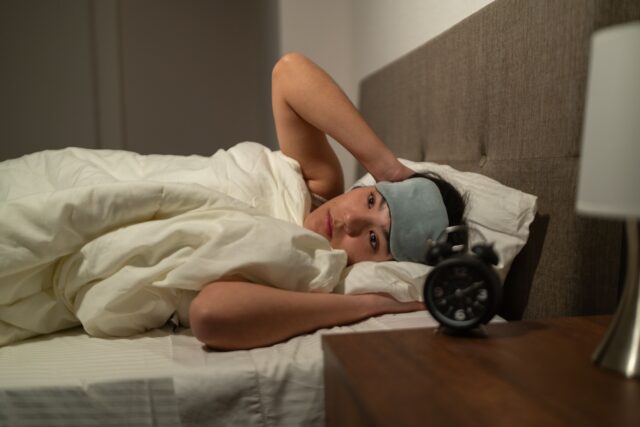
Why We Sleep — Our Best Scientific Guess
Scientists propose overlapping explanations: restoration³, energy conservation⁷, memory consolidation⁸, synaptic homeostasis⁹, emotional recalibration¹⁰.
• Sleep loss increases amygdala reactivity¹⁰
• REM sleep strengthens emotional memory integration⁸
• Slow-wave sleep supports immune function³
No single theory explains everything.
Which is irritating.
As Voltaire (French Enlightenment writer who distrusted certainty) wrote, “Doubt is not a pleasant condition, but certainty is absurd.” Sleep forces humility. We can measure voltage, oscillations, and metabolic clearance. We still do not fully understand why consciousness must disengage in this particular rhythm every night.
Andrew Huberman (Stanford neuroscientist studying circadian biology) emphasizes that sleep is active neural processing. Your “doing nothing” is metabolically expensive.
And as Jerry Garcia (lead guitarist of the Grateful Dead) once observed, “The experience of music is something that can’t be described in words.” Sleep is similar. We can graph it. We cannot fully translate it.
Teenagers Are Shifted, Not Defective
Adolescents experience a biologically driven circadian phase delay⁵.
• Melatonin rises later in adolescents
• Peak alertness shifts toward late evening
• Early school start times <8:30 am correlate with chronic restriction
You call it rebellion.
Biology calls it development.
When internal time collides with institutional time, pathology appears¹¹.
In Bipolar Disorder, modest sleep shifts can precede mania¹².
• Bipolar mania with decreased need for sleep: up to 90%¹²
As Kay Redfield Jamison (clinical psychologist who lives with bipolar illness herself) wrote, “I had been my whole life a sleepless, driven, relentless creature.” Sleep in Bipolar Disorder is not cosmetic. It is structural stabilization.
Disturb rhythm. Disturb mood.
As Chris Rock (comedian who specializes in uncomfortable clarity) once said, “You don’t pay taxes — they take taxes.” Your brain does not negotiate with sleep. It collects.
Dreams and Disaster
Humans have never stopped caring about dreams.
• REM sleep occupies ~20–25% of adult sleep
• REM deprivation impairs emotional regulation
Carl Jung (Swiss psychiatrist who emphasized symbolic meaning) believed dreams were compensatory messages¹³. You can reject archetypes and still acknowledge that REM integrates emotional memory⁸.
Joseph interpreted Pharaoh’s dream as famine after abundance.
Sleep as rehearsal.
Sleep as warning.
Paul Bowles (novelist who wrote about fragility) observed, “We are all so close to disaster, all the time.” Sleep may be one of the systems quietly preventing it.
Timothy Leary (psychologist and provocateur) said, “Turn on, tune in, drop out.” Sleep is the only altered state that does not require a substance or a manifesto.

Sleep and Psychiatry Share Circuitry
The overlap between sleep disturbance and psychiatric illness is not coincidence.
• Major Depressive Disorder with insomnia: 80–90%¹⁴
• Insomnia roughly doubles future depression risk¹⁵
• Anxiety disorders with sleep disturbance: 50–70%¹⁶
• PTSD sleep disturbance: up to 90%¹⁷
• ADHD sleep disturbance: 25–50%¹⁸
• Substance Use Disorders insomnia: >60%¹⁹
Sleep and psychiatry share circuitry. Disturb rhythm and mood destabilizes. Restore rhythm and stabilization often follows.
The hopeful part is this:
• REM rebounds after deprivation
• Slow-wave sleep deepens after restriction
• Homeostasis trends toward balance
Sleep is adaptive biology.
As George Carlin put it, “The planet is fine. The people are screwed.” Sleep is one of the few systems trying to quietly unscrew us every night.
So Do We Sleep to Escape?
Sometimes someone oversleeps to avoid pain. That happens.
But sleep itself is not avoidance. It is recalibration, integration, stabilization.
• Sleep regulates mood¹⁰
• Sleep consolidates memory⁸
• Sleep clears metabolic waste⁴
• Sleep stabilizes circadian timing⁵
The same brain that destabilizes with chronic sleep disruption is capable of recovery with restored rhythm.
Sleep feels ordinary because we do it every day.
It is not ordinary.
It is the quiet biological work of staying human.
If this helped you see sleep differently—not as laziness, not as weakness, not as escape—but as maintenance of your own humanity, I’m glad you read it.
Tell me what time you went to sleep last night.
You can also find me at
www.boulderpsychiatryassociates.com
And if you visit Boulder, please do so while awake.
Preferably after delta waves have done their work.
Footnotes
- Carskadon, M. A., & Dement, W. C. “Normal Human Sleep.” Principles and Practice of Sleep Medicine, 5th ed., Elsevier, 2011.
- Fogel, S. M., & Smith, C. T. “The Function of the Sleep Spindle: A Physiological Index of Intelligence and Memory.” Sleep Medicine Reviews, 15(1), 2011, pp. 45–56.
- Besedovsky, L., Lange, T., & Born, J. “Sleep and Immune Function.” Physiological Reviews, 92(3), 2012, pp. 1143–1178.
- Xie, L., et al. “Sleep Drives Metabolite Clearance from the Adult Brain.” Science, 342(6156), 2013, pp. 373–377.
- Crowley, S. J., et al. “An Update on Adolescent Sleep: New Evidence Informing the Perfect Storm Model.” Sleep Medicine Clinics, 13(1), 2018, pp. 1–12.
- Ohayon, M. M. “Epidemiology of Insomnia: What We Know and What We Still Need to Learn.” Sleep Medicine Reviews, 6(2), 2002, pp. 97–111.
- Siegel, J. M. “Clues to the Functions of Mammalian Sleep.” Nature, 437, 2005, pp. 1264–1271.
- Walker, M. P., & Stickgold, R. “Sleep, Memory, and Plasticity.” Annual Review of Psychology, 57, 2006, pp. 139–166.
- Tononi, G., & Cirelli, C. “Sleep and the Price of Plasticity: From Synaptic Homeostasis to Memory Consolidation.” Neuron, 81(1), 2014, pp. 12–34.
- Yoo, S. S., et al. “The Human Emotional Brain Without Sleep — A Prefrontal Amygdala Disconnect.” Current Biology, 17(20), 2007, R877–R878.
- American Academy of Sleep Medicine. International Classification of Sleep Disorders, 3rd ed., 2014.
- Harvey, A. G. “Sleep and Circadian Rhythms in Bipolar Disorder: Seeking Synchrony.” Clinical Psychology Review, 28(8), 2008, pp. 1458–1472.
- Jung, C. G. Man and His Symbols. Doubleday, 1964.
- Tsuno, N., Besset, A., & Ritchie, K. “Sleep and Depression.” Journal of Clinical Psychiatry, 66(10), 2005, pp. 1254–1269.
- Baglioni, C., et al. “Insomnia as a Predictor of Depression: A Meta-Analytic Evaluation.” Journal of Affective Disorders, 135(1–3), 2011, pp. 10–19.
- Cox, R. C., & Olatunji, B. O. “Sleep in the Anxiety-Related Disorders.” Sleep Medicine Reviews, 25, 2016, pp. 50–62.
- Germain, A. “Sleep Disturbances as the Hallmark of PTSD.” Nature and Science of Sleep, 5, 2013, pp. 75–85.
- Cortese, S., et al. “Sleep and Alertness in Children with Attention-Deficit/Hyperactivity Disorder.” Sleep Medicine, 10(5), 2009, pp. 529–536.
- Wulff, K., et al. “Sleep and Circadian Rhythm Disruption in Psychiatric and Neurodegenerative Disease.” Nature Reviews Neuroscience, 13(8), 2012, pp. 589–602.