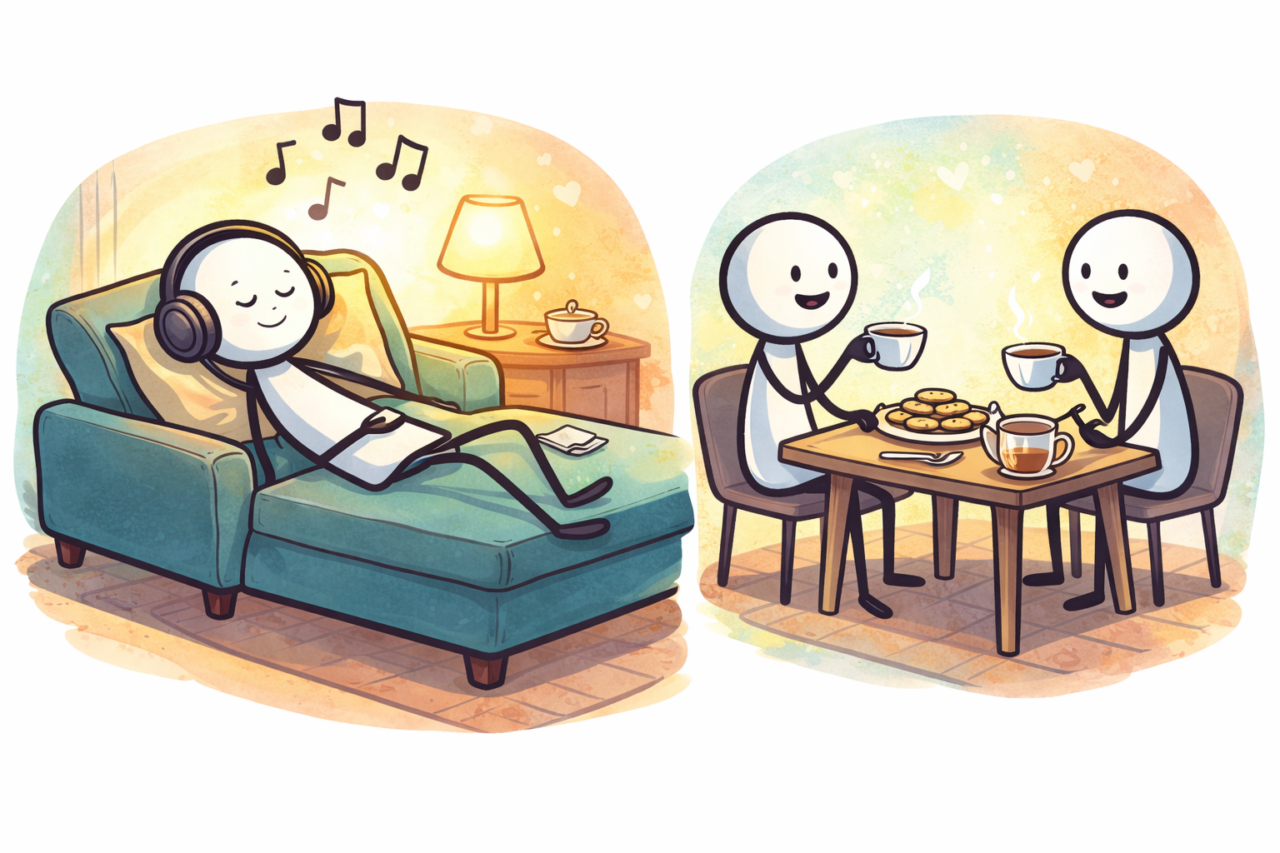
If you tell people you give ketamine to depressed patients, there is a pause. Not curiosity. Not fascination. Concern. The kind of silence that says, Are you sure that’s medicine? And if you walk into my office expecting an IV pole, a nurse, and a laminated protocol binder, you’ll be disappointed. There is a couch. There are headphones. There are two uninterrupted hours. There is one psychiatrist and one patient. No spectacle. Just space. Please hit the like button, forward, leave a comment, subscribe!
I’ve written before about NMDA receptor antagonism, glutamate modulation, and dendritic spine regrowth after ketamine exposure.¹⁰ That biology matters. But the reason this treatment unsettles people is not molecular.
It is experiential.
This Is Not Spravato
The FDA approves esketamine nasal spray, marketed as Spravato, for treatment-resistant depression under a REMS program.² The approval followed Phase 3 trials, including TRANSFORM-2, which demonstrated statistically significant improvement compared to placebo when added to oral antidepressants.¹²
But Spravato is esketamine — a single isomer.
The foundational antidepressant data that electrified psychiatry came from studies using racemic ketamine delivered intravenously. In 2000, Berman et al. first demonstrated rapid antidepressant effects.³ In 2006, Zarate et al. confirmed those findings in treatment-resistant patients.⁴ In 2013, Murrough et al. replicated efficacy in a two-site randomized controlled trial.¹¹
These were not fringe experiments. They were controlled, peer-reviewed trials.
I use rapidly dissolving tablets.
They dissolve under the tongue. They allow careful titration. They avoid infusion equipment. They are administered in my office.
Just me and the patient.
• FDA-approved branded esketamine product: 1
• Randomized controlled trials demonstrating racemic ketamine efficacy: multiple³,⁴,¹¹
• IV poles in my office: 0
As John Krystal, who led much of the early research, has said, ketamine represents “the most important antidepressant breakthrough in decades.”⁵ That is a statement rooted in data, not rebellion.
Why Just Me?
Patients spend about two hours with me. The first session is longer because no one is accustomed to feeling their mind loosen without feeling out of control. Most of these individuals meet criteria for treatment-resistant depression — a population that comprises roughly 30% of patients with major depressive disorder.⁶ Many have cycled through multiple medications, as documented in the STAR*D trial.⁶
Standard antidepressants typically require four to six weeks for meaningful effect.⁹ Ketamine, by contrast, has demonstrated rapid reductions in depressive symptoms — and in some studies, suicidal ideation — within hours.⁴,⁸
After the first visit, sessions run just under two hours. The average course is eight sessions. I have treated 38 patients. One returns every few months for maintenance, consistent with emerging data suggesting some patients benefit from periodic booster dosing.¹³
• Average sessions per patient: 8
• Treatment-resistant depression prevalence: ~30%⁶
• Typical SSRI onset: 4–6 weeks⁹
As Thomas Insel has acknowledged, psychiatry has struggled for decades to produce rapidly acting treatments.⁷ Ketamine’s defining feature is not novelty — it is speed.
The First Session Is “Recreational”
I use that word intentionally. The first session is calibration. We assess dose, tolerability, subjective response. We are not demanding insight. We are observing.
The second session is typically stronger. Occasionally by the third we adjust. After that, dosing stabilizes. Phillips et al. demonstrated that repeated and maintenance infusions can sustain response over time, reinforcing that this is a structured intervention, not an escalating experiment.¹³
• Primary goal of session one: calibration
• Dose escalations after session three: uncommon
• Evidence supporting repeated dosing durability: growing¹³
The Setup
It is a couch, not a chair. The distinction is psychological. A chair implies evaluation. A couch implies containment.
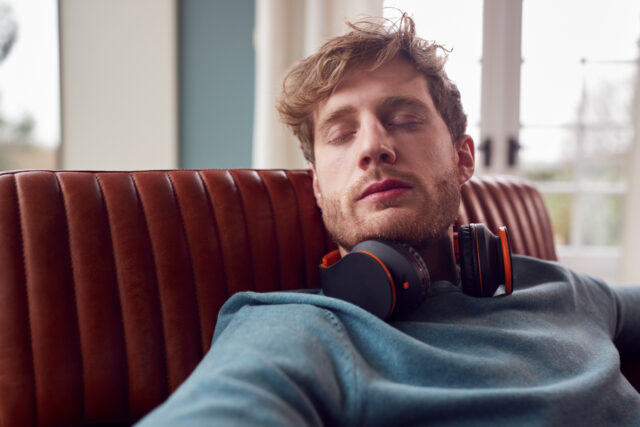
Lighting is low. Vital signs are monitored. Earphones go in. The music is instrumental — often a single instrument. No lyrics. No narrative imposed.
• Songs with lyrics: 0
• Minutes before perceptual shift: ~10–15
• Structured integration discussion after return: every session
As Jerry Garcia said, “Music is what feelings sound like.” I want the music neutral enough that it does not dictate emotion, only support it.
What Actually Happens
Within fifteen minutes, perception softens. Time stretches. The internal critic quiets. What critics imagine as hallucination is more accurately distance — distance from rumination and cognitive rigidity.
Meta-analyses have confirmed ketamine’s rapid reduction of suicidal ideation.⁸ Cipriani et al.’s large network meta-analysis reminds us how modest most antidepressant effect sizes are.⁹ Against that backdrop, ketamine’s effect profile stands out.
At the neurobiological level, preclinical research has shown ketamine activates mTOR signaling and increases synaptic spine density in prefrontal circuits affected by stress.¹⁰ Patients do not say “mTOR activation.” They say, “It doesn’t hit the same.”
• Ketamine’s antidepressant onset in some trials: hours⁴,⁸
• Preclinical evidence of synaptogenesis: demonstrated¹⁰
• Suicidal crises willing to wait six weeks: 0
Around Session Four
By session four, patients often report something less dramatic but more durable: decreased emotional intensity around longstanding narratives. The thought remains; the sting softens.
That aligns with synaptic plasticity models proposed by Duman and Aghajanian.¹ Patients experience this not as biology but as space.
• Observable psychological flexibility by session four: common
• Forced epiphanies: 0
• Structural plasticity evidence in preclinical models: robust¹,¹⁰
The Skeptics
There are legitimate concerns: durability, long-term safety, commercialization. Yet ketamine’s antidepressant effect has now been replicated across randomized trials, meta-analyses, mechanistic studies, and Phase 3 programs.³,⁴,⁸,¹¹,¹²,¹³
• Peer-reviewed ketamine trials: numerous
• Cultural comfort with altered states in Western medicine: limited
• Human suffering willing to wait decades for innovation: 0
Notes & Sources
- Duman RS, Aghajanian GK. Science. 2012;338(6103):68–72.
- U.S. Food and Drug Administration. Spravato (esketamine) prescribing information. 2019.
- Berman RM et al. Biol Psychiatry. 2000;47(4):351–354.
- Zarate CA et al. Arch Gen Psychiatry. 2006;63(8):856–864.
- Krystal JH et al. Biol Psychiatry. 2019.
- Rush AJ et al. Am J Psychiatry. 2006;163(11):1905–1917.
- Insel TR. Nat Rev Drug Discov. 2014;13(2):79.
- Wilkinson ST et al. Am J Psychiatry. 2018;175(2):150–158.
- Cipriani A et al. Lancet. 2018;391(10128):1357–1366.
- Li N et al. Science. 2010;329(5994):959–964.
- Murrough JW et al. Am J Psychiatry. 2013;170(10):1134–1142.
- Daly EJ et al. JAMA Psychiatry. 2019;76(9):893–903.
- Phillips JL et al. Am J Psychiatry. 2019;176(5):401–409.