This piece explores psychiatry, science, and lived experience. It is not medical advice, and it cannot replace care tailored to an individual person.
If someone walks into the emergency room clutching their chest, sweating through their shirt, whispering “left arm… numb,” no one says:
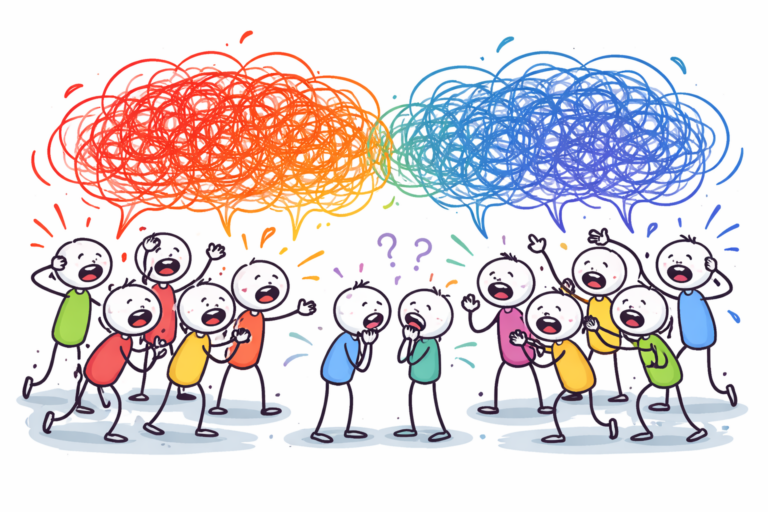
Psychiatry makes people nervous. Not because it is mysterious. But because it is personal. We will swallow pills for our heart, pancreas, thyroid, blood pressure, appetite. No debate. But touch the brain, and suddenly it is a Senate hearing. Let’s talk about why. I hope you enjoy this. Please hit the like button, leave me a message (I always answer), share, subscribe!
“Before you give me Nitroglycerin (a medication that opens blocked heart arteries during chest pain), I’d like to explore whether vasodilation aligns with my core identity.”
They take it.¹
If their blood pressure is 190 over something cinematic, they do not start a podcast about Lisinopril (a medication that lowers blood pressure and reduces strain on the heart by blocking the renin–angiotensin system).²
If they have diabetes, they take Metformin (a medication that improves insulin sensitivity and lowers blood sugar).³
If they want help losing weight, millions now take Semaglutide or Tirzepatide. In major trials, these medications produced average weight loss in the range of 10 to 20 percent.⁴ ⁵
No one accuses these drugs of stealing souls.
Then psychiatry enters the chat.
Now we are debating essence.
Half-Life Is Math, Not a Ghost Story
A drug’s half-life is simply the time it takes for its blood level to fall by half.⁶ If you have 100 units, after one half-life you have 50. Then 25. Then 12.5. After about five half-lives, the amount is clinically negligible.⁷
Fluoxetine has a longer half-life than many antidepressants. Its active metabolite lingers for one to two weeks.⁸ That means it fades gradually after stopping. It does not build a tiny vacation home in your liver and refuse to leave.
As Jerrold Rosenbaum has explained, medications follow pharmacokinetic curves, not morality plays.⁹
And as George Carlin once joked about how we rename uncomfortable things, we tend to change the language, so we do not have to confront reality. The half-life does not become “eternal life.” It declines. Predictably.
• Fluoxetine half-life: roughly 2 to 4 days
• Norfluoxetine half-life: 7 to 15 days
• Time to near-complete elimination: several weeks
• Evidence of six-month pharmacologic haunting: 0
Chronic Stress and Psychosis Change the Brain Too
Here is the part that does not trend on social media.
Chronic stress repeatedly activates the hypothalamic–pituitary–adrenal axis and elevates cortisol.¹⁰ Over time, elevated cortisol is associated with measurable changes in hippocampal volume and amygdala reactivity.¹¹
In normal English: memory circuits shrink. Fear circuits overfire. Executive control weakens.
Now psychosis.
Psychosis means losing contact with reality. Hallucinations. Delusions. Disorganized thinking. It is not dramatic personality. It is neurobiological dysregulation.
Acute psychosis is associated with dysregulated dopamine signaling in mesolimbic pathways.¹² Longitudinal imaging studies show that longer duration of untreated psychosis correlates with worse functional outcomes and progressive brain changes over time.¹³ ¹⁴
Each untreated episode is biologically loud.
Margaret Hertzig emphasized that developmental and psychiatric disorders are medical conditions rooted in neurobiology, not moral failure.¹⁵
My mentor, Clarice Kestenbaum, used to say, “When you treat a child’s brain, you are not changing who they are. You are clearing away what interferes with who they already are.”
The brain changes whether we intervene or not.
As Maria Bamford once quipped about her own mental health, “My brain is like a browser with 47 tabs open.” Medication does not install a new operating system. Sometimes it just closes a few tabs.
• Duration of untreated psychosis associated with worse outcomes: consistently supported¹⁶
• Five-year recurrence rate of untreated adolescent depression: approximately 60 percent¹⁷
• Evidence that psychiatric illness leaves the brain pristine: none
ADHD, Dopamine, and Being Able to Finish a Sentence
Attention-deficit hyperactivity disorder involves dysregulation of dopamine and norepinephrine systems in circuits governing executive function.¹⁸
Stimulants such as Methylphenidate and Amphetamine increase dopamine and norepinephrine in the prefrontal cortex.
For some patients, that does not produce euphoria. It produces the ability to sit still long enough to think.
Public rhetoric has included suggestions, including from Robert F. Kennedy Jr., that individuals taking stimulant medications should be sent to farms to detox from “dopamine-pushing drugs.”
Meanwhile, decades of controlled trials show robust reductions in core ADHD symptoms and meaningful improvements in academic and occupational functioning.¹⁹
• Decades stimulant medications studied: more than 50²⁰
• Effect size of stimulant treatment in ADHD meta-analyses: large¹⁹
• Evidence that stimulant treatment broadly impairs cognition in ADHD: none
As Bill Burr has joked in another context, society seems fine with performance enhancers as long as they are for the body. The minute they help the brain, we panic. “Oh no, now you can focus? That seems suspicious.”
Autistic Spectrum Disorder and Reducing Barriers
Autistic Spectrum Disorder is not cured by medication. It is not erased. It is not “fixed.”
But associated symptoms such as severe irritability, explosive aggression, debilitating anxiety, or profound attention dysregulation can sometimes respond to targeted pharmacologic treatment.
For some individuals with Autistic Spectrum Disorder, medication reduces self-injury. It decreases aggression. It softens anxiety enough for school attendance. It improves attention enough to complete tasks. It allows participation in relationships.
Medication does not erase identity. It reduces interference.
Which is exactly what glasses do.
Imagine someone driving down a busy road who suddenly rips off his glasses and says, “I want to see naturally.”
Then he hits a tree.
No one calls eyeglasses a conspiracy against authenticity.
They correct distortion.
Sometimes psychiatric medication functions the same way. Not by changing who someone is, but by reducing the neurological static that prevents them from functioning safely and meaningfully in the world.

The Selective Outrage Problem
We accept that Propranolol steadies tremor and reduces performance anxiety.
We accept that Atorvastatin lowers LDL cholesterol and reduces cardiovascular risk.
We accept that GLP-1 medications alter appetite signaling in the hypothalamus.
But when psychiatric medications alter neurotransmission in circuits governing mood or attention, we ask whether we are interfering with destiny.
Mood feels like morality.
Attention feels like discipline.
Motivation feels like character.
Treat the heart, no argument.
Treat the pancreas, no argument.
Treat the brain, and suddenly we are in a theology debate with footnotes.
As George Carlin once said, “The planet is fine. The people are [expletive].” The data are fine. The narratives are loud.
Take Psychiatry Seriously
Depression increases suicide risk.¹⁷
Longer duration of untreated psychosis worsens long-term functional outcome.¹⁶
Untreated ADHD correlates with higher accident rates and occupational instability.²¹
These are not lifestyle quirks.
They are medical conditions with measurable neurobiological correlates and real morbidity.
If we can accept medication for the coronary arteries, the pancreas, and the hypothalamus, we can accept evidence-based treatment for the brain.
The brain is not sacred territory immune from medicine.
It is an organ.
A complicated one.
Which is precisely why it deserves seriousness, humility, and science rather than panic.
Notes and Sources
- Antman, E. M., et al. (2004). “Management of ST-Elevation Myocardial Infarction.” Circulation, 110(9), e82 to e292.
- Brunton, L. L., et al. (2018). Goodman & Gilman’s The Pharmacological Basis of Therapeutics, 13th ed.
- American Diabetes Association. (2023). “Standards of Care in Diabetes.” Diabetes Care, 46(Suppl 1).
- Wilding, J. P. H., et al. (2021). “Semaglutide in Adults with Overweight or Obesity.” New England Journal of Medicine, 384, 989 to 1002.
- IQVIA Institute. (2023). “Trends in GLP-1 Utilization in the United States.”
- Rang, H. P., et al. (2019). Rang & Dale’s Pharmacology, 9th ed.
- Brunton, L. L., et al. (2018). Goodman & Gilman’s, pp. 17 to 19.
- Preskorn, S. H. (1997). “Clinical Pharmacology of Fluoxetine.” Journal of Clinical Psychiatry, 58(Suppl 6).
- Rosenbaum, J. F. (2000). “Selective Serotonin Reuptake Inhibitors.” Harvard Review of Psychiatry, 8(2).
- McEwen, B. S. (2007). “Physiology and Neurobiology of Stress.” Physiological Reviews, 87(3), 873 to 904.
- Lupien, S. J., et al. (2009). “Effects of Stress Throughout the Lifespan on the Brain.” Nature Reviews Neuroscience, 10, 434 to 445.
- Howes, O. D., & Kapur, S. (2009). “The Dopamine Hypothesis of Schizophrenia.” Schizophrenia Bulletin, 35(3), 549 to 562.
- Andreasen, N. C., et al. (2011). “Progressive Brain Change in Schizophrenia.” American Journal of Psychiatry, 168(6), 578 to 586.
- Vita, A., et al. (2012). “Progressive Brain Structural Changes in Schizophrenia.” Schizophrenia Bulletin, 38(5), 1050 to 1058.
- Hertzig, M. E. (1989). “Developmental and Biological Perspectives in Child Psychiatry.” Journal of the American Academy of Child & Adolescent Psychiatry, 28(3), 339 to 343.
- Marshall, M., et al. (2005). “Association Between Duration of Untreated Psychosis and Outcome.” British Journal of Psychiatry, 187(S48), s19 to s23.
- Birmaher, B., et al. (2002). “Childhood and Adolescent Depression.” American Journal of Psychiatry, 159(6), 851 to 858.
- Arnsten, A. F. T. (2009). “Neurobiology of ADHD.” Biological Psychiatry, 57(11), 1377 to 1384.
- Faraone, S. V., & Buitelaar, J. (2010). “Comparative Efficacy of Stimulants.” European Child & Adolescent Psychiatry, 19(4), 353 to 364.
- Swanson, J. M., et al. (2017). “Long-Term Outcomes of ADHD Treatment.” Journal of the American Academy of Child & Adolescent Psychiatry, 56(2), 101 to 110.
- Barkley, R. A. (2015). Attention-Deficit Hyperactivity Disorder: A Handbook for Diagnosis and Treatment, 4th ed. New York: Guilford Press.
If this made you uncomfortable, good. If it made you laugh, better. If it made you think differently about psychiatric medication, best.