This essay synthesizes psychiatry, cultural history, neuroscience, and social psychology to explore belief formation and uncertainty regulation in modern human systems.
If you made it here, you’re probably trying to understand something about people that refuses to stay simple. Please like the piece, leave a comment. I read them. Forward it to someone who disagrees with you. And if you’re able, upgrading to a paid subscription keeps this strange little operation still running.
Why Being Certain Feels Safer Than Being Accurate
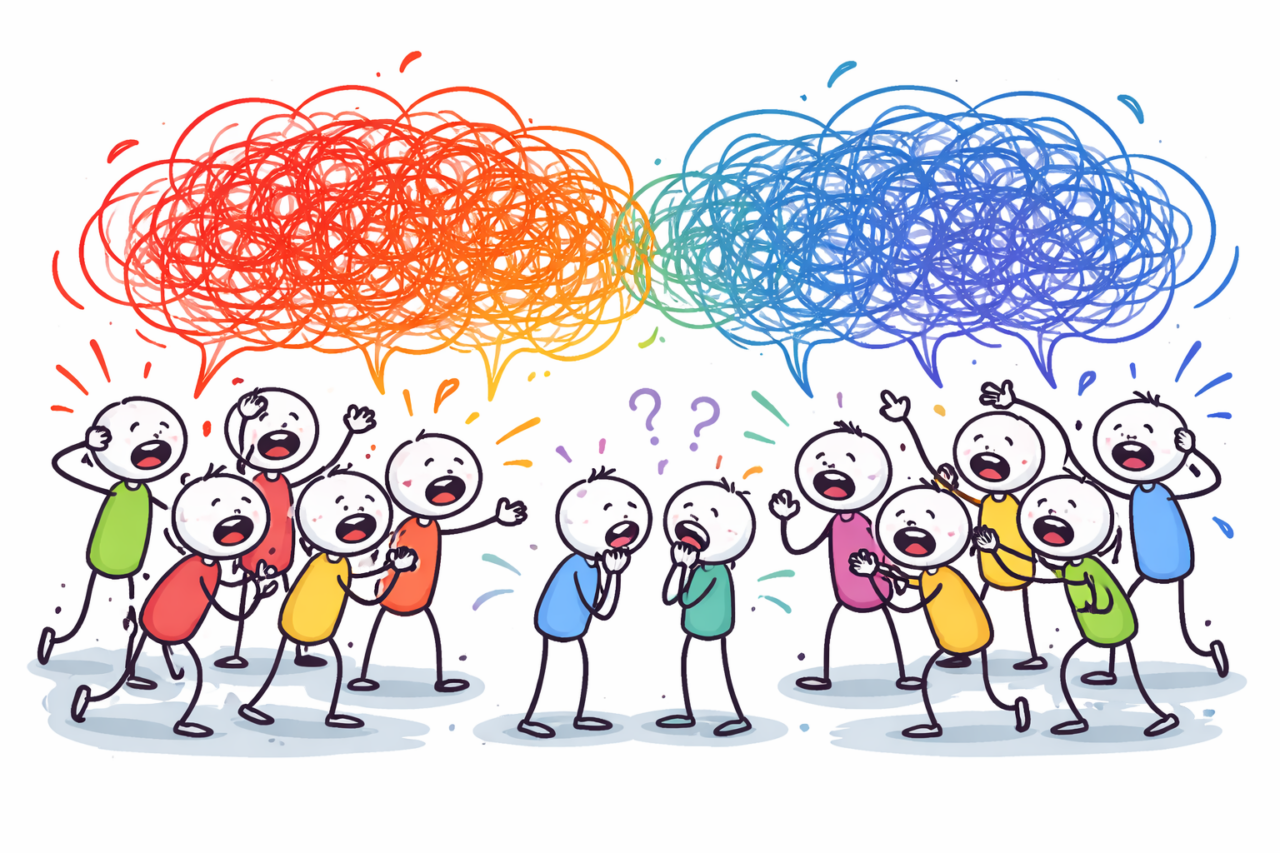
Spend enough time listening to intelligent people argue about politics, religion, science, or culture and a pattern becomes impossible to ignore sooner or later, each side concludes that the other side has completely lost its mind. The arguments may begin with facts and interpretations, but if they continue long enough the conversation shifts. What started as disagreement about evidence slowly becomes disagreement about sanity.
Everyone Thinks Someone Else Is Crazy
Spend enough time listening to political arguments, religious debates, or family disputes about how the world works and the pattern becomes familiar. Intelligent people regularly conclude that other intelligent people have completely lost their minds. Conversations may begin politely with facts, interpretations, and references to what someone believes really happened. But if the disagreement lasts long enough, the tone shifts. The argument stops being about evidence and becomes about sanity.
From there the diagnosis arrives quickly.
They’re crazy.
Psychiatry complicates that accusation almost immediately. Psychosis exists, of course, and delusions are real clinical phenomena, but most people accused of irrational belief are not psychotic. They are operating inside a different certainty system. From the outside their conclusions can look bizarre. Inside the framework they are using, however, those conclusions often feel perfectly reasonable.
Human beings rarely organize their lives around objective truth alone. We organize around explanations that make uncertainty tolerable enough to keep functioning. The brain dislikes unresolved ambiguity. It prefers a story that holds.
As Michael Shermer (science historian and founder of Skeptic Magazine) puts it: “Beliefs come first, explanations for beliefs follow.”¹ People often imagine the process working in the opposite direction. Evidence arrives first and conclusions follow. Yet if you watch human behavior closely, the order frequently reverses. A belief stabilizes something emotionally or socially, and explanations gather afterward to defend it.
Every belief system feels rational from the inside. If it didn’t, nobody would keep it.
The uncomfortable part of this observation is that it applies to all of us. The feeling of watching other people believe something ridiculous is extremely familiar. What is less comfortable is the possibility that somewhere, right now, another intelligent person is watching us with exactly the same expression.
The feeling of being right is one of the most pleasant sensations the human brain produces. It is calm, stabilizing, and deeply reassuring. When people defend beliefs aggressively, they are often protecting that feeling more than the belief itself. Being right feels like safety. Being wrong feels like falling. Most people will work very hard to avoid that fall.
• People who rate their own reasoning as above average: usually a majority
• The speed at which “they’re crazy” appears in a political argument: approximately immediate
• Times per day most humans unconsciously seek certainty cues from others: a lot
Without Stopping
Paul Bowles (American composer and writer) titled his autobiography Without Stopping. The phrase reads differently once you start watching human behavior closely. Movement postpones evaluation. As long as things keep shifting, evolving, and reinventing themselves, the system never has to stop long enough to ask whether it actually works.
Artists understand this tension well. David Bowie (British musician known for continual artistic reinvention) rarely stayed in one identity long enough for audiences to feel completely comfortable with it. Each time listeners thought they understood who Bowie was, the character changed.
Miles Davis (American jazz trumpeter and composer) behaved similarly with music. By the time audiences had learned how to hear one version of Miles, he abandoned it and went somewhere else.
Listeners often say they want innovation, but what they usually want is innovation that still feels familiar enough to recognize.
Bob Dylan (American songwriter and Nobel Prize–winning lyricist) illustrates the boundary perfectly. My brother followed Dylan happily through reinvention. Electric Dylan worked. Country Dylan worked. The motion itself was part of the appeal. But when Dylan entered his born-again Christian period and began openly preaching from the stage, my brother walked out. Not because Dylan changed, but because Dylan stopped changing. The exploration ended and certainty appeared. Audiences tolerate uncertainty in artists far more easily than they tolerate certainty about what the world means.
Music reveals something about human belief systems that politics often hides.
If change is motion, certainty is the claim that motion has ended.
• Audience preference for familiar material over new material: often around three quarters
• The number of artists punished for both changing and not changing: both
• The percent of listeners who want evolution without discomfort: nearly 100
Change Versus Progress
Language quietly encourages us to treat the words change and progress as though they mean the same thing. They do not. Change simply means something moved. Progress assumes the movement happened in a direction we personally approve of.
Most ideological fights are arguments about direction rather than movement. One group sees a shift and calls it improvement. Another sees the same shift and calls it collapse. Both groups observe the same event but attach different meanings to it.
Facts rarely settle the disagreement because the argument is not really about facts. It is about the story those facts are allowed to tell.
Meaning is where people live psychologically. Meaning is where certainty builds its house.
• The number of times “progress” is used as a synonym for “stuff I like”: nearly always
• The number of times “degeneracy” is used as a synonym for “stuff I fear”: nearly always
• The number of humans who want change without uncertainty: all of them

Facts Versus Fiction Is Not the Actual Fight
Many conflicts described as anti-science are not primarily about science. They are conflicts about authority, belonging, and trust. Science assumes that presenting accurate information should resolve disagreement, yet belief systems rarely operate that way in practice.
Information moves through relationships. People trust sources before evaluating claims.
Dave Farina (chemist and science educator, creator of Professor Dave Explains) argues misinformation blocks rational understanding. That is true, yet belief systems persist because truth travels through trust rather than logic alone.
• Number of times a correct fact changes a threatened identity: low
• Number of times a correct fact increases defensiveness: high
• The speed at which “science” becomes tribal identity: fast
Motion Versus Stability
Clinical psychiatry shows that different brains regulate uncertainty differently. Some stabilize through novelty and motion. Others stabilize through pattern and predictability.
Daniel Kahneman (psychologist and Nobel Prize–winning economist) observed: “A reliable way to make people believe in falsehoods is frequent repetition, because familiarity is not easily distinguished from truth.”²
The brain treats familiarity as safety.
Ahhh, the Big Lie.
• Adult ADHD prevalence: about 5 percent
• Autistic adults reporting transition distress: often well over half
• Humans confusing familiarity with accuracy: most
When Certainty Becomes Ritual
Obsessive-compulsive disorder exposes uncertainty intolerance clearly. Ritual temporarily neutralizes doubt.
As George Carlin (American comedian and social critic) said: “I have as much authority as the Pope. I just don’t have as many people who believe it.”³
• Lifetime prevalence of OCD: about 2 to 3 percent
• OCD presentations involving scrupulosity: substantial
• Duration of relief following compulsions: often minutes
Without Stopping
The truth is that humans have always solved uncertainty the same way. The human brain evolved around small fires and slow change. Modern civilization updates reality constantly. Artists reinvent themselves, believers repeat rituals, scientists rerun experiments, and voters search for voices that sound certain enough to quiet anxiety.
If you made it this far, we are doing what humans have always done: sitting together long enough for uncertainty to feel survivable.
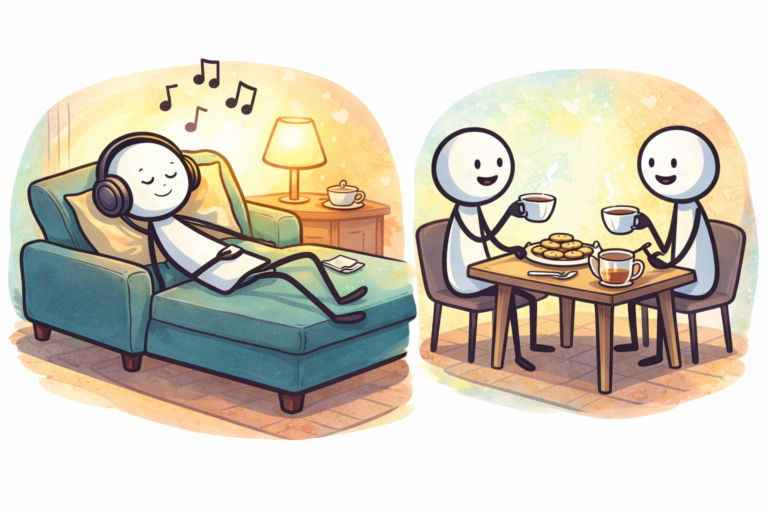
If you are in Boulder, stop by the office sometime. Conversations continue there after clinic hours, usually with tea, coffee, and whatever I baked that week.
I do have chairs.
And cookies.
And the suspicion that if we cannot sit across from one another long enough to tolerate uncertainty together, we never quite as evolved as we thought.
• Number of cookies offered to anyone who shows up in good faith: at least one
• Number of certainty systems a human can hold simultaneously: more than they admit
• Number of times humans reinvent meaning because we must: forever
Notes and Sources
¹ Shermer, M. The Believing Brain. Times Books, 2011.
² Kahneman, D. Thinking, Fast and Slow. Farrar, Straus and Giroux, 2011.
³ Carlin, G. Jammin’ in New York. HBO Special, 1992.
⁴ Jaspers, K. General Psychopathology. University of Chicago Press.
⁵ Garcia, J. Interviews and collected Grateful Dead archival commentary.
⁶ Vonnegut, K. Jr. The Sirens of Titan. Dell Publishing, 1959.
⁷ Harari, Y. N. Sapiens: A Brief History of Humankind. Harper, 2015.
Artists reinvent themselves, believers repeat rituals, scientists rerun experiments, and voters search for voices that sound certain enough to quiet anxiety. We’re doing what humans have always done. Sitting together long enough for uncertainty to feel survivable.