
Football and baseball: both sports which involve a ball.
ADHD and ASD: both neurodivergent.
They just behave like they were coded by different interns.
What neurodivergent actually means
Neurodivergent does not mean quirky personality with oat milk preferences. It means your brain processes information differently2. It describes the brain’s operating system, not what someone looks like on the outside.
- Neurotypical brain = Apple
- ADHD brain = Windows with forty-seven tabs open3
- Autism brain = Linux with custom code and a spreadsheet describing the code
Neurodivergence affects attention, emotional regulation, and sensory processing4,5. ADHD and ASD look completely different, but underneath they share executive function differences4, difficulty regulating attention, emotions, or sensory input5, and different wiring in networks that filter information6,7. They are not opposites. They are different expressions of the same wiring.
ADHD vs Autism
ADHD brain: “I had a plan. Then a bird happened.”
ASD brain: “I had a plan. Why are we betraying the plan.”
ADHD misses social cues because their attention left the room without filing paperwork. ASD misses cues because they are analyzing eyebrow position like a CSI reconstruction. ADHD focuses on ten things for one minute each, while ASD focuses on one thing for ten hours.
As Dr. Russell Barkley (leading ADHD researcher) explains, “ADHD is not a disorder of knowing what to do. It is a disorder of doing what you know.”12 And as Temple Grandin (autistic professor and inventor) famously said, “Different, not less.”11
Sensory hypersensitivity
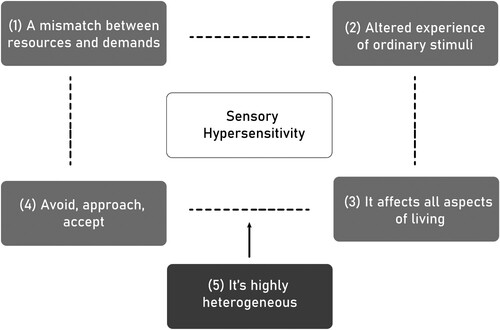
A major sign of ASD is hypersensitivity. Neurotypical brains filter out irrelevant sensory information. Autistic brains absorb every sensation like a government surveillance program. Regular brain enters Target thinking, “I need toothpaste.” Autistic brain enters Target and registers fluorescent lights buzzing, carts squeaking, freezer fans humming, toddler meltdown in aisle three, and rubber rain boots smelling like despair.
This hypersensitivity happens because autistic brains have more sensory connectivity and fewer brakes in the salience network6,7. Everything feels equally important. Temple Grandin puts it bluntly: “I am not oversensitive. The world is under filtered.”11 People with ADHD are overwhelmed because their thoughts are loud. People with autism are overwhelmed because the world is loud. Same building. Different boss fight.
Can a person have both ADHD and ASD?
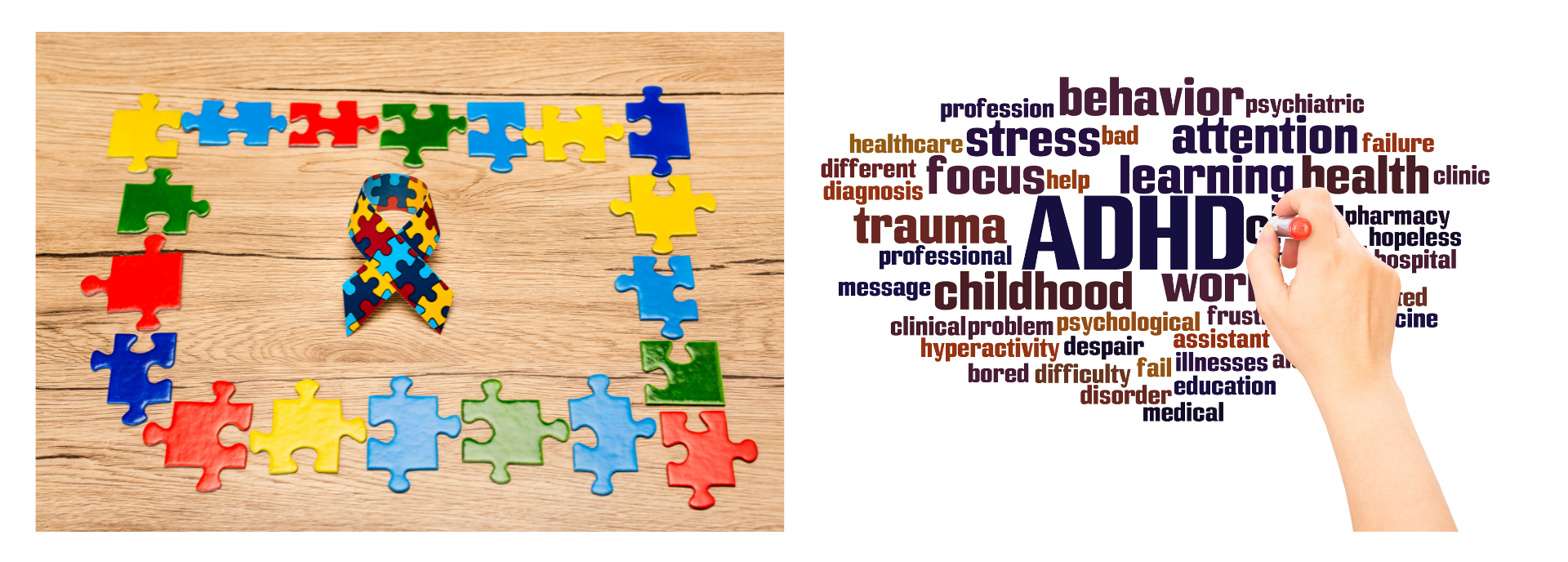
Yes. And it is not rare. Thirty to fifty percent of autistic people also meet criteria for ADHD8, and twenty to forty percent of people diagnosed with ADHD also qualify for autism9. Nearly half. This combo is basically “I cannot start anything and I cannot stop anything.”
According to Dr. Edward Hallowell (psychiatrist specializing in ADHD), “ADHD is a Ferrari brain with bicycle brakes.”10 Autism is a high-performance brain with a rulebook. ADHD is a high-performance brain with no seatbelt.

Why this matters
Because misdiagnosis is now a competitive sport. ADHD can look like autism when someone shuts down from overwhelm. Autism can look like ADHD when someone avoids eye contact or seems distant. A correct diagnosis is not a personality badge. It is a roadmap.
The trend: everyone thinks they are neurodivergent now
Being exhausted by capitalism is not ADHD. Not liking parties is not autism. Feeling overwhelmed at Costco is called being alive.
Diagnosis trends:
- Adult ADHD diagnoses increased 139 percent in ten years13
- Autism diagnoses rose from 1 in 150 to 1 in 3614,15
- TikTok videos tagged “ADHD” have fourteen billion views16
- Forty percent of adults self-diagnose after social media exposure17
We are in the era of DIY diagnosis and vibes-based medicine.
The neurodivergent gold rush
There is real suffering. There is also real monetization. Entire industries now sell brain scans, neurofeedback, ADHD coaching, and expensive supplement stacks. These businesses make billions.
- Neurofeedback is a billion-dollar market20
- ADHD coaching generates over a billion yearly25
- Some brain scan clinics charge up to ten thousand dollars24
If confusion printed money, neurodivergence would be the new Bitcoin.
Urine neurotransmitter testing
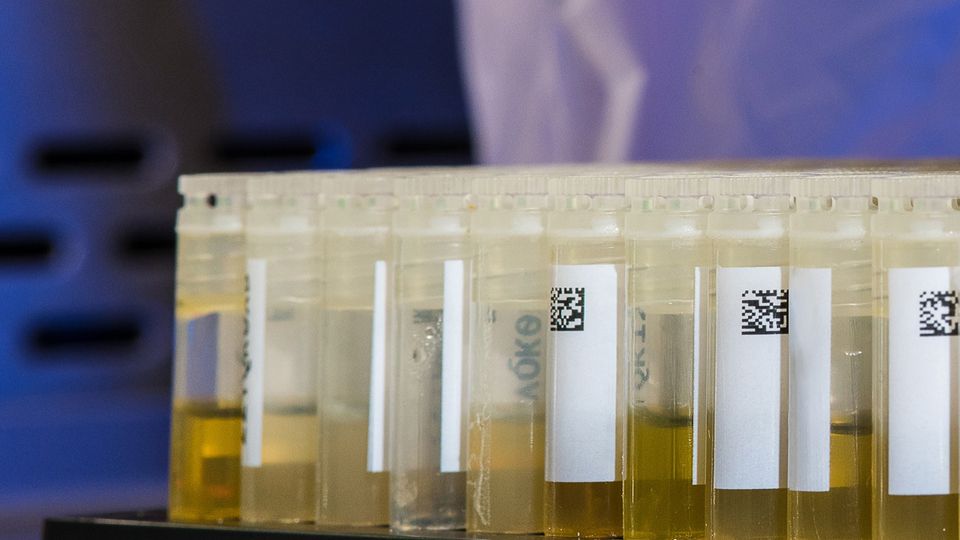
Alternative clinics claim, “We can diagnose your brain chemistry from your pee.” No. Urine neurotransmitter tests measure metabolites, not neurotransmitters21. Metabolites are chemical leftovers. Trash, not data. Trying to diagnose ADHD from urine is like checking your trash to see what food is still in your refrigerator.
Drug tests make sense because drugs belong in urine22. Kidney tests make sense because waste belongs in urine22. Neurotransmitters do not leave the brain, swim through your bloodstream, and politely exit via your kidneys. The brain has a blood brain barrier23. If urine could diagnose mental health, psychiatrists would work in bathrooms.
Who should diagnose neurodivergence
A licensed psychologist or psychiatrist. Not TikTok. Not someone selling supplements. A real evaluation includes a clinical interview, developmental history, standardized testing, and interpretation by someone trained27. As Dr. Stephen Shore (autistic professor) says, “If you have met one person with autism, you have met one person with autism.”28 Brains are individual. Labels are tools. Not costumes.
References
- Carlin, George. A Place for My Stuff! Atlantic Records, 1981.
- Armstrong, Thomas. Neurodiversity. Da Capo Press, 2010.
- Sarkis, Stephanie. ADHD and Adulting. New Harbinger, 2019.
- Barkley, Russell. Executive Functions. Guilford Press, 2012.
- Mazefsky, C. A., et al. “Emotion Regulation in ASD.” Journal AACAP, 2013.
- Uddin, L. Q. “Salience Network Review.” Nature Reviews Neuroscience, 2015.
- Markram, K., Markram, H. “Intense World Theory.” Frontiers in Human Neuroscience, 2010.
- Leitner, Y. “Co-occurrence of ASD and ADHD.” 2014.
- Antshel, K. M., et al. “Autism and ADHD Overlap.” 2016.
- Hallowell, Edward. Delivered from Distraction. Ballantine Books, 2011.
- Grandin, Temple. Thinking in Pictures. Vintage Books, 2006.
- Barkley, Russell. CHADD National Conference Keynote, 2017.
- Xu et al. “Adult ADHD Diagnosis Trends.” JAMA Psychiatry, 2023.
- CDC. “Autism Prevalence 2000.” ADDM Network Report.
- CDC. “Autism Developmental Disabilities Monitoring 2023.”
- TikTok Analytics. “Hashtag ADHD Metrics,” 2024.
- Pew Research Center. “Social Media and Health Information,” 2024.
- IBISWorld. “ADHD Coaching Market Size,” 2024.
- Grand, David. Brainspotting. Sounds True Publishing, 2013.
- Market Research Future. “Neurofeedback Forecast,” 2024.
- NIH. “Metabolites Definition.” NCBI Educational Resource, 2022.
- National Kidney Foundation. “Understanding Urine Testing,” 2024.
- Abbott, N. J., et al. “Blood Brain Barrier Structure.” 2010.
- Amen Clinics Pricing Guide, 2024.
- Joint Coaching Federation Industry Report, 2024.
- Mulaney, John. New in Town. Comedy Central Records, 2012.
- American Psychological Association. “Assessment Guidelines,” 2023.
- Shore, Stephen. Beyond the Wall. Autism Asperger Publishing, 2003.