

The Pattern of Autonomy
If you’ve ever noticed that cults eventually get weird about sex, good for you. You noticed the pattern everyone pretends is accidental. It isn’t.
Cults can survive bad predictions, failed prophecies, and leaders who lie constantly. What they cannot tolerate for long is private autonomy. Sex is where autonomy lives.
WHY SEX SHOWS UP IN CULTS
Sex is not just sex. I think of this when I consider the alleged perpetrators in the Epstein Files. It’s attachment, power, shame, identity, reproduction, and survival rolled into one volatile bundle1. Which makes it incredibly useful.
Cults don’t fixate on sex because they’re horny. They fixate on sex because it works. Cults use sex because it:
- Bonds people fast: Sex collapses distance. It accelerates attachment. Trust forms before judgment has time to intervene2.
- Lowers defenses: Once intimacy is involved, criticism stops feeling thoughtful and starts feeling disloyal.
- Creates vulnerability: The more personal the exposure, the harder it is to leave without shame following you out the door.
- Generates shame on demand: Sex can be declared sacred or sinful depending on what the group needs that day. Both produce obedience3.
- Confuses boundaries: When emotional intimacy, spiritual authority, and sexual access blur, people lose their internal compass.
- Produces loyalty: Secrets bind. Especially the kind you’re told only the group understands.
This is not scandal. It’s strategy. As Michel Foucault (philosopher of power) noted, control over bodies is how institutions convert belief into obedience4.

SEX AS A LEVER, NOT A REWARD
In cults, sex is rarely about pleasure. It’s about who gets access, who doesn’t, and who decides. Leaders may:
- Grant sexual access as status
- Restrict sex as punishment
- Reframe exploitation as transcendence
- Call coercion “growth”
- Label resistance “fear” or “immaturity”
As Philip Zimbardo (psychologist) demonstrated, power paired with permission erodes ethics rapidly5. Add sex, and erosion becomes collapse.
POLITICAL AND IDEOLOGICAL CULTS DON’T OFFER SEX, THEY OFFER SEX PANIC
Political cults usually don’t promise sex. They promise protection from it. They obsess over purity, bodies, gender, reproduction, and who counts as “degenerate.”
Sex becomes a threat. Desire becomes suspicious. Autonomy becomes dangerous. As Jonathan Haidt (social psychologist) explains, once something is framed as sacred, negotiation stops6. Fear sticks longer than pleasure. And controlling bodies is easier when people are already afraid of them.
WHAT FREUD WOULD SAY ABOUT THIS
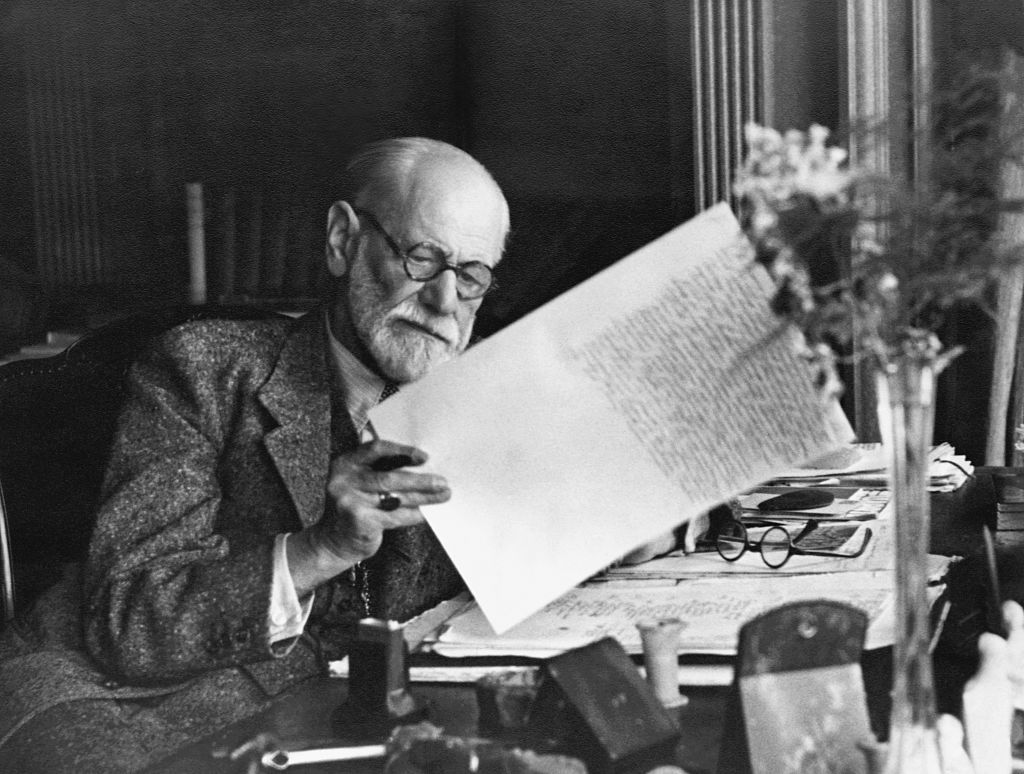
Freud would not be surprised. He believed sexuality sits at the center of unconscious life, and repression doesn’t remove it. It distorts it7. Freud would say cults obsess over sex because:
- Repressed desire resurfaces as control
- Shame converts libido into obedience
- Authority offers relief from internal conflict
As Sigmund Freud (psychoanalyst) wrote, “Civilization is built upon the renunciation of instinct”8. Cults just monetize that renunciation.
WHAT JUNG WOULD SAY ABOUT THIS
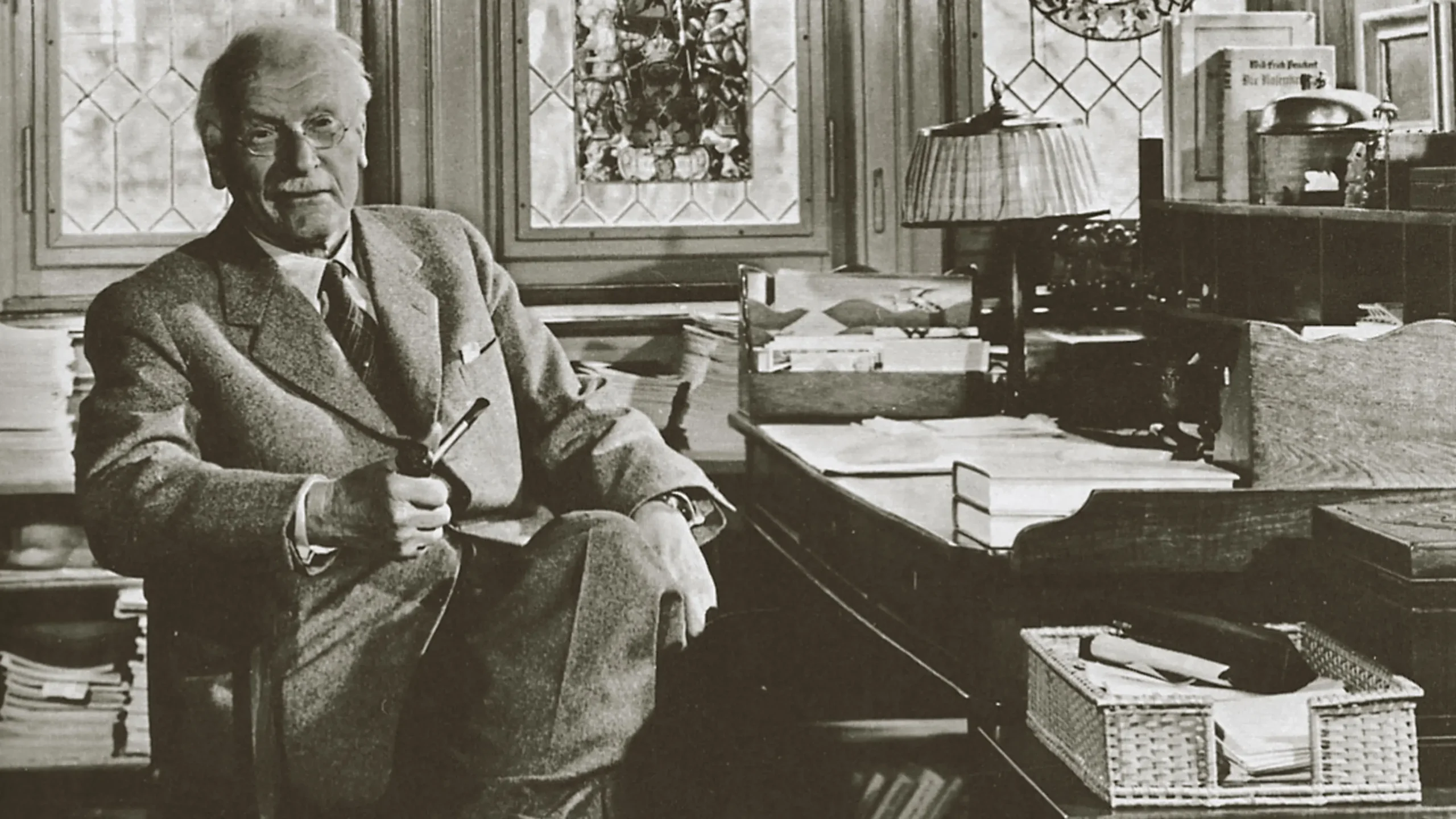
Jung would say cults activate the shadow. Everything erotic, aggressive, or forbidden that people refuse to integrate gets projected outward, then punished. Sex becomes symbolic. Bodies become battlegrounds. Purity becomes identity.
As Carl Jung (psychiatrist) warned, what we fail to integrate returns with force9. Usually wearing a uniform. That’s why cults talk endlessly about sex while insisting they’re above it.
WHY SEX AND SHAME ALWAYS TRAVEL TOGETHER
Shame is one of the most efficient control tools humans have ever invented. It:
- Silences dissent
- Keeps people compliant
- Makes suffering feel deserved
- Turns surveillance inward
As Brené Brown (researcher on shame) notes, shame thrives in secrecy, silence, and judgment10. Cults provide all three. Once shame is internalized, enforcement becomes unnecessary. You do the work for them.
WHEN “LIBERATION” IS JUST CONTROL IN A DIFFERENT OUTFIT
Some cults restrict sex. Others flood it. Both work. Sex-as-denial creates desperation. Sex-as-permission creates dependency. Either way, autonomy disappears.
As Jerry Garcia (musician, accidental philosopher) said, “You don’t want to be the best at what you do. You want to be the only one who does what you do.” Uniqueness becomes authority. Authority becomes loyalty.
WHAT THIS TELLS US ABOUT CULTS IN GENERAL
If a group controls how you think, controls who you can touch, and controls what you do with your body—that is not enlightenment. That is administration. As George Orwell (political writer) understood, power is not just about belief. It’s about deciding what people are allowed to feel in their own skin11.

FINAL BOTTOM LINE
If a group controls what you think and what you do with your body, you are not being awakened. You are being managed. That doesn’t require chains or compounds. It just requires shame, certainty, and someone else deciding where your body ends and their authority begins.
If this made you uncomfortable, good. That’s usually where agency starts.
WHY THIS WAS A SERIES
This was never three separate topics. It was one system, viewed from three angles. Cults showed how certainty hijacks the brain under threat. Freud and Jung showed how even brilliant ideas rot when followers stop questioning. Sex and Power showed where control always lands once belief hardens: the body.
Different domains. Same mechanism. The pattern is boring once you see it: Fear demands certainty. Certainty demands authority. Authority demands loyalty. Loyalty eventually demands your body.
This isn’t about religion, politics, therapy, or sex. It’s about what happens when thinking gets replaced by belonging. No movement is immune. No ideology is special. No intelligence level is protective. The only real safeguard is humility plus the ongoing permission to ask, “Wait. Is this actually true?”
If that question is discouraged, punished, or mocked, you already know where you are. And if reading this made you defensive, irritated, or suddenly eager to explain why your version is different, congratulations. That’s the nervous system noticing something important.
I read and welcome all comments, including thoughtful disagreement. Curiosity is not betrayal, and questioning ideas is not a personal failure. If you’d rather not comment publicly, you can find me at my website. And if you’re in Boulder, Colorado, yes, I’m real, I exist offline, and I do this work with actual humans who sit in actual chairs and change their minds all the time.
FOOTNOTES
- Michel Foucault, The History of Sexuality, Volume I: An Introduction (New York: Pantheon, 1978), pp. 17–35, 92–102. ↩
- John Bowlby, Attachment and Loss, Vol. 1: Attachment (New York: Basic Books, 1969), pp. 177–204, 208–215. ↩
- Janet Lalich, Bounded Choice: True Believers and Charismatic Cults (Berkeley: University of California Press, 2004), pp. 15–38, 95–121. ↩
- Michel Foucault, The History of Sexuality, Volume I (1978), pp. 140–159. ↩
- Philip Zimbardo, The Lucifer Effect: Understanding How Good People Turn Evil (New York: Random House, 2007), pp. 211–252. ↩
- Jonathan Haidt, The Righteous Mind: Why Good People Are Divided by Politics and Religion (New York: Pantheon, 2012), pp. 146–175, 219–230. ↩
- Sigmund Freud, Three Essays on the Theory of Sexuality (1905), in The Standard Edition of the Complete Psychological Works of Sigmund Freud, Vol. VII (London: Hogarth Press, 1953), pp. 123–245. ↩
- Sigmund Freud, Civilization and Its Discontents (1930), in The Standard Edition, Vol. XXI (London: Hogarth Press, 1961), pp. 64–86. ↩
- Carl G. Jung, Aion: Researches into the Phenomenology of the Self (Princeton: Princeton University Press, 1951), pp. 8–23, 71–96. ↩
- Brené Brown, Daring Greatly (New York: Gotham Books, 2012), pp. 67–88, 145–152. ↩
- George Orwell, Nineteen Eighty-Four (London: Secker & Warburg, 1949), pp. 248–268. ↩
- Robert J. Lifton, Thought Reform and the Psychology of Totalism (New York: W. W. Norton, 1961), pp. 419–437.
- Ernest Becker, The Denial of Death (New York: Free Press, 1973), pp. 1–19, 91–104.
- Erich Fromm, Escape from Freedom (New York: Farrar & Rinehart, 1941), pp. 141–170.
- Steven Hassan, Combating Cult Mind Control (Rochester, VT: Park Street Press, 2015), pp. 53–78, 183–201.
- Judith Herman, Trauma and Recovery (New York: Basic Books, 1992), pp. 94–128.
- Robert Sapolsky, Behave: The Biology of Humans at Our Best and Worst (New York: Penguin Press, 2017), pp. 596–621.
- Jerry Garcia, interviews on individuality and creativity, in Garcia: An American Life by Blair Jackson (New York: Penguin, 1999), pp. 243–245.