There are two kinds of people in the world.
People who listen to lyrics.
People who scream metaphors for grief, addiction, abandonment trauma, and psychosis in the car with the confidence of someone ordering a latte.
Most of us are in group two1.
Lyrics are emotional wallpaper. They are poetry. We do not study them. We live inside them. And while we are humming along, they are quietly rewiring our expectations of love, loss, longing, and survival2.
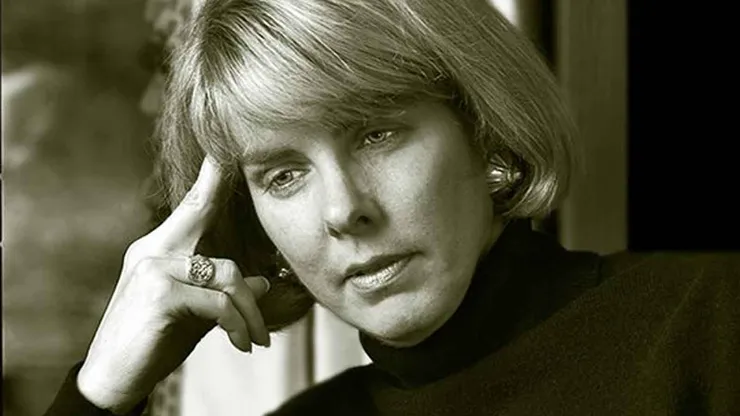
Kay Redfield Jamison (psychologist and expert on mood disorders) says artists often live at an emotional voltage that would fry most people. Their work contains the cry behind the creation3. If that is true, then for sixty years we have been dancing to someone else’s untreated catastrophe.
Time to turn on the lights.
Why Songs Hit Harder Than Conversations
Because:
- Rhythm calms the nervous system4
- Melody bypasses defenses5
- Metaphor lets humans say dangerous things safely6
- Repetition loads emotional code into long term memory7
We quote lyrics the way past generations quoted scripture or philosophers. Sometimes more. Songs are blueprints for feelings. Conversations are paperwork.

The First Instrument and Why Emotion Started There
Humans invented music the way they invented fire. Accidentally, then obsessively.
The first instrument was almost certainly the human voice. Before tools, early humans already had:
- vocal cords
- breath
- rhythm in their bodies
- emotions that needed an exit
A scream signals danger. A hum signals safety. A chant signals belonging. The voice was a built in emotional broadcast system8.
After the voice came flutes made from hollow bones, scraped percussion, and stretched hides. Anything that made sound became a tool for meaning. Humans do not like ambiguity. They like patterns. Music gave shape to feelings long before language caught up.
The Evolutionary Psychology of Music
Why We Are Built to Feel Through Sound
Music is not a luxury. It is a survival mechanism.
Evolutionary psychologists note that even early hominins used sound to regulate group cohesion, emotional states, and threat perception9. Music helped with:
- regulating arousal
- synchronizing group behavior
- bonding between caregivers and infants
- marking rituals, transitions, and grief
- teaching emotional categories before language existed
A lullaby teaches safety. A war chant teaches unity. A funeral song teaches loss without requiring vocabulary for it.
Music activates nearly every major neural network at once: emotional circuits, memory circuits, reward pathways, motor regions, prediction systems, and mirror neurons10. No other human behavior lights up the brain like this except complex social bonding.
Which is why losing access to music is dangerous.
What Happens When Humans Cannot Access Music
When deprived of music, studies show increases in:
- anxiety
- irritability
- emotional dysregulation
- loneliness
- impaired social bonding
- decreased sense of meaning
Music is not optional for the human nervous system. It is emotional scaffolding. Remove it and the structure wobbles.
This is why even in the darkest moments of human history, people made music anyway.
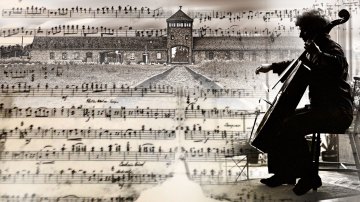
Why Music Appeared Even in Concentration Camps
In the concentration camps, prisoners made instruments from scraps, built makeshift orchestras, whispered songs, and tapped rhythm with spoons. Not because life was tolerable. But because the nervous system cannot endure prolonged terror without something to anchor it.
Music served three functions:
Emotional survival
It prevented complete psychic collapse when language was inadequate11.
Communal identity
Singing together was an act of remembering humanity when the system tried to erase it12.
Resistance
Music said, You cannot stop us from feeling, remembering, or being human13.
Even in hell, humans reach for melody. We admire people who can do this to us with sounds and poetry.
Modern Lyricists Continuing the Emotional Tradition
Where Article 1 explored the classics, Article 2 dives into the present and finds artists writing with their emotional organs on the outside.
Billie Eilish
“everything i wanted”
Suicidal ideation disguised as a lullaby. Achievement cannot immunize you against despair.
Kendrick Lamar
“u”
A self confrontation so raw Kendrick dislikes performing it. Trauma legacy, shame, and the kind of honesty most people avoid at all costs.
Olivia Rodrigo
“logical”
Gaslighting as cognitive distortion. A teenager explaining schemas better than many adults.
Mitski
“Nobody”
Borderline level emptiness dressed up as disco.
Wet Leg
“Chaise Longue”
Absurd humor masking overstimulation and anxiety.

What Experts Add To This
Kay Redfield Jamison (psychologist): Artists create from unstable emotional voltage3.
Bessel van der Kolk (trauma researcher): Trauma keeps the brain’s alarm on14.
Daniel Levitin (neuroscientist): Music rewires emotional circuitry15.
Aaron Beck (founder of cognitive therapy): Catastrophizing distorts meaning16.
John Bowlby (attachment theorist): Attachment wounds shape self worth17.
Elisabeth Kübler Ross (psychiatrist and grief theorist): Grief changes shape instead of disappearing18.
Together they all say the same thing. Music is an emotional MRI.
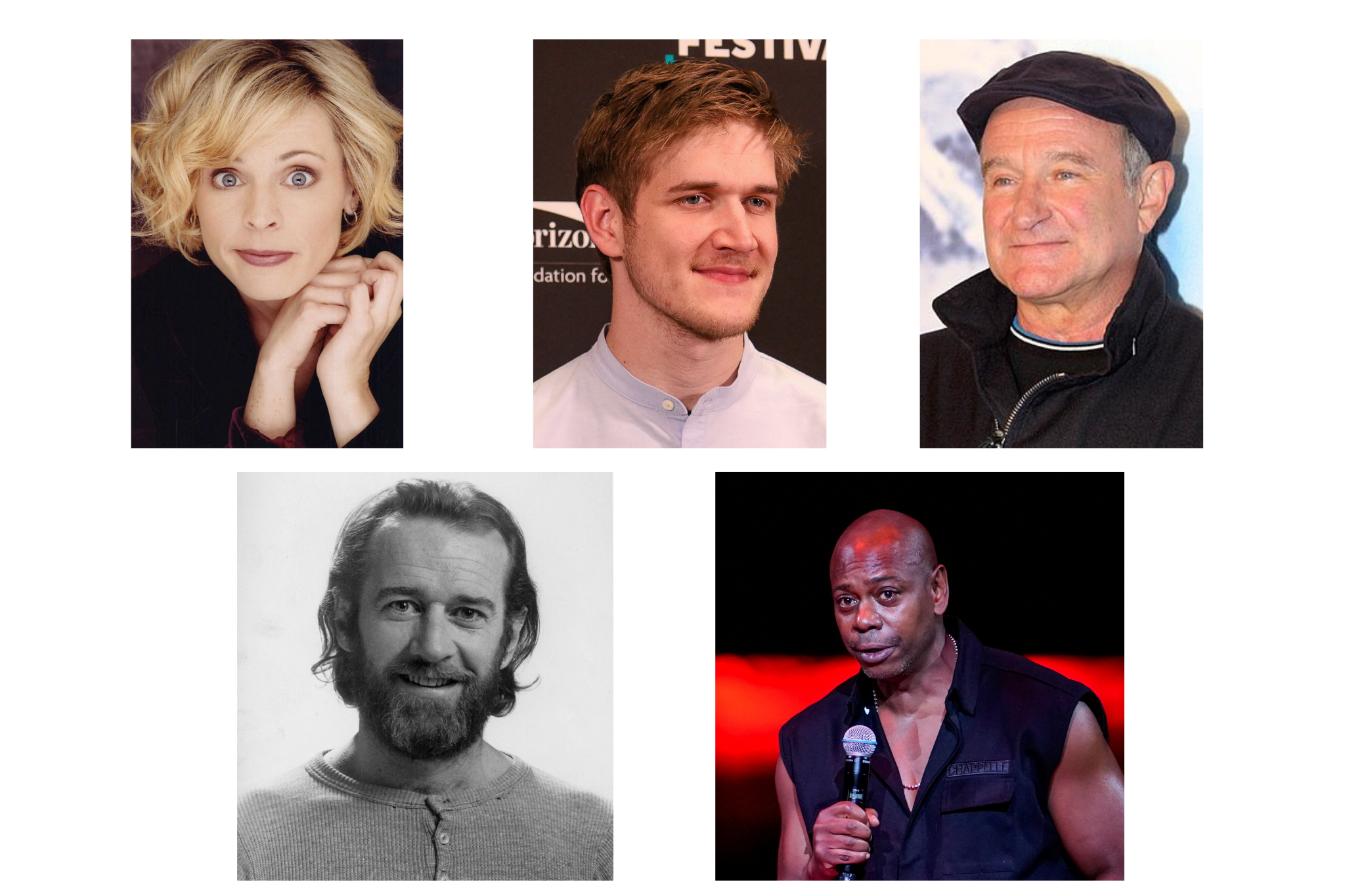
What Comedians Add To This
Comedians tell the truth sideways.
George Carlin (comedian): Inside every cynical person is a disappointed idealist19.
Maria Bamford (comedian): My issues have subscriptions20.
Robin Williams (comedian and actor): A little spark of madness is necessary21.
Bo Burnham (comedian and writer): Humor becomes medicine when medicine needs backup22.
Dave Chappelle (comedian): Calling someone crazy is often what people say when they cannot understand their suffering23.
Comedy and lyrics share a bloodstream. They both hide confessions inside misdirection.
Why Humans Treat Lyrics Like Religious Texts

Different cultures, same emotional operating system.
- Fado in Portugal
- Bollywood ballads in India
- Afrobeats in Lagos
- K pop in Seoul
- American teenagers crying to Mitski behind a Taco Bell
Lyrics become scripture because they:
- validate private states
- offer vocabulary for unnameable feelings
- give narrative shape to suffering
- broadcast I am not the only one
- allow safe emotional exposure
Misunderstood lyrics often mean misunderstood selves. Seeing them clearly is emotional literacy.
Why This Matters
Songs are not background. They are emotional X rays.
They are therapy sessions that never got billed.
They are case reports disguised as hooks.
Music lets the nervous system tell the truth even when the mouth refuses.
When you finally understand what your favorite songs are actually saying, you understand yourself with more precision. Lyrics are mirrors. The question is whether you are ready to look.
Are you still singing the misinterpretation or finally ready to hear what has always been there?
If you find this work helps you better understand the role of both music and specifically lyrics, please leave me a comment, tell me what you know about this. How are you affected by music and/or lyrics? Especially when you were younger, or if it is your kids who need to listen to something to fall asleep, or have posters of their favorites on the wall to always remind them of something….
FOOTNOTES
- Daniel J. Levitin, This Is Your Brain on Music (New York: Penguin, 2006), pp. 3–18. ↩
- Patrik N. Juslin and John A. Sloboda, “Emotional Responses to Music,” Psychological Bulletin 139, no. 1 (2013). ↩
- Kay Redfield Jamison, Touched with Fire (New York: Free Press, 1993), pp. 5–18. ↩
- Michael Thaut, “Rhythm, Music, and the Brain,” Annals of the New York Academy of Sciences 1060 (2005). ↩
- Stefan Koelsch, Brain and Music (Oxford: Wiley-Blackwell, 2012), pp. 46–72. ↩
- George Lakoff, “Metaphor and Emotion,” Cognitive Science 17 (1993). ↩
- Bob Snyder, Music and Memory (Cambridge, MA: MIT Press, 2000), pp. 173–185. ↩
- Charles Darwin, The Expression of the Emotions in Man and Animals (1872). ↩
- Robin Dunbar, “Music and Social Bonding,” Nature (2012). ↩
- Aniruddh D. Patel, Music, Language, and the Brain (Oxford: Oxford University Press, 2008). ↩
- Viktor Frankl, Man’s Search for Meaning (1946). ↩
- Shoshana Kalisch, Yes, We Sang! Songs of the Ghettos and Concentration Camps (1985). ↩
- Shirli Gilbert, Music in the Holocaust (Oxford University Press, 2005). ↩
- Bessel van der Kolk, The Body Keeps the Score (Viking, 2014), pp. 205–220. ↩
- Daniel Levitin, The World in Six Songs (Dutton, 2008). ↩
- Aaron T. Beck, Cognitive Therapy and the Emotional Disorders (1976). ↩
- John Bowlby, A Secure Base (Basic Books, 1988). ↩
- Elisabeth Kübler-Ross, On Death and Dying (1969). ↩
- George Carlin, Napalm & Silly Putty (Hyperion, 2001). ↩
- Maria Bamford, The Special Special Special! (2012). ↩
- Robin Williams, Interview, Mork & Mindy era Archive (1978). ↩
- Bo Burnham, Inside (Netflix, 2021). ↩
- Dave Chappelle, Inside the Actors Studio (2006). ↩
- Oliver Sacks, Musicophilia (Knopf, 2007). ↩
- Robert Zatorre, “Predispositions and Plasticity in Music Processing,” Nature Neuroscience (2005). ↩