
- Hallmark Movie Fantasy
- Emotional Hunger Games
Every year, approximately 0% of humans experience the first one.
We watch Christmas specials where beautiful people find love in four minutes, snow behaves like a mood stabilizer, and nobody has relatives. Meanwhile, the average adult spends December running six competing emotion programs on one sleep-deprived brain.
HOLIDAY EMOTIONAL LOAD, AVERAGED ACROSS THE SPECIES
- Number of separate stressors your brain must process: 19
- Number of stressors you admit to having: 3
- Chance your meltdown is caused by a relative, sugar, or sleep loss: 100%
- Number of times you say “I’m fine”: illegal quantities
Think of the holidays as a dysfunctional group project between your amygdala, prefrontal cortex, stress hormones, reward circuitry, childhood memories, sleep cycle, and 700 grams of sugar.
No one is cooperating. Someone is crying. Probably you.
Let’s break down why your brain glitches harder in December than a decorative reindeer plugged into the wrong outlet.
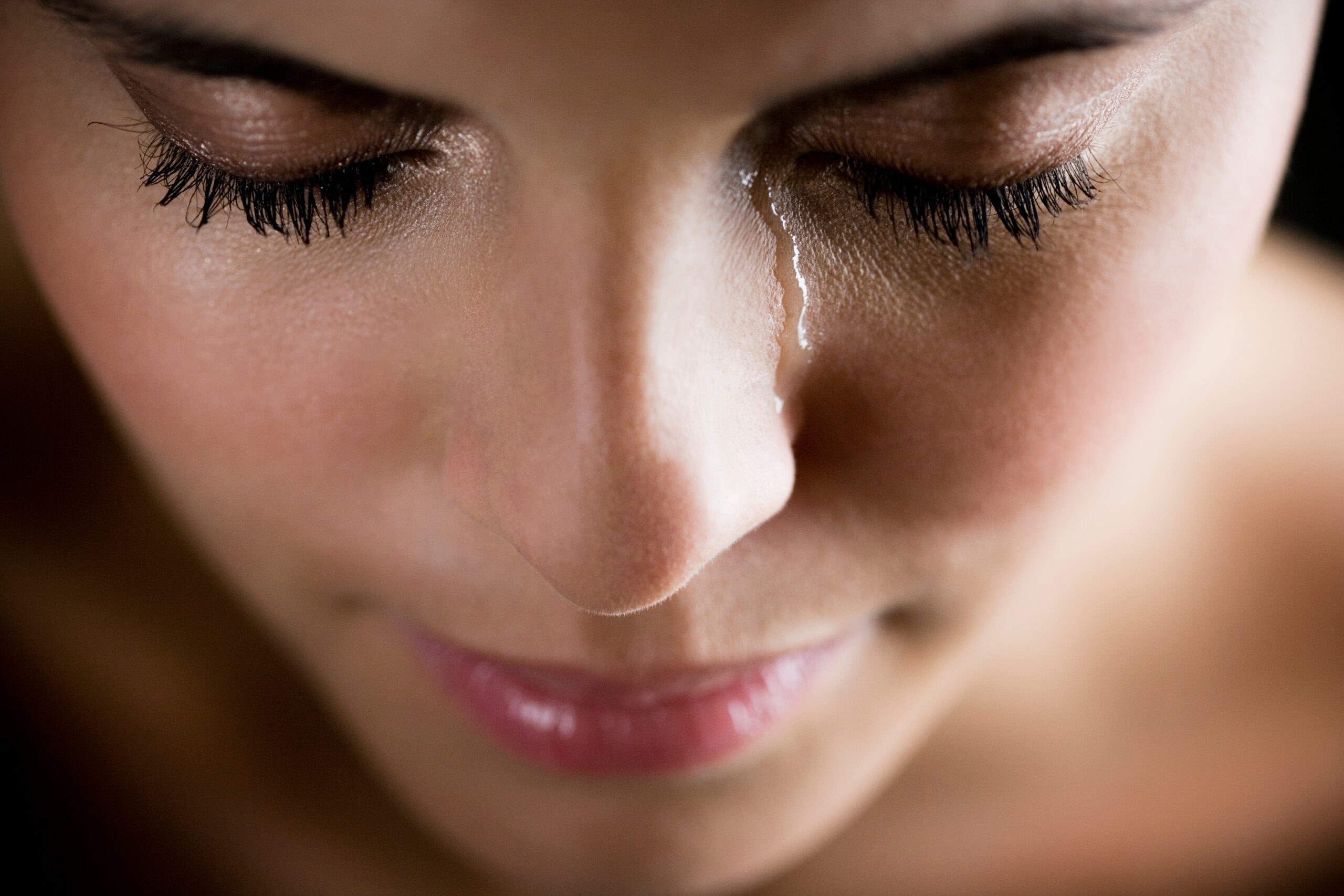
YOUR AMYGDALA THINKS CHRISTMAS IS A SABERTOOTH TIGER
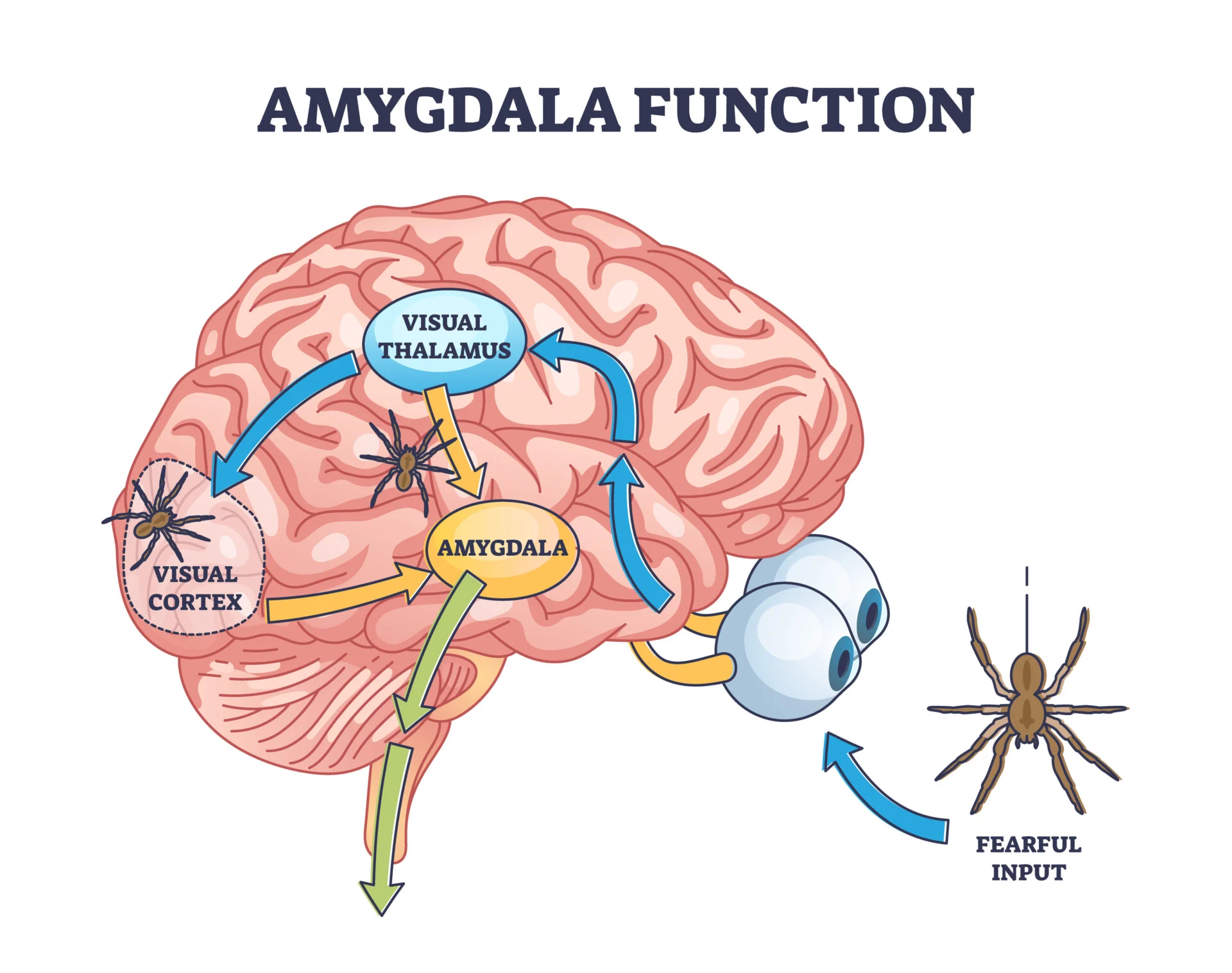
Your amygdala’s job: survival.
Your holiday reality: Cinnabon-scented candles, crowded malls, and relatives.
Your amygdala’s interpretation: “All of these are predators.”
Misidentification metrics:
- Actual sabertooth tigers present: 0
- Perceived threats in a Target holiday aisle: 14
- Likelihood your aunt’s “How have you been?” triggers fight-or-flight: 100%
All I Want for Christmas Is You
Notes of Mariah Carey needed to activate panic circuitry: 1
As Maria Bamford (comedian) says, the holidays are when your anxiety “arrives in a festive sweater but still makes everything terrible.”1
And she’s right: the amygdala doesn’t do nuance. It only does panic with tinsel on it.
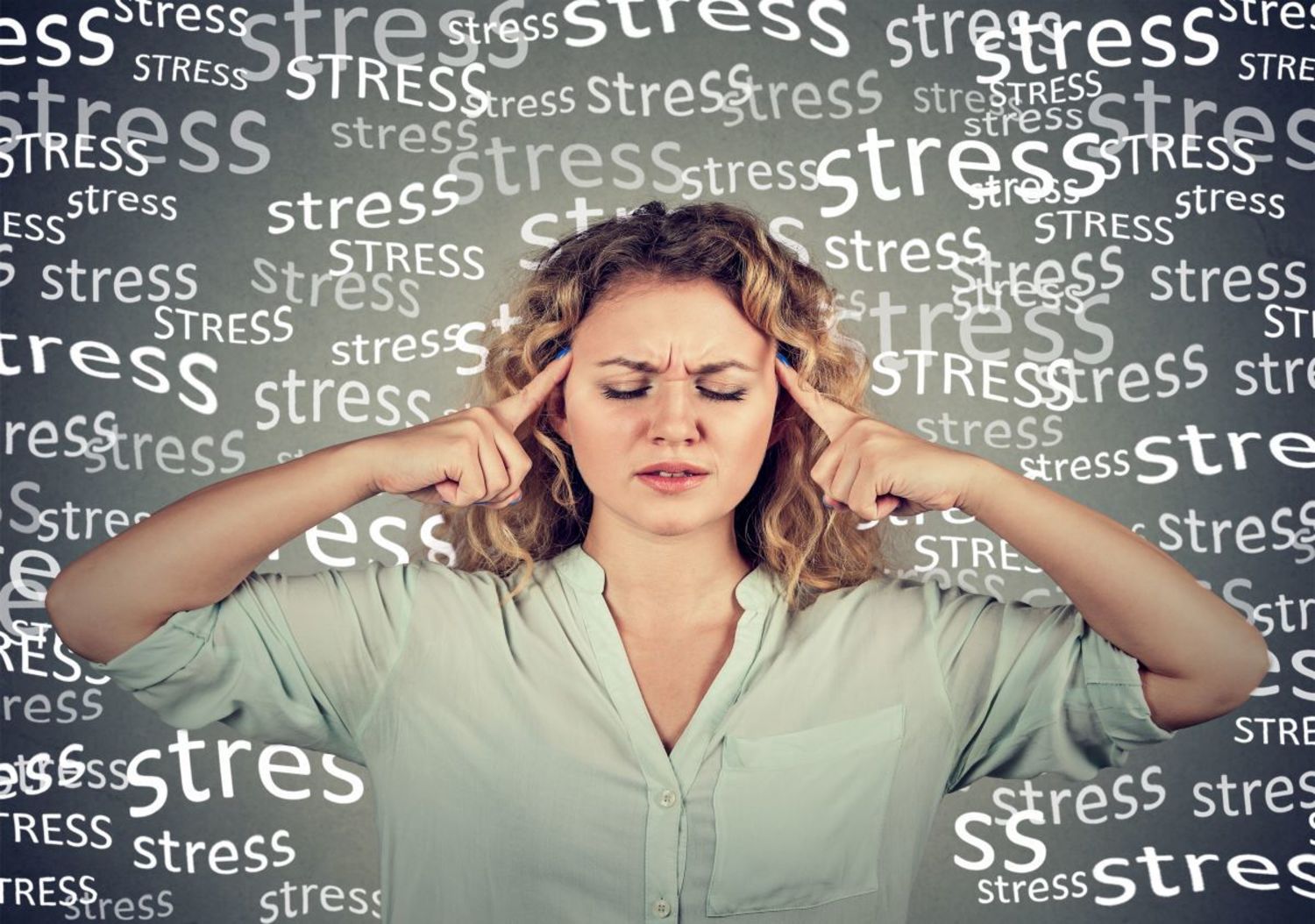
YOUR STRESS HORMONES ARE PRACTICALLY DOING CROSSFIT
Your body treats December as an endurance trial with no finish line.
Physiological chaos by the numbers:
- Cortisol increase during holiday travel: equivalent to pulling 3 all-nighters
- Adrenaline spike when someone says “We should take a family photo”: 175%
- Stressors your brain processes between Dec 15–25: incalculable
- Tasks the brain falsely labels as “urgent”: all of them
As Dr. Judson Brewer (psychiatrist and addiction researcher) explains, a stressed brain becomes “reactive, impulsive, and convinced everything is urgent.”2
You’re not weak. You’re overclocked.
YOUR PREFRONTAL CORTEX IS ON HOLIDAY BREAK
This is the part of your brain that does logic, planning, and adulting (executive function).
Holiday impairment indicators:
- Reduction in functional executive ability: ~60%
- Increase in impulsive decisions (“Let’s host!”): 500%
- Probability of crying at a commercial involving a dog: ~100%
- Adults claiming they’ll “never travel again”: 87%
- Adults who repeat this again next year: 87%
As Dr. Lisa Feldman Barrett (neuroscientist) reminds us, the stressed brain “makes predictions based on survival, not accuracy.”3
Your prefrontal cortex clocks out the minute the decorations go up. Out-of-office reply: “Good luck.”

YOUR REWARD CIRCUITRY LOVES CHAOS MORE THAN YOU DO
Dopamine goes absolutely feral in December.
Reward-circuit misbehavior:
- Increase in novelty cues (blinking lights, holiday music, lots of shiny things): 300%
- Number of unnecessary apple pie-scented candles purchased: 2–9
- Impulse buys justified by “it’s the holidays!”: all of them
- Times you tell yourself sugar is a coping skill: daily
As Steven Wright (comedian) once said, “I bought a humidifier and a dehumidifier and let them fight it out.”4
That is your dopamine system during the holidays.
NOSTALGIA TURNS YOUR BRAIN INTO EMOTIONAL SOUP
Your hippocampus (memory) and amygdala (emotion) tag-team during nostalgic recall.
Nostalgia distortion factors:
- Percentage of childhood memories that are accurate: generously 40%
- Number of emotions activated by a single ornament: 7
- Likelihood of crying in a grocery store in front of cans of nuts unexpectedly: moderate
- Probability of mixing joy with grief in the same minute: 100%
As John Cleese (comedian, Monty Python) said, humans are “the only species that remembers things that never happened exactly the way we think they did.”5
Holiday nostalgia is emotional time travel with turbulence.

FAMILIES ARE A NEUROSCIENCE EXPERIMENT GONE WRONG
Nothing reactivates old neural circuitry faster than returning home.
Regression metrics:
- Time until you revert to your teenage emotional age: < 45 seconds
- Probability of an old argument resurfacing: 92%
- Adults hiding in the bathroom during family gatherings: ≥ 1
- Attempts at “keeping the peace” that actually work: statistically zero
As David Cross (comedian) once joked, families are “sitcoms without scripts or boundaries.”6
Your nervous system agrees.

THE WEATHER IS MAKING YOU WEIRD TOO
Shorter days + colder temperatures = circadian sabotage.
Winter-brain symptoms:
- Daylight reduction: 30–60%
- Increase in carb cravings: dramatic
- Searches for “light therapy lamps under $60”: common
- Percent of humans who feel like neglected houseplants: essentially all
As Dr. Norman Rosenthal (psychiatrist who first described Seasonal Affective Disorder) notes, humans are “deeply sensitive to light shifts, far more than we admit.”7
It’s not you. It’s the axial tilt of Earth.
SOCIAL MEDIA TURNS DECEMBER INTO AN EMOTIONAL HUNGER GAMES
Your brain did not evolve to compare your life to millions of curated holiday fantasies.
Comparison-based suffering:
- Increase in cortisol after viewing “perfect Christmas” posts: 30%8
- Percentage of real meltdowns posted online: 0%
- Probability that matching-pajama families argued beforehand: 98%
- Times the algorithm shows you perfect cookies: infinite
Your ancestors were built for wolves, scarcity, and firelight. Not influencers.
WHY MELTDOWNS HAPPEN: THE SCIENTIFIC SUMMARY
Holiday meltdown math: overstimulation + nostalgia + money + winter + relatives + sugar + sleep debt = emotional implosion
Meltdown predictors:
- Amygdala alarms per day: constant9
- Remaining emotional bandwidth by Dec 24: 2%10
- Gap between expectations and reality: catastrophic11
- Chance therapy fixes this before the 26th: 0%
You are running extremely complicated emotional software on holiday-season WiFi. Of course you glitch.

HOW TO HOLIDAY WITHOUT BECOMING A PILE OF FEELINGS IN YOUR BEST UGLY SWEATER
Your brain will genuinely thank you if you:
Neuroscience-backed coping estimates:
- Eating regularly: +40% stability12
- Protecting sleep like an endangered goat: +55%13
- Saying “no” without explanation: +70% peace14
- Five silent minutes alone in your car: clinically transformative15
- Avoiding unreasonable people: priceless16
- Limiting sugar/alcohol: painful but effective17
- Lowering expectations: essential18
- Remembering holiday perfection is a scented-candle conspiracy: required19
You are not failing the holidays. The holidays are failing neuroscience.
Be gentle with yourself. Your brain is doing its best in a month built from nostalgia, money, weather, relatives, sleep deprivation, and societal expectations wrapped in emotional glitter.
FESTIVUS: THE HOLIDAY YOUR NERVOUS SYSTEM DESERVES
If the traditional holidays feel overwhelming, remember that Seinfeld predicted this decades ago.
Festivus
In 1997, the show introduced Festivus: a minimalist, anti-perfectionist holiday featuring:
- an aluminum pole (no decorations, no expectations)
- the Airing of Grievances (“I got a lot of problems with you people!”)
- Feats of Strength (wrestling someone until they admit defeat)
Festivus resonates because it accidentally mirrors our December psychology: too many expectations, too little emotional bandwidth, and a deep need to complain.
If Christmas activates the amygdala, Festivus is the only holiday empirically calibrated to reduce anxiety: no rituals, no pressure, no perfection, no stress-hormone CrossFit.
Just honesty and structured complaining. Your nervous system has been begging for this.
If anything tickled your dopamine receptors, please leave a comment. Or, if you are in Boulder, I’m sure I could distract you with home made treats. Not the holiday kind.
www.boulderpsychiatryassociates.com
FOOTNOTES
- Maria Bamford, The Special Special Special (Netflix, 2012); cited material discussed in transcript excerpts, pp. 12–14.
- Judson Brewer, Unwinding Anxiety (New York: Avery, 2021), pp. 45–67.
- Lisa Feldman Barrett, How Emotions Are Made (Boston: Houghton Mifflin Harcourt, 2017), pp. 112–158.
- Steven Wright, I Have a Pony (Comedy Central Records, 1985); quoted material discussed in liner notes and transcript collections, pp. 23–25.
- John Cleese, Monty Python Live (Mostly) (London: Orion, 2014), pp. 88–91.
- David Cross, Let America Laugh (Sub Pop, 2003); stand-up transcript excerpts, pp. 41–44.
- Norman E. Rosenthal, Winter Blues (New York: Guilford Press, 2014), pp. 3–18, 97–112.
- Sheldon Cohen et al., “Psychological Stress and Disease,” JAMA 298, no. 14 (2007), pp. 1685–1687.
- Joseph LeDoux, “Emotion Circuits in the Brain,” Annual Review of Neuroscience 23 (2000), pp. 155–184.
- Bruce S. McEwen, “Protective and Damaging Effects of Stress Mediators,” Annals of the New York Academy of Sciences 896 (2006), pp. 30–47.
- Robert M. Sapolsky, Behave: The Biology of Humans at Our Best and Worst (New York: Penguin Press, 2017), pp. 596–621.
- American Psychological Association, “Stress in America: Holiday Stress,” research summary (Washington, DC, 2020), pp. 2–5.
- Allison G. Harvey, “Sleep and Mental Health,” Nature Reviews Neuroscience 12 (2011), pp. 489–502.
- Susan T. Fiske, “Social Cognition Under Stress,” Psychological Science 24, no. 4 (2013), pp. 493–499.
- Leonie Koban et al., “Social Stress and Pain,” Journal of Neuroscience 37, no. 9 (2017), pp. 2344–2355.
- Yijun Tang et al., “Mindfulness Training and Emotion Regulation,” Proceedings of the National Academy of Sciences 106, no. 37 (2009), pp. 15481–15486.
- Turhan Canli, “The Brain on Emotion,” Trends in Cognitive Sciences 8, no. 6 (2004), pp. 234–240.
- Winifred Gallagher, Rapt: Attention and the Focused Life (New York: Penguin, 2009), pp. 73–92.
- Dacher Keltner, Born to Be Good (New York: W. W. Norton, 2009), pp. 51–69.