The Second Brain You’ve Been Ignoring
Let’s have a heart-to-gut talk about the forty trillion tiny squatters who live inside you. They are not just along for the ride. They help digest your breakfast burrito, train your immune system, produce vitamins, and send chemical messages that can literally change your mood. They have been here for billions of years, and they are better at survival than any human has ever been.
Once you learn about them, you will never look at your stomach the same way again.
Meet Your Microbial Overlords
Microbes were the first living things on Earth, appearing roughly 3.5 billion years ago1 when Earth was a volcanic wasteland with no oxygen, no trees, no fish. The oceans were hot, the air was toxic, and meteorites still rained down. And yet microbes said, “Perfect. We’ll take it.” Over hundreds of millions of years, they figured out how to live in boiling vents, freezing ice, acid pools, and radioactive zones. They invented photosynthesis, filled the atmosphere with oxygen, and made multicellular life possible.
— Dr. James Greenblatt, psychiatrist and pioneer in nutritional psychiatry
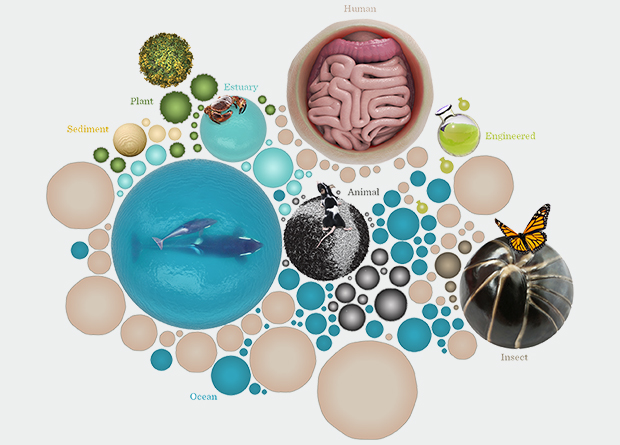
Today those microbial descendants still run much of the show inside you. The average human hosts around 39 trillion microbial cells3 compared to only 30 trillion human cells. Comedian Bill Hicks put it perfectly: “We are a virus with shoes.”4
These organisms weigh about 200 grams, roughly the weight of a hamster3, but carry millions of genes, about 100 times more than you have3. Your microbiome contains as many as 1,000 species that collectively produce vitamins, influence immune function, and determine how many calories you absorb from your food.
You are not a single organism. You are a living city with trillions of citizens, all working, fighting, and cooperating around the clock.
Microbial Networking: The Original Social Media
Microbes are not solitary. They are chatterboxes. They use quorum sensing5, a chemical messaging system that lets them count how many neighbors are present. When enough of them are nearby, they switch from acting alone to acting as a group.
— Ali Wong, comedian, in Baby Cobra
She was talking about new parenthood, but she could have been describing a thriving gut microbiome fermenting fiber into short-chain fatty acids7 and sending messages to your immune system.
When microbes sense a quorum, they coordinate behavior. They can build biofilms, which are slimy protective fortresses. They can release toxins to wipe out competitors. They can share resources or switch on genes that make them glow in the dark8.
— George Carlin, legendary comedian
And they do not just talk to each other. They talk to you. Certain bacteria can trigger cravings for sugar. Others encourage you to eat fiber. Some even influence mood by signaling your gut cells to produce serotonin or dopamine. That “gut feeling” might literally be a bacterial group chat reaching consensus.
— Dr. Robert Lustig, pediatric endocrinologist

A Symbiotic Relationship (Mostly)
You and your microbes are partners. You feed them, give them shelter, and in exchange they make vitamins like K and B1210, help you digest complex plant fibers, teach your immune system to tell friend from foe11, and protect you from pathogens12.
— Julie Matthews, nutritionist specializing in autism and gut health
Without microbes, your immune system would overreact, causing allergies and autoimmune attacks. Children raised in overly sterile environments are more likely to develop these problems.
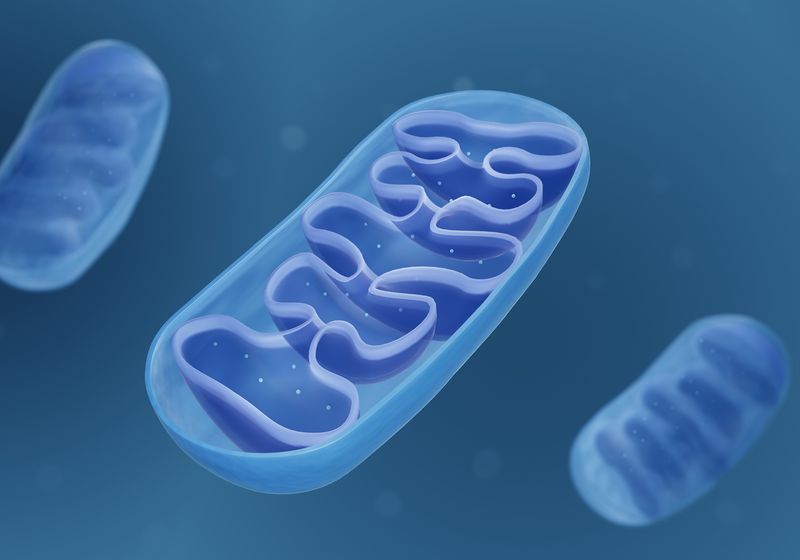
And then there is the deepest partnership of all: mitochondria. Two billion years ago, a single-celled organism swallowed a bacterium. Instead of digesting it, they formed a truce. The bacterium became the mitochondrion14.
Mitochondria turn food into ATP, the energy that powers every heartbeat, every thought, every breath. They are why you can move, think, dream, and be alive. They are living proof that symbiosis is one of the oldest and most successful survival strategies on Earth.
Why We Eat Everything
Humans are omnivores. That ability let us survive ice ages, famines, and migrations.
— Bill Burr, comedian
Our anatomy reflects this flexibility: teeth for slicing, tearing, and grinding. Stomach acid strong enough to kill pathogens. Intestines long enough to extract nearly all usable calories15.
Your microbes finish digestion by fermenting fiber into short-chain fatty acids that reduce inflammation, nourish the gut lining, and even regulate appetite7. They help decide how much energy you get from each bite, which is why two people can eat the same meal but have different weight outcomes.
The Gut–Brain Hotline
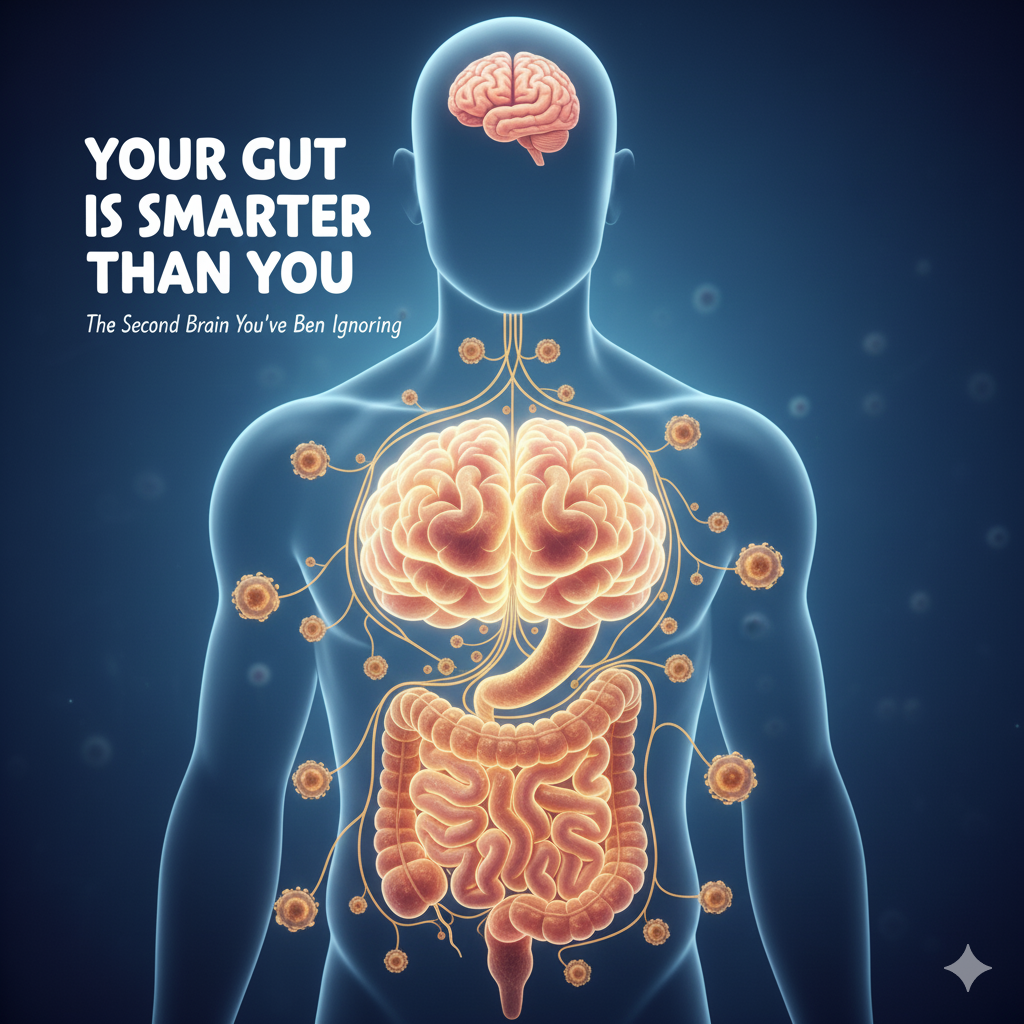
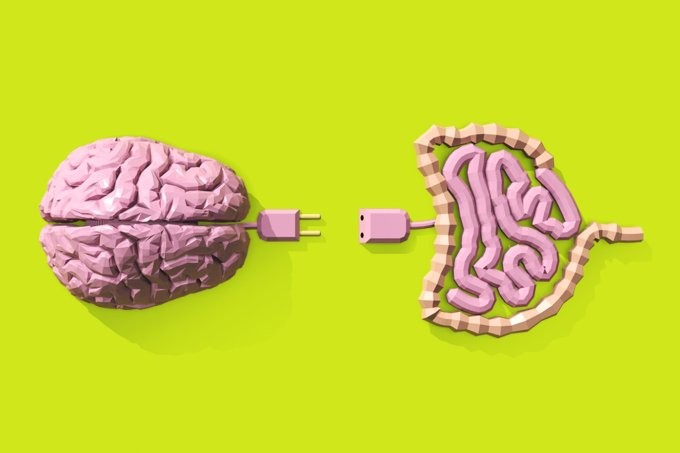
You have two brains. Your second brain, the enteric nervous system, has around 500 million neurons16 and connects to your skull-brain through the vagus nerve17. This is a two-way hotline constantly reporting on digestion, immune activity, and inflammation.
— George Carlin, legendary comedian
When your gut is inflamed, the vagus nerve sends alarm signals to the brain, triggering anxiety, irritability, and brain fog. When the gut is healthy, it sends calming signals that stabilize mood.
This is especially important for autism. Between 50 and 70 percent of autistic people have chronic GI problems18. A 2019 study found that fecal microbiota transplants improved GI symptoms by 80 percent and autism-related behaviors by 45 percent, with benefits lasting two years19.
Serotonin: Not Just a Happy Chemical
Serotonin is often called the happiness chemical, but about 90 to 95 percent of it is made in the gut20.
Serotonin controls how fast food moves through your intestines, how sensitive you are to pain, when you feel hungry, and how well you sleep. Low serotonin slows motility, which can cause constipation and increase risk for depression20. High serotonin speeds things up, which explains why stress can send you running to the bathroom20.
Some gut bacteria stimulate serotonin production directly20. Your microbes are literally helping write your emotional script.
— Bill Burr, comedian
SSRIs, the most prescribed antidepressants, increase serotonin signaling everywhere, not just in the brain. Up to 40 percent of people report gut side effects like nausea or diarrhea20. That is not random. That is biology reminding you that serotonin works everywhere, not just in your skull.
Why You Need to Know This
This is not trivia. This is the control panel for your body and mind.
When your microbiome is balanced, inflammation decreases, mood steadies, energy improves, and stress becomes manageable11. When it is disrupted, you might first notice fatigue, brain fog, anxiety, or cravings20 long before any stomach pain.
— Ali Wong, comedian
Understanding this shifts how you see mental health. Depression and anxiety are not just “chemical imbalances in the brain.” They are full-body issues that involve the gut, the immune system, and the trillions of microbes you carry. Supporting gut health is a fundamental part of supporting mental health.
How to Support Healthy Serotonin
- Eat tryptophan-rich foods like turkey, eggs, seeds, oats20
- Feed your microbes with prebiotic fiber from garlic, onions, bananas, asparagus20
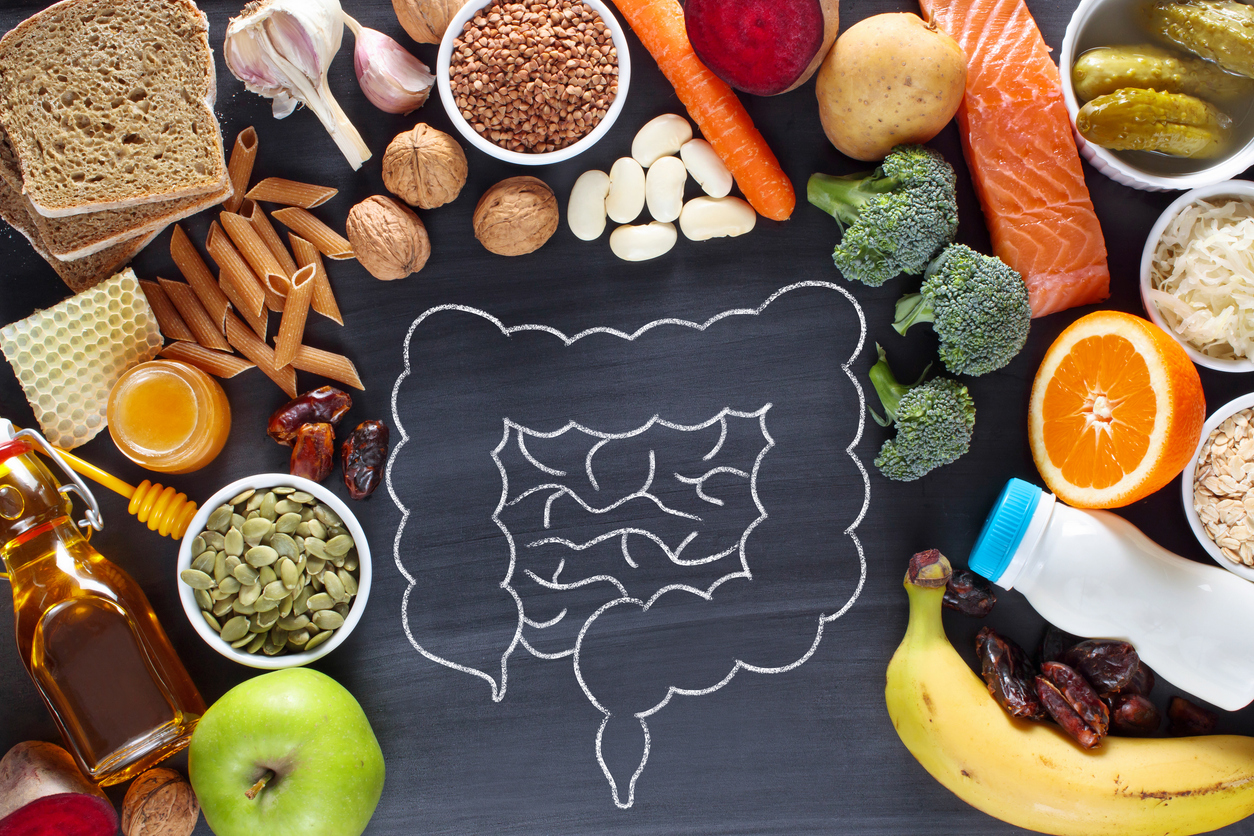
- Add probiotics and fermented foods like yogurt, kefir, sauerkraut20
- Exercise daily to increase serotonin and improve gut motility20
- Get enough sleep, since serotonin production depends on circadian rhythm20
Five Simple Ways to Keep Your Gut and Brain Happy
- Feed Your Microbes Real Food. Aim for 25 to 30 grams of fiber per day20
- Add Fermented Foods. Diversity keeps ecosystems resilient20
- Avoid Microbiome Wrecking Balls. Cut back on ultra-processed foods20
- Manage Stress. Mindfulness and slow breathing calm the vagus nerve20
- Prioritize Sleep. Poor sleep disrupts microbial diversity20
The Big Takeaway
You are not one creature. You are trillions of creatures living in partnership.
You have two brains. You have trillions of microbial roommates. You have ancient bacteria inside every cell producing the energy that keeps you alive.
Mental health is not all in your head. It is in your gut, your immune system, and in the 39 trillion voices living inside you. When you take care of them, you take care of yourself.
Ready to Go Deeper
This is not just a fun fact. It is an invitation to rethink health from the ground up.
When you eat better, sleep well, and reduce stress, you are not just doing “self-care.” You are literally sending chemical signals to trillions of microbes, telling them to work with you, not against you. When you ignore these systems, inflammation rises, fatigue builds, and mental health declines.
This is one of the most powerful levers you have to improve your life. Small daily choices can reset your microbiome and improve mood, focus, and resilience within weeks.
I invite you to continue this conversation with me, because this is just the beginning of what science is uncovering.
Visit: www.boulderpsychiatryassociates.com
Footnotes
- Knoll, A.H. (2015). Life on a Young Planet: The First Three Billion Years of Evolution on Earth. Princeton University Press, p. 42. ↩
- Greenblatt, J. (2018). Integrative Medicine for Depression. Norton Medical Books, p. 17.
- Sender, R. et al. (2016). “Revised Estimates for the Number of Human and Bacteria Cells in the Body.” PLOS Biology, 14(8): e1002533. ↩
- Hicks, B. (1993). Arizona Bay. Rykodisc. ↩
- Waters, C.M., Bassler, B.L. (2005). “Quorum Sensing: Cell-to-Cell Communication in Bacteria.” Annual Review of Cell and Developmental Biology, 21: 319–346. ↩
- Wong, A. (2016). Baby Cobra. Netflix.
- Koh, A. et al. (2016). “From Dietary Fiber to Host Physiology: Short-Chain Fatty Acids as Key Bacterial Metabolites.” Cell, 165(6): 1332–1345. ↩
- Nealson, K.H. (1977). “Autoinduction of Bacterial Luciferase.” Science, 196(4296): 1315–1317. ↩
- Lustig, R. (2012). Fat Chance. Hudson Street Press, p. 103.
- Hill, M.J. (1997). “Intestinal Flora and Vitamin K Metabolism.” Journal of Clinical Pathology, 50(6): 472–475. ↩
- Belkaid, Y., Hand, T.W. (2014). “Role of the Microbiota in Immunity and Inflammation.” Cell, 157(1): 121–141. ↩
- Kamada, N. et al. (2013). “Control of Pathogens and Pathobionts by the Gut Microbiota.” Nature Immunology, 14: 685–690. ↩
- Matthews, J. (2021). Nourishing Hope for Autism. BioIndividual Nutrition Institute, p. 44.
- Lane, N. (2005). Power, Sex, Suicide: Mitochondria and the Meaning of Life. Oxford University Press, p. 68. ↩
- Milton, K. (2003). “The Critical Role Played by Animal Source Foods in Human Evolution.” Journal of Nutrition, 133(11): 3886S–3892S. ↩
- Gershon, M.D. (1998). The Second Brain. Harper Perennial, p. 33. ↩
- Bonaz, B. et al. (2018). “The Vagus Nerve at the Interface of the Microbiota-Gut-Brain Axis.” Frontiers in Neuroscience, 12: 49. ↩
- McElhanon, B.O. et al. (2014). “Gastrointestinal Symptoms in Autism Spectrum Disorder: A Meta-Analysis.” Pediatrics, 133(5): 872–883. ↩
- Kang, D-W. et al. (2019). “Long-term Benefit of Microbiota Transfer Therapy in Autism Symptoms and Gut Microbiota.” Scientific Reports, 9: 5821. ↩
- Yano, J.M. et al. (2015). “Indigenous Bacteria from the Gut Microbiota Regulate Host Serotonin Biosynthesis.” Cell, 161(2): 264–276. ↩