

Before Law, There Was Light
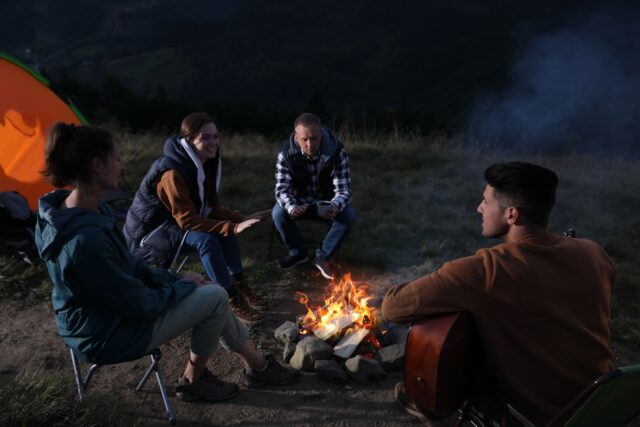
Before there were governments, there were hearths. Before there were laws, there were shared flames. Before zoning regulations and HOA disputes, there was a circle of light pushing back the dark and telling a group of mammals, Stay.
The first pot was not ceramic. It was a hole in the ground. Civilization began with a divot. That is not metaphor. That is archaeology.
Evidence of controlled fire stretches back at least 400,000 years¹. At Gesher Benot Ya’aqov, roughly 780,000 years ago, repeated hearth use left behind burned flint, charred seeds, and fish bones altered by heat².
• Earliest widespread habitual fire use in Europe: approximately 400,000 years ago¹
• Evidence of repeated hearth use at Gesher Benot Ya’aqov: approximately 780,000 years ago²
The earth keeps receipts. Fire did not just warm us. It reorganized us.
Architecture of Staying
A flame is temporary. A hearth is commitment.
At Çatalhöyük, homes were constructed around interior hearths³. Walls oriented toward fire. Sleeping platforms arranged beside it. Life literally bent toward heat. Before we had constitutions, we had choreography.
Richard Wrangham writes in Catching Fire, “Cooking was the driving force behind our becoming human.”⁴ Cooking increased caloric yield, reduced chewing time, and freed metabolic energy that may have supported larger brains.
• Reduction in chewing time from raw to cooked diets: dramatic⁴
• Estimated caloric gain from cooking tubers and meat: significant⁴
In other words, we cooked our way into bigger heads. But something quieter happened. We sat down. Roasting meat is intuitive. You see flesh transform. You smell it. You repeat it. Fire is visible change. Immediate. Concrete. Gratifying. It is the caveman version of pressing post.
But roasting feeds tonight. It does not require planning for winter. It does not require coordinating labor. It does not require trusting invisible systems. Fire teaches power. It does not teach patience. What it did teach was proximity.
Firelight and Nervous Systems
Shared fire required trust. It required predictability. It required turn-taking. It required proximity without violence. Mammals regulate around shared warmth⁵. Fire extended social hours beyond sunset and reduced nocturnal fear.
Before we had diagnoses, we had firelight. The hearth may have been the first psychiatric intervention.
Michael Pollan writes, “Cooking involves a series of transformations, and all transformations are magical.”⁶ Magic here means visible causality. Add heat. Food changes. Wait. Something happens. In another line, he reduces civilization to three commands: “Cook. Eat. Together.”⁶ Cooking slows time. Eating creates ritual. Together creates governance.
When disaster strikes, José Andrés does not begin with theory. “Food is not just about eating energy,” he has said. “It’s about feeding community.”⁷ He builds kitchens because structure calms people.
Daniel Boulud once described cooking as “an act of love” centered on “the people around the table.”⁸ Georges Perrier insisted nightly repetition was nonnegotiable⁹. Discipline in kitchens is not ego. It is predictability.
Heat gathers people. Predictability calms them. And when predictability dissolves, something else fills the vacuum.
Fairness in the Flame
At a hearth, distribution is visible. Someone passes meat. Someone waits. Someone receives. Hierarchy begins there. So does fairness. We evolved watching food divided.
Fairness around food is not abstract theory. It is mammalian calibration. The nervous system registers equity before it understands philosophy.
Bruce Springsteen sang, “Everybody’s got a hungry heart.”¹² Not just for calories. For belonging. For inclusion at the circle. When distribution becomes invisible, fairness becomes statistical. Statistics do not regulate nervous systems.
Comedians, Acceleration, and the Fracture
Sometimes comedians see structural shifts before academics do.
George Carlin warned, “The reason I talk to myself is because I’m the only one whose answers I accept.”¹⁰ It was a joke. It was also a diagnosis of isolation. When shared rituals weaken, private certainty expands.
Jerry Seinfeld once joked, “If someone wants to kill themselves, the least they can do is not waste our time watching.”¹¹ He was mocking spectacle culture. Substitute spectacle with algorithm and the joke becomes structural.
Today, more than half of calories in the American diet come from ultra-processed foods¹⁵.
• Percentage of U.S. calories from ultra-processed foods: over 50%¹⁵
• Ultra-processed food intake associated with increased chronic disease risk¹⁵
These foods are engineered for motion. They eliminate preparation. They eliminate waiting. They eliminate the table.
We still gather around heat, but often it is a microwave humming in isolation. We eat in cars. We eat standing. We eat in front of screens.
The hearth required stillness. Modern life rewards acceleration. Fire once forced us to sit together long enough to look at one another. Now we scroll past one another while chewing. The technology improved. The choreography fractured.
Sam Harris writes, “Civilization is built upon cooperation, and cooperation depends upon trust.”¹³ Trust does not emerge from velocity. It emerges from repetition.
Jamie Raskin has said that democracy depends upon trust in institutions¹⁴. Trust is practiced in small predictable exchanges long before it appears in constitutions.
Shared meals were rehearsal for that trust. Long before governments, humans practiced governance by passing meat across flame. Fire made us stay. And staying long enough to tolerate one another is the foundation of everything that follows. The next leap — grain, fermentation, salt, governance — requires humans willing to trust invisible processes.
But you cannot trust invisible processes if you cannot sit still. And that began with flame.

Footnotes
- Roebroeks W, Villa P. “On the earliest evidence for habitual use of fire in Europe.” Proceedings of the National Academy of Sciences 108, no. 13 (2011): 5209–5214.
- Alperson-Afil N, et al. “Spatial organization of hominin activities at Gesher Benot Ya’aqov, Israel.” Science 326, no. 5960 (2009): 1677–1680.
- Hodder I. Çatalhöyük: The Leopard’s Tale. London: Thames & Hudson, 2006, pp. 88–94.
- Wrangham R. Catching Fire: How Cooking Made Us Human. New York: Basic Books, 2009, pp. 1–23, 97–110.
- Dunbar R. Grooming, Gossip, and the Evolution of Language. Cambridge, MA: Harvard University Press, 1996, pp. 62–75.
- Pollan M. Cooked: A Natural History of Transformation. New York: Penguin Press, 2013, pp. 3–9, 12.
- Andrés J. Public interviews compiled in: We Fed an Island. New York: Ecco, 2018, pp. 15–24.
- Boulud D. Interviews collected in: Letters to a Young Chef. New York: Basic Books, 2003, pp. 41–52.
- Perrier G. Quoted in industry interviews; see: The Apprentice: My Life in the Kitchen. Philadelphia: Camino Books, 2007, pp. 73–81.
- Carlin G. Napalm & Silly Putty. New York: Hyperion, 2001, p. 17.
- Seinfeld J. Stand-up performance references in: Seinlanguage. New York: Bantam, 1993, pp. 102–104.
- Springsteen B. “Hungry Heart.” The River. Columbia Records, 1980.
- Harris S. The Moral Landscape. New York: Free Press, 2010, pp. 45–53.
- Raskin J. Public remarks on democratic norms; see: Unthinkable: Trauma, Truth, and the Trials of American Democracy. New York: Harper, 2022, pp. 184–196.
- Monteiro C.A., Cannon G., Levy R.B., et al. “Ultra-processed foods and health outcomes.” Public Health Nutrition 22, no. 5 (2019): 936–941.