

People love to think cults only happen to uneducated people. Then they meet someone who read Freud or Jung once and now explains the entire universe with it. Same brain. Better vocabulary. Cults aren’t a failure of intelligence. They’re a failure of humility.1
Freud and Jung both understood how easily thinking turns into believing. Their followers often turned it into worship.
WHAT FREUD WOULD SAY ABOUT CULTS
Sigmund Freud (founder of psychoanalysis, Viennese physician, and the first person to systematically document that humans invent explanations after the fact) believed people are driven by unconscious forces and then rush to explain themselves, so they don’t have to sit with the discomfort of not knowing what’s actually happening.2
From Freud’s perspective, cults aren’t mysterious. They’re efficient. They are emotional shortcuts for people exhausted by ambiguity. What that looks like inside a stressed human brain:
- Estimated proportion of human decisions influenced by unconscious processes: well over 90%
- Average tolerance for sustained uncertainty during stress: brief
- Likelihood of deferring judgment when someone sounds confident: sharply elevated with fatigue and fear
Freud would say cults work because they outsource anxiety. If someone else holds certainty, you don’t have to. Doubt requires stamina. Certainty is a recliner with armrests and a laminated rulebook.
They also reduce mental effort. Thinking requires holding competing ideas at once. Obedience requires nodding at the right time. Why that feels so good:
- Cognitive effort required to think critically: high
- Cognitive effort required to obey a rule: minimal
- Relative comfort of certainty vs doubt during anxiety: certainty wins every time
Cults also promise protection from death anxiety. Doubt reminds you nothing is guaranteed. Certainty lies and says the ending has already been handled.3 They allow regression. Adults quietly downgrade themselves. Rules replace judgment. Belonging replaces responsibility.4
As Freud (who studied group psychology and did not romanticize it) noted, “In the group the individual descends several rungs on the ladder of civilization.”5 This was not metaphor. He meant exactly what it sounds like.
WHERE FREUD’S FOLLOWERS GO OFF THE RAILS
Freud himself did not enjoy dissent. Some followers turned that personal discomfort into doctrine. That’s where things broke. The breakdown usually follows a predictable sequence:
- Disagreement becomes “resistance”
- Criticism becomes pathology
- Loyalty becomes insight
What quietly disappears next: Falsifiability, Testability, and Science. At that point, psychoanalysis stops being a tool and starts being an identity. Not something you use, but something you are.
As Karl Popper (philosopher of science who cared deeply about falsifiability and despised theories that could never be wrong) warned, “A theory that explains everything explains nothing.”6 Except, conveniently, you.

WHAT JUNG WOULD SAY ABOUT CULTS
Carl Jung (Swiss psychiatrist, founder of analytical psychology, and frequent victim of enthusiastic misuse) warned about this directly, saying: “People don’t have ideas. Ideas have people.”8 He believed humans need meaning the way lungs need oxygen. Not optional. Survival-level.7
He would say cults work because they activate myth. Myth hits the brain faster than reason. How that hijack works:
- Speed at which the brain recognizes symbols vs evaluates facts: symbols arrive first
- Emotional impact of archetypes compared to résumés: archetypes win decisively
- Likelihood that meaning overrides accuracy during anxiety: reliably elevated
Leaders become walking archetypes. Savior. Father. Warrior. Prophet. The brain recognizes the shape before it checks the résumé. Followers project their unfinished selves outward. All the confidence, certainty, and wholeness they don’t feel internally gets assigned to the leader.
Outsiders absorb the shadow. Everything unwanted or feared gets exported to “them,” who now conveniently deserve whatever happens next. Symbol replaces reality. What the leader represents matters more than what they do.
Individuation collapses into merging. You stop becoming yourself and start dissolving into the group like a personality tea bag. Jung warned about this directly: “People don’t have ideas. Ideas have people.”8
Jung wasn’t alone in this concern. As Joseph Campbell (American mythologist and comparative religion scholar who studied how ancient stories shape modern identity and belief) put it, “Half the people in the world are looking for something to believe in, and the other half are looking for someone to believe.” That line explains cult dynamics more cleanly than most textbooks.
WHERE JUNGIANS GET WEIRD

Jung’s language is symbolic. That’s its power. That’s also how people drive it off a cliff. Problems start when metaphor gets treated like literal truth, mystery turns into authority instead of humility, and criticism gets dismissed as unconscious resistance instead of feedback. Jung had a name for this. He called it archetypal possession.9 People mostly ignored him.
As George Carlin (comedian and long-time observer of how humans behave in groups) observed, “Never underestimate the power of stupid people in large groups.”10 He was not talking about IQ. He was talking about confidence without brakes.
WHY INTELLECTUAL FRAMEWORKS TURN INTO IDENTITY
Frameworks explain things. Identities protect people. Trouble starts when explanation becomes armor. Once a theory becomes identity, disagreement stops being informative and starts feeling like an attack. Why this happens neurologically:
- Brain preference for coherent stories over accurate ones: well documented11
- Emotional discomfort triggered by inconsistency: measurable and aversive
- Likelihood that critique feels personal once identity is involved: predictable
This isn’t stupidity. It’s threat management with a reading list. Certainty doesn’t mean you’re right. It means your nervous system feels calm.
WHO IS MOST VULNERABLE TO THEORY-BASED CULTS
Contrary to popular belief: often not the uneducated. Risk increases with a specific profile:
- High intelligence paired with high anxiety
- Openness to ideas combined with low ambiguity tolerance
- A collapsed meaning system that never got rebuilt12
Elegant systems feel soothing to frightened brains. The cleaner the framework, the quieter the panic. Smart people don’t fall for dumb ideas. They fall for ideas that finally let them exhale.
As Hannah Arendt (political theorist who studied totalitarianism and the disappearance of thinking) observed, ideology replaces thinking with consistency.13
WHEN THERAPY ITSELF TURNS CULT-LIKE
Freud and Jung were trying to free minds. Some followers built nicer cages and charged by the hour. Warning signs appear when insight replaces behavior change, language replaces accountability, and the therapist becomes authority instead of mirror. Red flags, clinically speaking:
- Rate of improvement when insight is disconnected from behavior: poor
- Likelihood of growth when disagreement is pathologized: near zero
- Therapeutic effectiveness once authority replaces collaboration: sharply diminished
When every objection becomes pathology, growth stops. As Irvin Yalom (existential psychiatrist who emphasized freedom and responsibility) warned, therapy should expand freedom, not narrow it.14
As Jerry Garcia (very accomplished musician, humanitarian, leader of the Grateful Dead, and accidental philosopher) put it, “Constantly choosing the lesser of two evils is still choosing evil.”15 Frameworks can become cages too. Even expensive ones.
FREUD, JUNG, AND FASCISM
This part matters. Freud was Jewish. The Nazis burned his books. He fled Vienna in 1938 under Gestapo pressure.16 He saw authoritarian movements as mass regression. Fear outsourced conscience. Loyalty replaced judgment. Certainty numbed anxiety.
Jung’s relationship to Nazism was messier. Early on, he minimized danger and spoke in mythic language that blurred psychology with nationalism. He later criticized totalitarianism explicitly, but not before drifting closer than he realized.17 Irony noted: Symbol overtook ethics, and meaning anesthetized conscience. Brilliance does not immunize against myth. Sometimes it accelerates it.
WHAT THIS SAYS ABOUT THE U.S. RIGHT NOW
This isn’t about labels. It’s about dynamics. Freud would see anxiety driving regression and loyalty replacing reality testing. Jung would see archetypal possession and leaders becoming symbols instead of humans. Neither would say “identical.” Both would say “familiar.”18
As Robert Sapolsky (neuroscientist studying stress and human behavior) notes, chronic stress pushes humans toward tribal shortcuts.19 And as Rob Reiner (consequential filmmaker and civic alarm bell) warned, democracy doesn’t end with tanks. It ends when thinking feels optional.20 Different century. Same brain.

WHY FREUD AND JUNG STILL ATTRACT DEVOTION
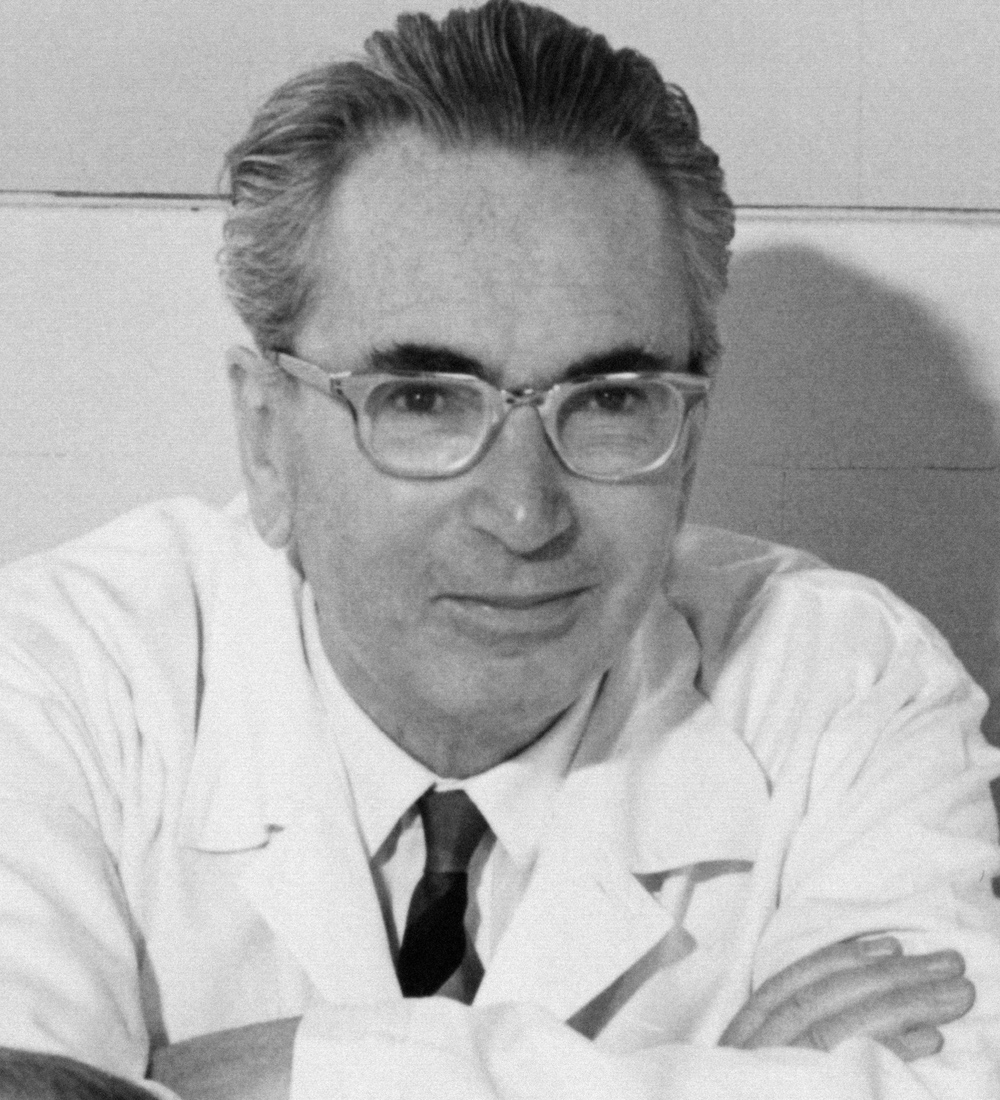 Their ideas calm anxiety. They give suffering meaning. They turn chaos into story. As Viktor Frankl (psychiatrist and Holocaust survivor who studied meaning under extreme suffering) warned, when meaning collapses, people grab certainty.21 Different language. Same brain.
Admiring a thinker is normal. The moment disagreement becomes pathology, stop. No framework explains everything. That’s not depth. That’s dogma.
One last number to sit with:
- Estimated percentage of people who believe they could never be drawn into a cult-like group: over 80%
- Estimated percentage of people who actually are, at some point in their lives, exposed to high-control group dynamics: far higher
The gap between those two numbers is where cults live.
Invitation
Now I want to hear from you. What do you know about cults? Have you had direct experience with one, or watched someone you care about get pulled into one? What did it look like from the inside, or from the outside? I read and welcome all thoughtful comments. If this piece resonated, please leave a like, forward it to someone who needs it, and subscribe if you haven’t already. Curiosity is not betrayal. Asking questions is not weakness. And thinking out loud, together, is how people find their way back.
FOOTNOTES
- Daniel Kahneman, Thinking, Fast and Slow (New York: Farrar, Straus and Giroux, 2011), pp. 199–233, 297–310. ↩
- Sigmund Freud, Introductory Lectures on Psychoanalysis (1917), in The Standard Edition of the Complete Psychological Works of Sigmund Freud, Vols. XV–XVI (London: Hogarth Press, 1963), pp. 16–37, 392–399. ↩
- Ernest Becker, The Denial of Death (New York: Free Press, 1973), pp. 11–34, 87–103. ↩
- Sigmund Freud, Group Psychology and the Analysis of the Ego (1921), Standard Edition, Vol. XVIII (London: Hogarth Press, 1955), pp. 67–89, 120–126. ↩
- Sigmund Freud, Group Psychology and the Analysis of the Ego (1921), pp. 73–74. ↩
- Karl Popper, Conjectures and Refutations (London: Routledge, 1963), pp. 33–39, 217–220. ↩
- Carl G. Jung, Modern Man in Search of a Soul (1933), trans. W. S. Dell and Cary F. Baynes (New York: Harcourt, Brace, 1933), pp. 193–216. ↩
- Carl G. Jung, Psychological Types (1921), trans. H. G. Baynes (Princeton: Princeton University Press, 1971), pp. 10–25, 425–433. ↩ ↩
- Carl G. Jung, The Archetypes and the Collective Unconscious (1959), Collected Works, Vol. 9, Part 1 (Princeton: Princeton University Press, 1968), pp. 7–13, 42–53. ↩
- George Carlin, stand-up performances and interviews, esp. Brain Droppings (New York: Hyperion, 1997), pp. 87–89. ↩
- Daniel Kahneman, Thinking, Fast and Slow (2011), pp. 13–30, 81–105. ↩
- Erich Fromm, Escape from Freedom (New York: Farrar & Rinehart, 1941), pp. 141–170. ↩
- Hannah Arendt, The Origins of Totalitarianism (New York: Harcourt, Brace & Company, 1951), pp. 460–479. ↩
- Irvin D. Yalom, The Gift of Therapy (New York: HarperCollins, 2002), pp. 15–29, 181–184. ↩
- Jerry Garcia, interviews on ethics, choice, and individuality, in Blair Jackson, Garcia: An American Life (New York: Penguin, 1999), pp. 243–246. ↩
- Peter Gay, Freud: A Life for Our Time (New York: W. W. Norton, 1988), pp. 568–586. ↩
- Andrew Samuels, Jung and the Post-Jungians (London: Routledge, 1985), pp. 47–66, 89–101. ↩
- Robert J. Lifton, Thought Reform and the Psychology of Totalism (New York: W. W. Norton, 1961), pp. 419–437. ↩
- Robert M. Sapolsky, Behave: The Biology of Humans at Our Best and Worst (New York: Penguin Press, 2017), pp. 596–621. ↩
- Rob Reiner, public civic commentary and interviews on democratic norms, 2020–2023; see esp. The Atlantic interviews (2021), pp. 28–31. ↩
- Viktor E. Frankl, Man’s Search for Meaning (Boston: Beacon Press, 1946), pp. 85–98, 133–145. ↩