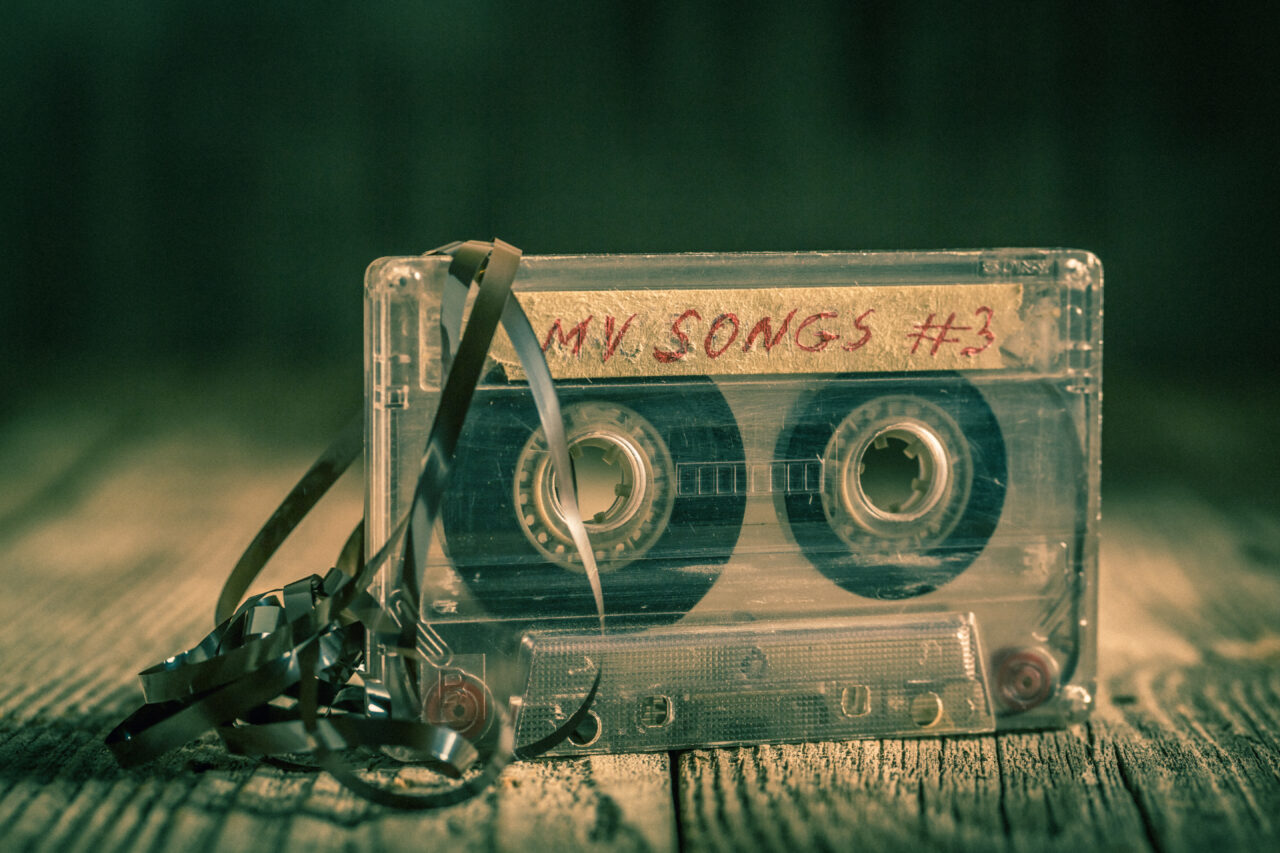
- People who listen to lyrics.
- People who confidently scream along to metaphors for psychosis, grief, addiction, and attachment trauma.
Most of us are proudly in group two1.
Lyrics function like emotional wallpaper. You do not study them. You live inside them. And while you are humming along, they are quietly rewiring your expectations of love, safety, heartbreak, and survival2.
Psychologist Kay Redfield Jamison (expert on mood disorders and creativity) says artists often live at an “emotional voltage” most people never experience, and their work often contains the “cry behind the creation”3. If that is true, then entire generations of us have been dancing to someone else’s untreated crisis.
We have been clubbing to nervous breakdowns for sixty years. Time to open the blinds.
HOW ARTISTS INTENTIONALLY MESS WITH OUR HEADS
Songwriters do not simply write songs. They wiretap the nervous system.
- Bob Dylan wanted to blow open consciousness4
- Kurt Cobain wrote for “anyone who felt freakish or wrong”5
- Billie Eilish writes about darkness so listeners feel less alone6
- Kendrick Lamar constructs albums like trauma therapy sessions7
- Taylor Swift builds emotional neighborhoods people can move into8
- Wet Leg shields anxiety behind absurd humor9
Neuroscientist Daniel Levitin calls music a “unique pattern of neural firing” that reshapes how the brain processes emotions10. Translation: music is neuroplasticity with a beat.
Comedians intuitively understand the closeness of humor and despair. George Carlin said, “Inside every cynical person there is a disappointed idealist”11. That is the blueprint of half the music industry.

HOW ARTISTS WERE SHAPED BY LYRICS THEMSELVES
Before artists wrote the songs that shattered you, someone else’s words shattered them.
- Springsteen says Roy Orbison taught him yearning12
- Bono says Leonard Cohen taught him sadness as architecture13
- Taylor Swift says other people’s lyrics were her emotional education14
This is developmentally normal. Children feel far earlier than they understand. Music becomes the operating manual.
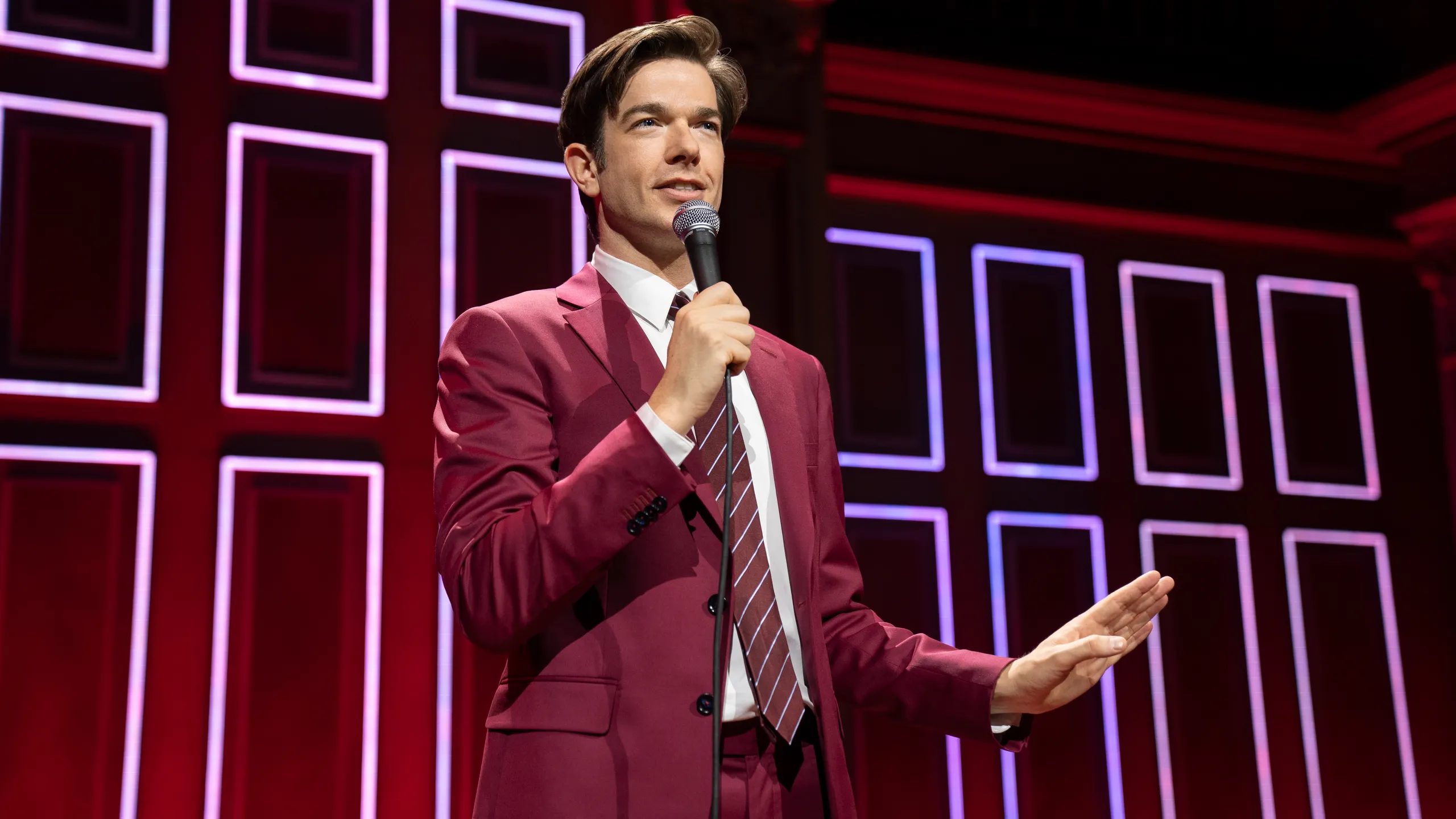
John Mulaney jokes, “I will keep all my emotions right here, and then one day I will die”15. Musicians simply start writing albums instead.
HOW LYRICS EVOLVED AS PSYCHOLOGY EVOLVED
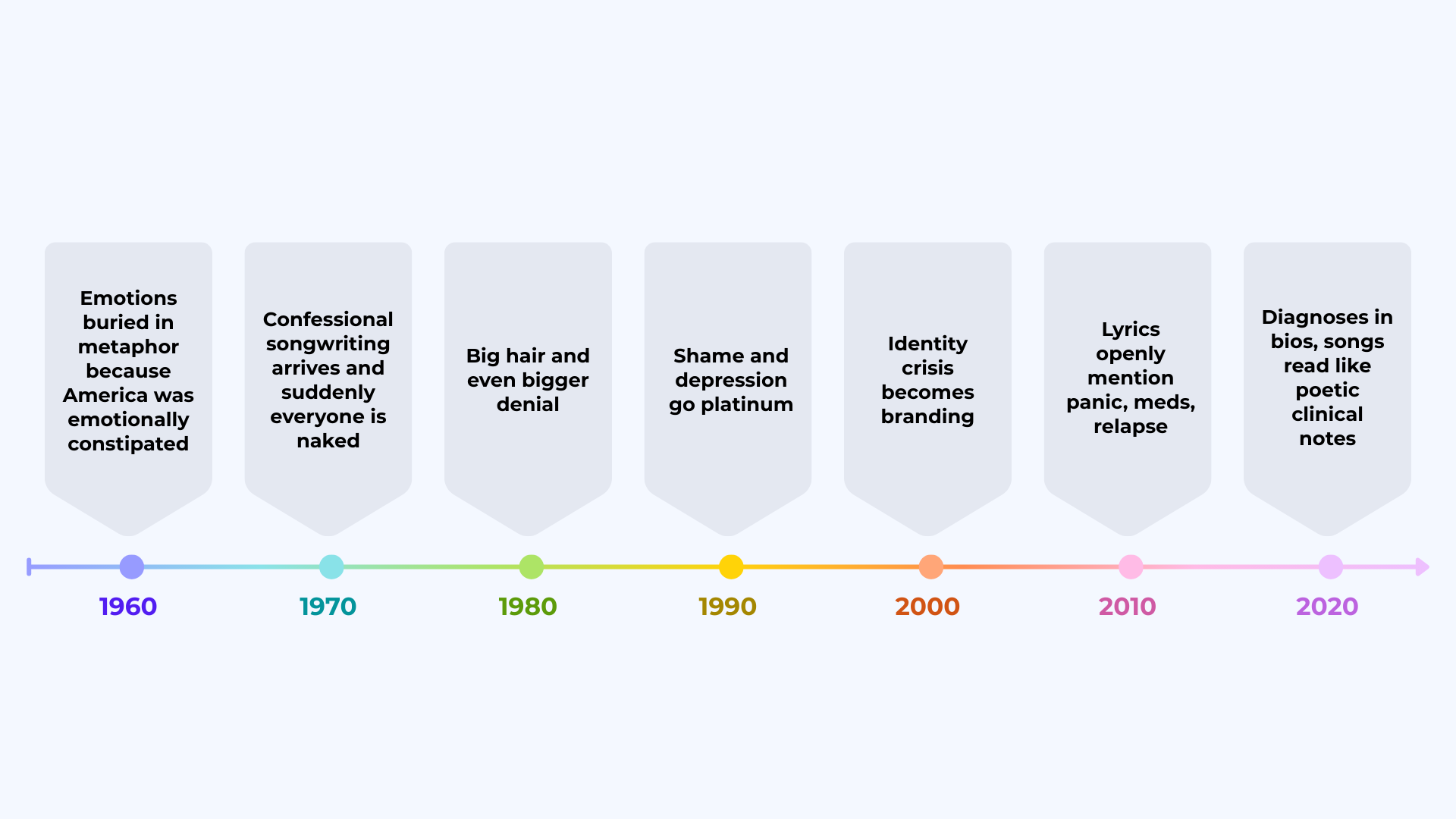
Music and psychology matured like twins who shared a dysfunctional childhood.
- 1960s: Emotions buried in metaphor because America was emotionally constipated
- 1970s: Confessional songwriting arrives and suddenly everyone is naked
- 1980s: Big hair and even bigger denial
- 1990s: Shame and depression go platinum
- 2000s: Identity crisis becomes branding
- 2010s: Lyrics openly mention panic, meds, relapse
- 2020s: Diagnoses in bios, songs read like poetic clinical notes
Trauma expert Bessel van der Kolk says that after trauma “the alarm system in the brain is always on”16. Modern music often sounds like someone singing from inside that alarm.
SEVEN CLASSIC SONGS YOU HAVE BEEN MISUNDERSTANDING FOR YEARS
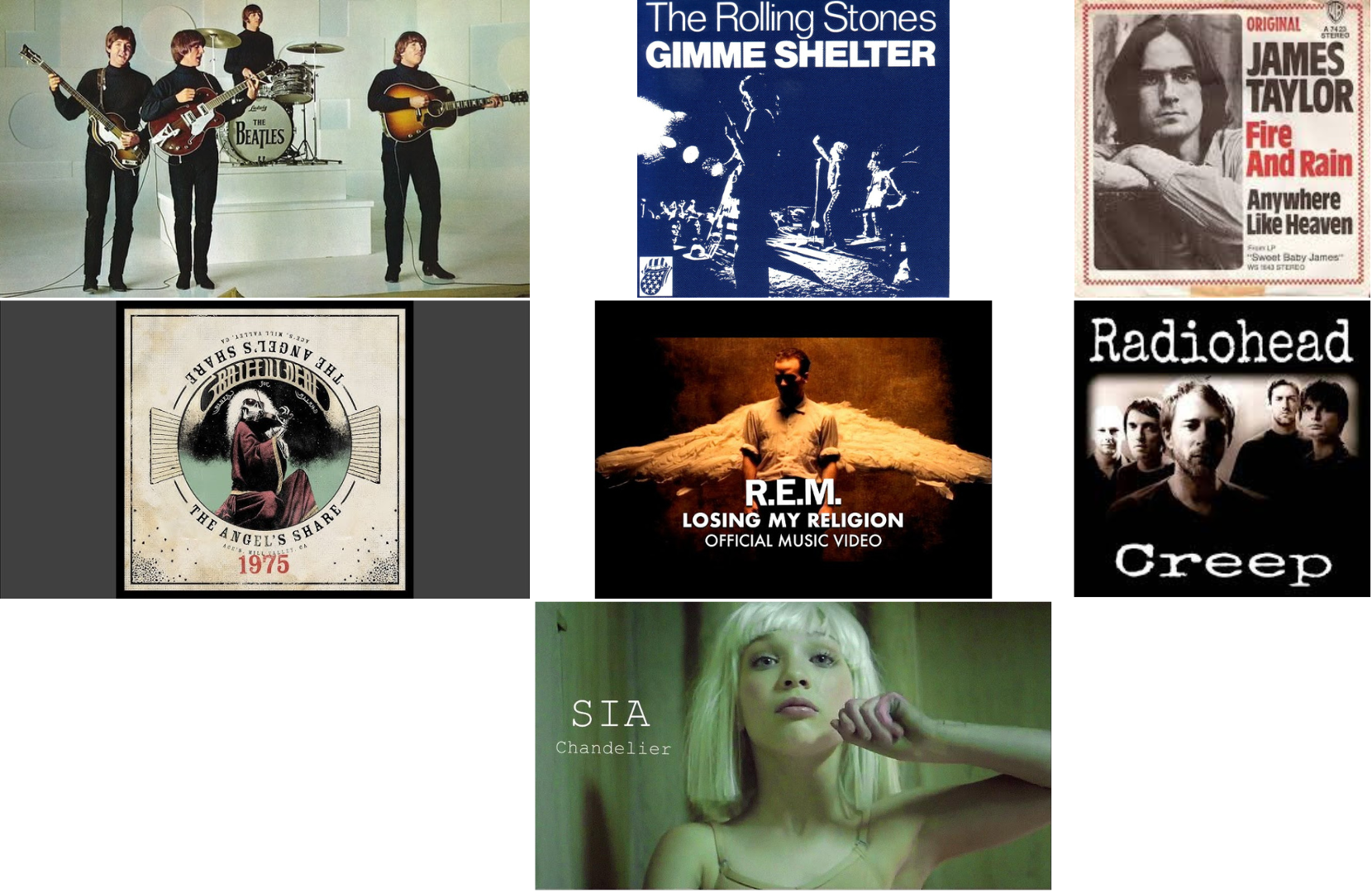
- HELP! — The Beatles (1965)
People think it is a cheerful bop about being overwhelmed. It is actually a depressive collapse. John Lennon: “I was fat and depressed and I wrote ‘Help!’ and I meant it”17.
Jamison notes that artists with mood disorders often bury pleas inside cheerful work3. This is Exhibit A. Major key plus hand claps tricks the brain. Humans hear tone before meaning. This is why people tell a quietly crumbling friend, “You seem fine.”
Deeply, the song reveals identity collapse and dissociation. Patients describe depression the same way. “My life is happening and I am watching.”
Robin Williams: “You are only given a little spark of madness. You must not lose it”18. - GIMME SHELTER — The Rolling Stones (1969)
People think it is about general danger. It is actually trauma physiology set to electric guitar. Mick Jagger: “It is a very violent time”19. Merry Clayton’s cracked high note is the sound of the amygdala punching drywall.
Maria Bamford: “My issues have subscriptions”20. This narrator has a lifetime membership. - FIRE AND RAIN — James Taylor (1970)
People think it is a heartbreak ballad. It is actually about suicide loss, addiction, and depression. James Taylor: “Suzanne committed suicide. It was a very heavy time”21.
Grief researcher Elisabeth Kubler Ross taught that grief does not end. It shapeshifts22. This song is one of its shapes. - FRANKLIN’S TOWER — The Grateful Dead (1975)
Listeners hear whimsical imagery. It is actually about emotional thawing and the return of presence. “If you plant ice, you are going to harvest wind.” That is cognitive behavioral therapy disguised as psychedelia.
Gilda Radner: “It is always something”23. The Dead respond: Yes, but waking up is something too. - LOSING MY RELIGION — R.E.M. (1991)
People assume a faith crisis. It is actually about losing composure, obsessive rumination, and rejection anxiety. “That is me in the corner” is not about God. It is about shame.
Aaron Beck, founder of cognitive therapy, would diagnose this narrator with catastrophizing and distorted threat appraisal24. - CREEP — Radiohead (1992)
People think it is teen angst. It is actually profound shame, derealization, and rejection sensitivity. Thom Yorke: “It is about being a loser”25.
Attachment theorist John Bowlby would call this fear of unworthiness the gravitational center of insecure attachment26. Every line announces: “I do not deserve to occupy space.” - CHANDELIER — Sia (2014)
People think it is empowering. It is actually the sound of a relapse in progress. “Party girls do not get hurt” is denial. “I am holding on for dear life” is crisis. Bo Burnham: “Laughter is the best medicine, besides medicine”27. Sia uses volume instead of medication.
SOME MORE SONGS THAT QUIETLY FIT THE SAME CATEGORIES
Bereavement and Persistent Complex Grief
- Yesterday (Paul McCartney, The Beatles)
- Nothing Compares 2 U (Prince, The Family)
- Black (Eddie Vedder and Stone Gossard, Pearl Jam)
- Ghost (Justin Bieber)
- Visiting Hours (Ed Sheeran)
Major Depressive Disorder and Anhedonia
- Everybody Hurts (R.E.M.)
- Mad World (Tears for Fears)
- Unwell (Matchbox Twenty)
- Breathe Me (Sia)
- Liability (Lorde)
- Numb Little Bug (Em Beihold)
Depressive Disorders With Suicidal Ideation and Hopelessness
- Hurt (Nine Inch Nails)
- Lithium (Nirvana)
- 1-800-273-8255 (Logic)
- Hope Is a Dangerous Thing for a Woman Like Me to Have (Lana Del Rey)
Anxiety Disorders and Existential Distress
- The Sound of Silence (Simon & Garfunkel)
- The Boxer (Simon & Garfunkel)
- Demons (Imagine Dragons)
- Breathin (Ariana Grande)
- Stressed Out (Twenty One Pilots)
Trauma-Related Disorders and Emotional Detachment
- Comfortably Numb (Pink Floyd)
- Zombie (The Cranberries)28
- Praying (Kesha)
- This Is America (Childish Gambino)
Dissociation, Identity Disturbance, and Perceptual Alteration
- Space Oddity (David Bowie)
- Stan (Eminem feat. Dido)
- Everything I Wanted (Billie Eilish)
Substance Use Disorders and Maladaptive Coping
- Rehab (Amy Winehouse)
- Swimming Pools (Drank) (Kendrick Lamar)
- Mask Off (Future)
Adjustment Disorder, Chronic Stress, and Interpersonal Strain
- Under Pressure (Queen & David Bowie)
- Fast Car (Tracy Chapman)
- Welcome to the Black Parade (My Chemical Romance)
- Running Up That Hill (Kate Bush)
- How to Save a Life (The Fray)
These songs are MRIs of the human condition disguised as radio hits. Music tells the truth long before we are ready to hear it. We think we choose songs, but they choose us. They slip into our lives, decode our emotional circuitry, and then sit quietly in the background waiting for us to catch up.
One day you finally understand the lyric you have been screaming for years, and it feels like someone turned on the lights in a room you did not know you were living in. Humans are not built to explain everything they feel. That is why we have music. It tells the truth for us until we are brave enough to tell it ourselves.
If anything I wrote felt like the key change that ruined everything, or if is in sync, please leave a comment, or go to my website: www.boulderpsychiatryassociates.com. If you are in Boulder, please stop by.
FOOTNOTES
- Levitin, D. This Is Your Brain on Music. Penguin, 2006. ↩
- Juslin, P. “Emotional Responses to Music.” Psychological Bulletin, 2013. ↩
- Jamison, K. R. Touched with Fire. Free Press, 1993. ↩ ↩
- Scaduto, A. Bob Dylan. Scribner, 1972. ↩
- Cross, A. Heavier Than Heaven: Kurt Cobain Biography. Hyperion, 2001. ↩
- Apple Music Interview with Billie Eilish, 2019. ↩
- Lamar, K. To Pimp a Butterfly interviews, Rolling Stone, 2015. ↩
- Hiatt, B. “Taylor Swift and Emotional Storytelling.” Rolling Stone, 2021. ↩
- NME Interview with Wet Leg, 2022. ↩
- Levitin, D. “Neural Representation of Music.” Nature Reviews Neuroscience, 2012. ↩
- Carlin, G. Brain Droppings. Hyperion, 1997. ↩
- Springsteen, B. Born to Run. Simon and Schuster, 2016. ↩
- Bono interview, The Guardian, 2009. ↩
- Swift, T. Folklore documentary commentary, 2020. ↩
- Mulaney, J. New in Town. Netflix, 2012. ↩
- Van der Kolk, B. The Body Keeps the Score. Viking, 2014. ↩
- Lennon interview, Help! documentary, 1985. ↩
- Williams, R. Interview, Inside the Actors Studio, 2001. ↩
- Jagger interview, Gimme Shelter documentary, 1970. ↩
- Bamford, M. You Are a Comedy Special. Hachette, 2019. ↩
- Taylor interview, CBS Sunday Morning, 2002. ↩
- Kubler Ross, E. On Grief and Grieving. Scribner, 2005. ↩
- Radner, G. It is Always Something. Simon and Schuster, 1989. ↩
- Beck, A. Cognitive Therapy and Emotional Disorders. Penguin, 1979. ↩
- Yorke interview, Rolling Stone, 1993. ↩
- Bowlby, J. Attachment and Loss. Basic Books, 1969. ↩
- Burnham, B. Make Happy. Netflix, 2016. ↩
- Various artist interviews and liner notes compiled from Rolling Stone, Mojo, and NME archives. ↩